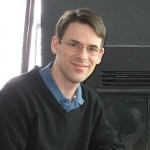
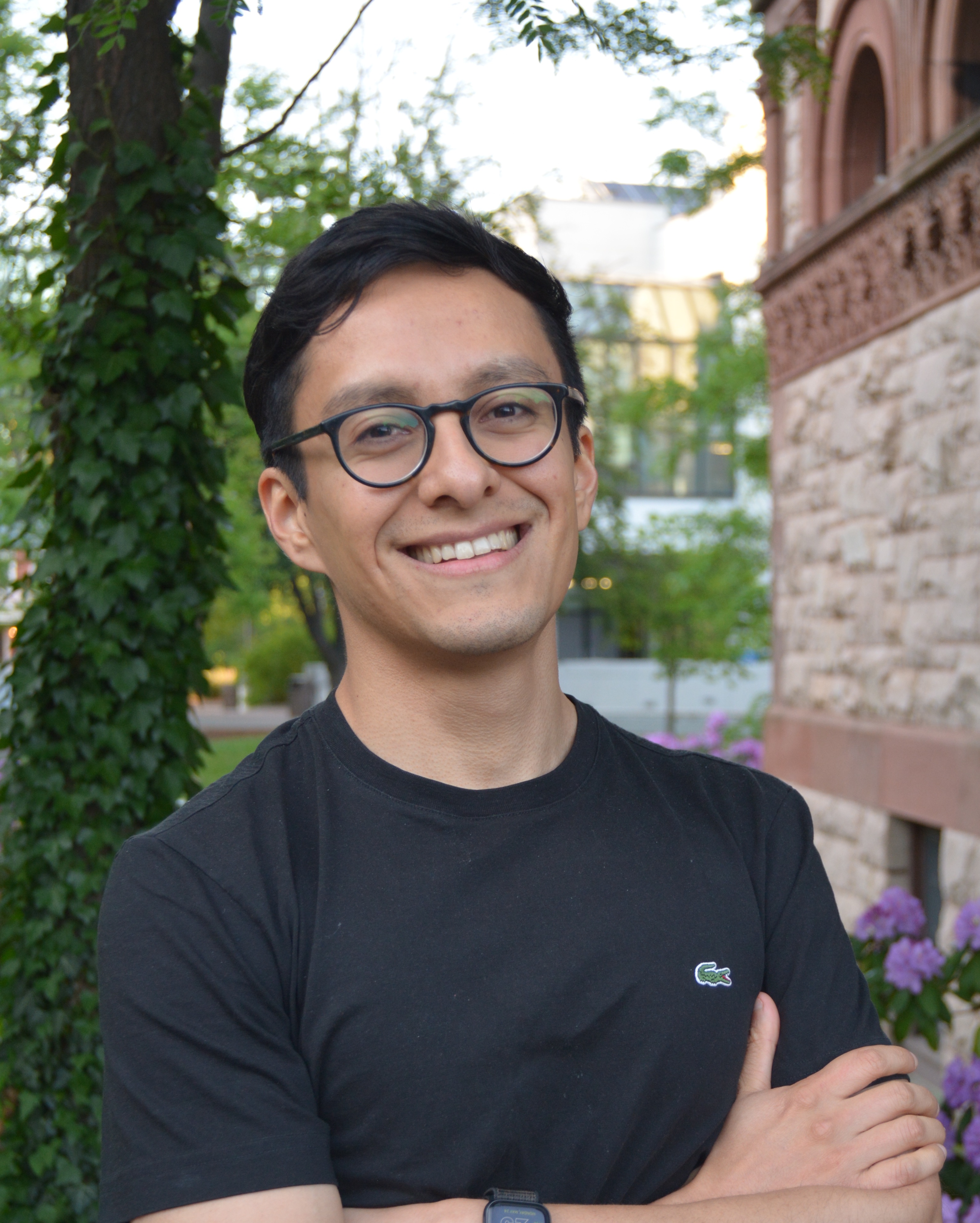
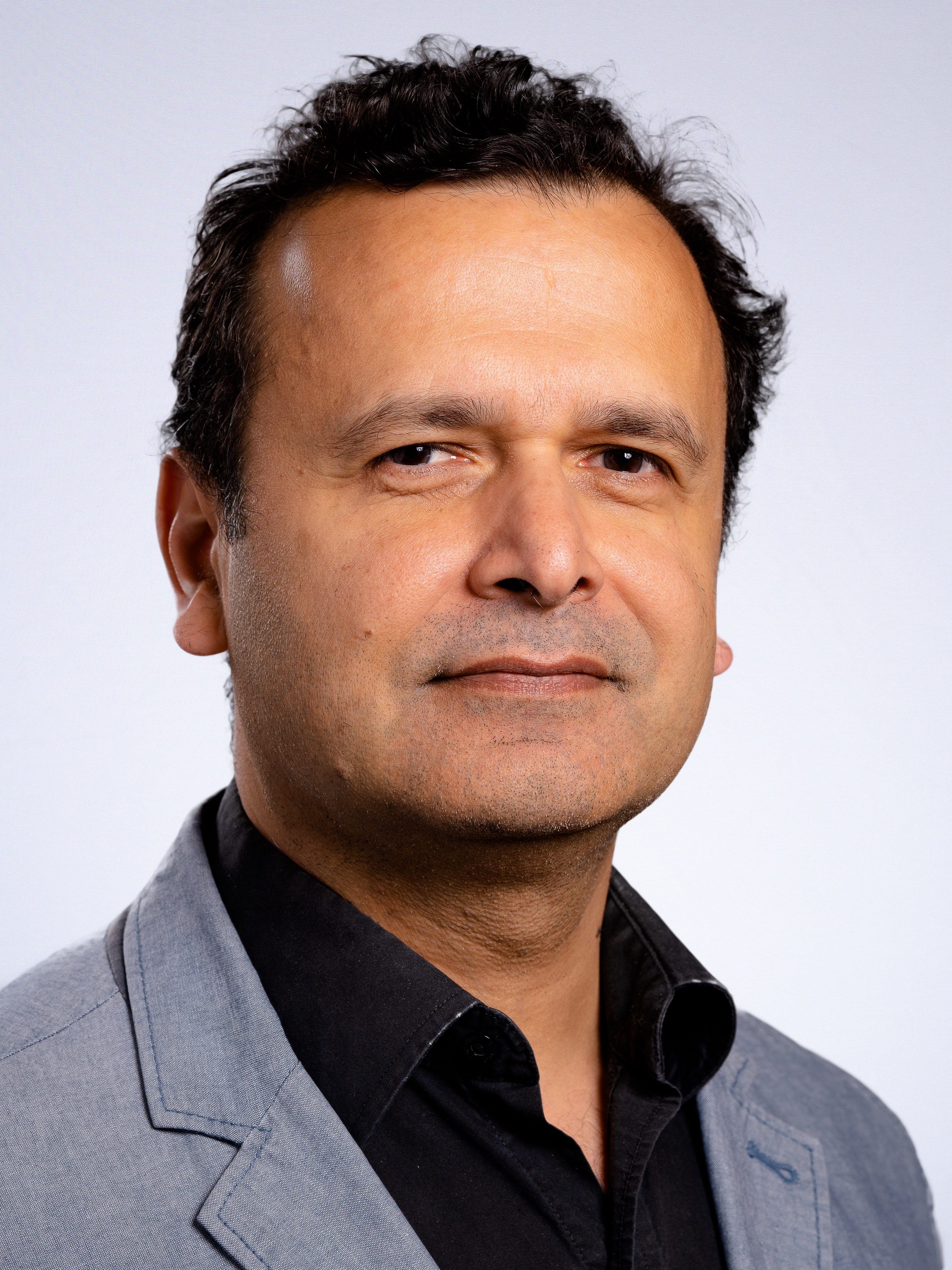
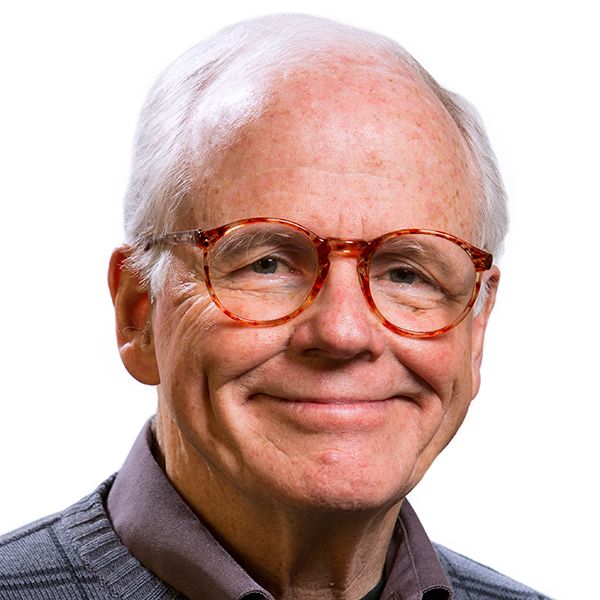
Dr. Andrew Frey is a Professor in the Department of Physics at the University of Winnipeg, with an Adjunct appointment in Applied Computer Science at the University of Manitoba. His research bridges cosmology and high-energy theoretical physics, focusing on dark energy, dark matter, inflation, and the Big Bang through frameworks like string theory and general relativity. Ph.D. in Physics from the University of California, Santa Barbara (2003) Research spans cosmology-string theory intersections, gravitational collapse in AdS/CFT, and quantum information in gravity. He employs analytical and numerical methods to study extra-dimensional dynamics, dark matter models, and holographic complexity. Recent publications (2016–2025) emphasize string cosmology, AdS instability, and gravitational wave signatures. Keywords cluster around theoretical physics, quantum gravity, and condensed matter applications. Erica and Arnold Rogers Award for Excellence in Research and Scholarship Advises former students including Cole Coughlin, Jiayue Yang, Manu Srivastava, and S.E. Skelton. Media contributions include commentary on Nobel Prizes, dark matter, and a CKUW radio segment .
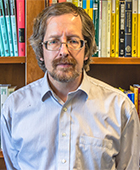
Michael R. Douglas is a Professor at the Simons Center for Geometry and Physics at Stony Brook University . A renowned string theorist , he contributed to matrix models, noncommutative geometry, Dirichlet branes, and the statistical approach to string phenomenology. Previously, he was Professor of Physics and Director of the New High Energy Theory Center at Rutgers University before joining Stony Brook in 2008. Education : B.A. in Physics (Harvard, 1983), Ph.D. in Physics (Caltech, 1988) His research bridges theoretical physics and mathematics , focusing on string theory , quantum field theory , and Calabi-Yau manifolds . Recently, he has pioneered the application of machine learning and symbolic computation to solve complex mathematical and physical problems, such as computing Calabi-Yau metrics. His publications span string compactification , flux vacua , noncommutative geometry , and AI-driven scientific discovery . He explores the intersection of physics and computation , including AI models for economic simulations and mathematical data science. Scientific Awards : Sackler Prize in Physical Sciences Louis Michel Visiting Professor at IHES Clay Mathematical Institute Mathematical Emissary He is a Fellow of the American Mathematical Society and Member of the American Physical Society . Douglas has edited Journal of High Energy Physics and Communications in Mathematical Physics , and organized workshops like 'String Theory for Mathematicians' and 'Mathematical Foundations of Quantum Field Theory'.
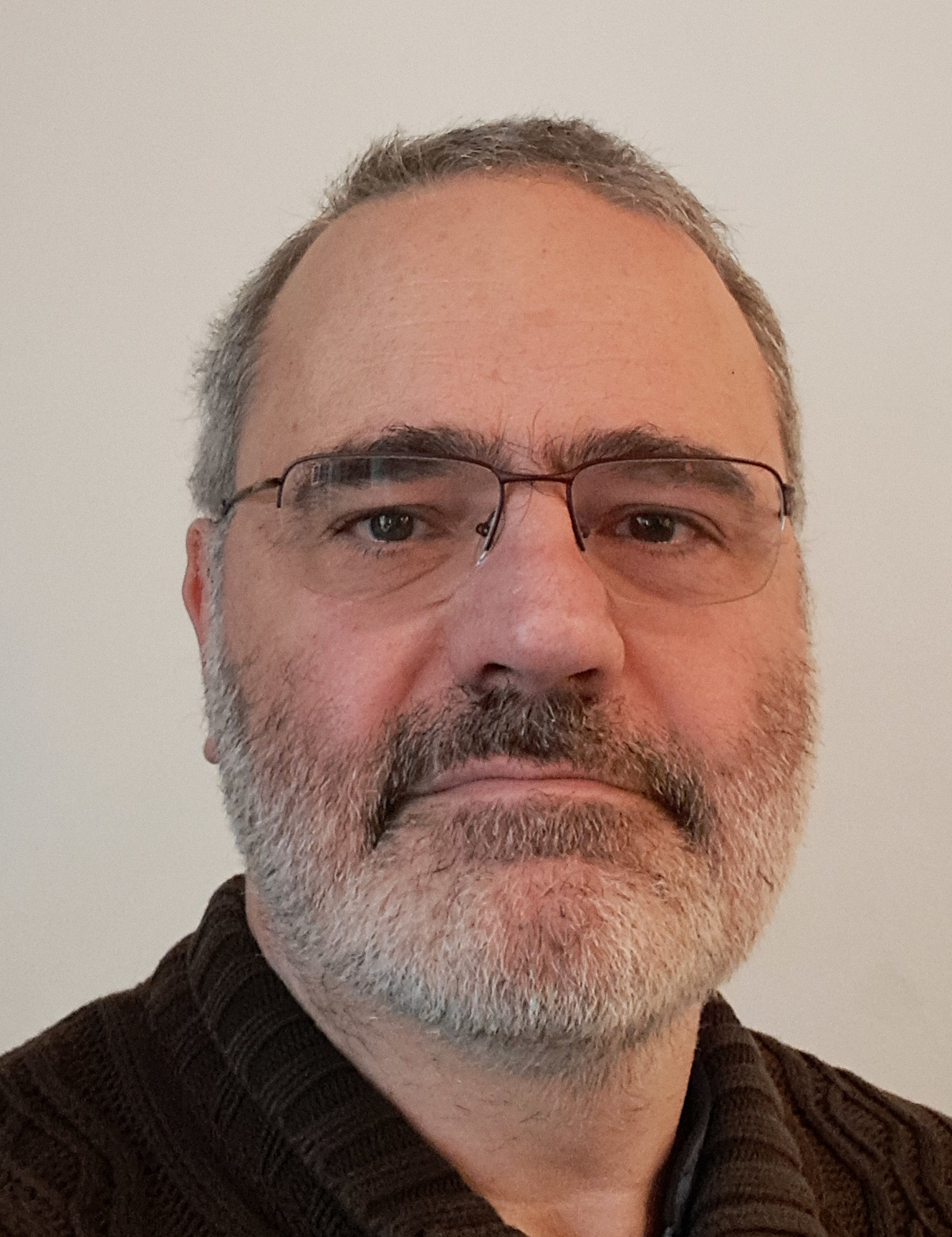
Jérôme DURAND-LOSE is a Professor of Computer Science at the University of Orléans, France, affiliated with the Faculty of Science and Technology and the Department of Computer Science. He is a member of the Graphs, Algorithms and Calculation Models team at LIFO (Fundamental Computer Science Laboratory of Orléans) and serves as Deputy Scientific Director for Europe and International at CNRS Computer Sciences since May 2024. He completed his PhD in Computer Science at the University of Bordeaux I in 1996, followed by a Habilitation à Diriger des Recherches (HDR) from the University of Nice-Sophia Antipolis in 2003. His academic career includes positions as Lecturer at the University of Nice-Sophia Antipolis (1998-2004), CNRS delegation to LIP (Laboratory of Parallel Computing) at ÉNS Lyon (2002-2004), and recruitment as University Professor at the University of Orléans in 2004. He has been promoted through the professorial ranks to the second exceptional class in 2023. DURAND-LOSE's research focuses on unconventional models of computation, particularly signal machines for abstract geometrical computation in Euclidean spaces. His work explores cellular automata, reversible computing, distributed systems, and self-stabilization. He has made significant contributions to understanding geometric computation, collision computing, and computational universality in continuous space-time models. His research demonstrates how continuous geometry can be harnessed for both classical and hypercomputation. His recent publications demonstrate a consistent focus on abstract geometrical computation, with particular emphasis on signal machines capable of representing complex mathematical structures like infinite countable linear orderings. His work bridges theoretical computer science with geometric and continuous models of computation, exploring both classical and hypercomputation capabilities through the manipulation of signals in Euclidean space. Member of the Editorial Board of the International Journal of Unconventional Computing (2011-) Chair of the Steering Committee of the International Conference on Machines, Computations and Universality (2013-) Member of the Board of the Computability in Europe association (2011-2014) Participation in 32 international conference program committees, including 9 as chair As an academic leader, DURAND-LOSE has supervised four PhD students to completion, served as Director of LIFO (Fundamental Computer Science Laboratory of Orléans) from 2010-2016, and held various administrative roles including Provisional Administrator of the UFR Sciences and Technology (2020-2021). He has been actively involved in the organization of numerous international conferences in unconventional computation, including chairing program committees for MCU and UCNC conferences. He is affiliated with LIFO (Fundamental Computer Science Laboratory of Orléans, ÉA 4022), where he leads the Graphs, Algorithms and Calculation Models team. His laboratory work focuses on geometric computation models, signal machines, and their applications to understanding computational universality in continuous spaces.
Stanley Fung is a Lecturer in the School of Computing and Mathematical Sciences at the University of Leicester. He holds B.Eng., M.Phil., and Ph.D. degrees from the University of Hong Kong. His research focuses on algorithms, with teaching responsibilities in third-year/MSc modules on Algorithms, C++, and Cryptography. He currently serves as the School's Deputy Director of Education and Examination Officer for UG degrees, overseeing Panels and Boards of Examiners. His research interests emphasize algorithm design and analysis, particularly in online scheduling, thermal-aware resource allocation, and optimization problems. Notable work includes studies on sorting algorithms, energy-harvesting sensor networks, and haplotype inference in genetics. Selected publications (2003-2021) highlight contributions to scheduling theory, algorithmic efficiency, and interdisciplinary applications like bioinformatics. His work often explores trade-offs between computational complexity and practical constraints such as temperature management and energy efficiency. Administratively, he manages educational governance processes, reflecting his dual role as both a researcher and academic leader in computer science education.
Dr. Edward Mazenc is a Research Fellow in Theoretical Physics at ETH Zürich, affiliated with the group of Prof. Matthias Gaberdiel. His work focuses on gauge/string duality, spacetime emergence, and the AdS/CFT correspondence. Previously, he was a Kadanoff Fellow at the University of Chicago and completed his PhD at Stanford under Prof. Sean Hartnoll. His research bridges quantum information theory, random matrix theory, and topological string models. Education: PhD in Theoretical Physics, Stanford University (2017) Masters in Mathematics, University of Cambridge (Maths Tripos) Undergraduate Physics, Massachusetts Institute of Technology (MIT) Research interests include deriving exact equivalences between matrix integrals and topological strings, exploring connections between random matrices and moduli space geometry, and extending these results to full AdS/CFT frameworks. His recent work with Prof. Rajesh Gopakumar established foundational results in the simplest gauge/string duality. Key contributions span theoretical cosmology (de Sitter microstates), quantum gravity deformations, and interdisciplinary applications like N95 mask decontamination using thermal methods.
Victor A. Rodriguez is a Research Fellow in the Department of Physics at the University of California, Santa Barbara , advancing theoretical physics through computational and analytical methods. Education B.S. in Physics & Mathematics from The University of Texas at Austin Ph.D. in Physics from Harvard University (2021), supervised by Xi Yin Current Position President's Postdoctoral Fellow, UC Santa Barbara , mentored by Clifford V. Johnson Research focuses on string theory , quantum gravity , and bootstrap techniques for strongly coupled systems, including non-perturbative effects in 2D gravity and cosmological applications of string theory. Scientific Awards: President’s Postdoctoral Fellowship
Dr. Sanjaye Ramgoolam is a Reader in Theoretical Physics at the School of Physical and Chemical Sciences, Queen Mary University of London. His research focuses on string theory, quantum field theory, representation theory, and combinatorics, with particular emphasis on gauge-string duality (AdS/CFT correspondence) and permutation invariant matrix models. He has pioneered mathematical frameworks using representation theory and combinatorics to explore the holographic map between quantum field theories and string theory. His work also extends to applications in financial matrix models and computational linguistics via matrix statistics. Teaching roles include advanced courses such as Mathematical Techniques 4 and Advanced Quantum Field Theory. He has supervised numerous PhD students, including Costis Papageorgakis and Tom Brown, and collaborates with researchers like Andreas Brandhuber and Rodolfo Russo on grants like 'Amplitudes, Strings and Duality' funded by STFC. Recent research highlights include Gaussian permutation invariant matrix models, quantum thermodynamics in large N systems, and combinatorial topological string theories. His work bridges fundamental physics with mathematical structures, offering insights into quantum gravity and dualities. Key grants include the Royal Society-funded 'Combinatorics and algorithms for quantum states in holography' (2025-2026) and STFC's 'Amplitudes, Strings and Duality' (2023-2026). His 15 most recent articles span topics like eigenvalue systems for multi-matrix invariants, permutation symmetry in quantum thermodynamics, and Kronecker coefficients from ribbon graphs. Though no explicit awards are listed, his extensive publications and grants reflect significant contributions to theoretical physics.
Nathan Benjamin is an Assistant Professor of Physics and Astronomy at the University of Southern California (USC). His research focuses on theoretical physics, particularly in quantum gravity, conformal field theories (CFTs), and their holographic dualities. He holds a PhD in Physics from Stanford University (2018) and a B.S. in Physics from MIT (2013). His work bridges high-energy physics with mathematical structures, exploring topics like modular forms, resurgence phenomena, and the interplay between geometry and quantum systems. Benjamin’s research interests include 2D CFT partition functions, Liouville theory, and the application of bootstrap methods to uncover universal properties of quantum field theories. He investigates black hole thermodynamics, AdS/CFT correspondence, and emergent spacetime geometries from holographic principles. His contributions often involve advanced mathematical techniques, such as automorphic forms and analytic number theory, to address foundational questions in quantum gravity. His recent work explores thermal QFTs, duality-invariant distance measures, and symmetric product orbifold CFTs. These studies highlight his focus on unifying theoretical frameworks across particle physics, string theory, and mathematical physics. Benjamin’s publications reflect a commitment to interdisciplinary approaches, addressing topics like S-duality in deformed CFTs and the role of modular symmetry in gravitational systems.
Zohar Komargodski is a Professor in the Department of Physics and Astronomy at Stony Brook University. His research focuses on quantum field theory, condensed matter physics, and theoretical high-energy physics. Key areas include symmetry principles, phase transitions, topological phases, and conformal field theories (CFTs). He explores phenomena such as generalized symmetries, renormalization group flows, and anomalies in quantum systems. Recent work involves studies on monopoles, disclinations, and the interplay between temperature and order in 2+1 dimensions. His articles address topics like Wilson line phases, giant vortices, and line defects, contributing to understanding non-perturbative effects in gauge theories and quantum gravity phenomenology. While no specific awards are listed, his prolific publication record reflects significant contributions to theoretical physics. Advising and grant activities are not detailed in the provided texts, but his lab likely focuses on cutting-edge theoretical and computational physics.
Xiangwen Zhang is a Professor in the Department of Mathematics at the University of California, Irvine. His research focuses on geometric analysis and partial differential equations, particularly exploring geometric flows, complex geometry, and mathematical physics. He has contributed to the study of Hessian equations, Strominger systems, and string theory-related geometric structures. Dr. Zhang’s work bridges differential geometry and nonlinear PDEs, with significant contributions to the understanding of curvature flows, conformally balanced metrics, and geometric inequalities. His research often involves advanced techniques from complex geometry and geometric analysis, addressing questions in both pure and applied mathematical contexts. His academic activities include teaching courses like Math 2D (Multivariable Calculus) and maintaining active participation in seminars such as the Analysis Seminar and Differential Geometry Seminar. He collaborates widely, evidenced by co-authorships with researchers like T. Fei, D.H. Phong, and S. Picard. His research has been published in leading journals such as the Journal of Differential Geometry and Inventiones Mathematicae. Zhang’s expertise also extends to geometric inequalities and spacetime geometry, as seen in his work on Minkowski formulae and Alexandrov theorems. His research program reflects a deep engagement with the interplay between geometry, analysis, and theoretical physics.
Richard Brower is a Professor in the Department of Electrical and Computer Engineering at Boston University's College of Engineering, with an affiliated faculty role in the Department of Physics. His research focuses on numerical lattice field theory, quantum computing, and high-performance computing for exascale supercomputers. He holds a PhD in Physics from the University of California. Education: B.S. Physics, Harvard University, 1963 M.A. Applied Math, Harvard University, 1964 PhD, Physics, University of California, 1968 Research Interests: Brower advances multi-grid software for exascale systems, explores quantum computing applications for qubit and analog hardware, and investigates quantum physics in particle, string, and gravity contexts. His work includes stealth dark matter studies, Lorentzian conformal field theories, and lattice QCD simulations. Publications Trends: His recent articles address lattice quantization methods, stealth dark matter spectra, and conformal symmetry in 2D/3D Ising models. He frequently integrates geometric and topological approaches with computational physics. Scientific Awards: A.P. Sloan Research Fellow (1974–1976) Past Managing Editor, International Journal of Computational Physics Advising & Grants: Brower collaborates on DOE exascale computing projects and leads efforts in multigrid algorithms for fermion calculations. His work spans lattice gauge theory applications in quantum computers and beyond-Standard-Model physics. Labs/Teams: Affiliated with BU's computational physics and quantum computing research groups, contributing to national HEP computing initiatives.
María AH Vozmediano is a Research Professor at the Institute of Materials Science of Madrid (CSIC). Her career began with a PhD in Quantum Field Theory from the Weizmann Institute (Israel, 1984) under Prof. Aharon Davidson, addressing the domain wall problem and Peccei-Quinn symmetry. She conducted postdoctoral research at Princeton University (1986–1988) with Ed Witten’s String Theory group. Transitioning to condensed matter physics, she collaborated on 2D gravity, Fermi liquids, and quantum electron liquids, co-authoring a seminal book on the latter. Her work with Paco Guinea integrated quantum field theory into graphene research. She taught mathematics at Universidad Carlos III de Madrid (tenured assistant professor), the Autonomous University of Madrid, and Complutense University of Madrid before joining CSIC. Her research bridges high-energy physics and condensed matter, emphasizing applications of field theory to materials like fullerenes and Dirac materials.
David Tong is a Professor at the University of Cambridge within the Department of Applied Mathematics and Theoretical Physics . His career spans institutions like MIT and Columbia University, with research rooted in quantum field theory and its applications to particle physics, string theory, cosmology, and condensed matter physics. Current research includes monopoles, dyons, and generalized symmetries in quantum field theory. He has pioneered work on gauge-gravity duality , linking black hole conductivity to strange metals . Key contributions involve the quantum geometry of Calabi-Yau manifolds and duality webs in 2+1 dimensions, bridging high energy physics and condensed matter phenomena. Teaching includes advanced courses on Statistical Physics , Quantum Field Theory , and Classical Mechanics , with freely available lecture notes.
Sebastian Franco is a Professor and Chair of the Physics Department at The City College of New York (CCNY) within the City University of New York (CUNY) system. His research focuses on theoretical physics, particularly in string theory, gauge theories, and their geometric realizations through brane models and algebraic geometry. His work bridges string theory with algebraic geometry, exploring topics such as brane brick models, quiver gauge theories, and dualities in higher-dimensional field theories. Key themes include the geometric engineering of supersymmetric field theories, the study of Calabi-Yau manifolds, and the application of dimer models to understand moduli spaces and dualities. Recent publications highlight advancements in 5D superconformal field theories (SCFTs), generalized symmetries in 2D systems, and the interplay between Fano varieties and brane configurations. His contributions also extend to understanding non-invertible symmetries, twin theories, and the octagon amplitude in large-N limits. Dr. Franco’s research frequently employs tools from toric geometry, cluster algebras, and holography, with applications ranging from condensed matter systems to high-energy physics. His work has implications for understanding quantum gravity, topological phases of matter, and the geometric underpinnings of particle physics models.
Evgenii Barts is an active researcher at the University of Groningen's Faculty of Science and Engineering, specializing in the Theory of Condensed Matter group. He earned his PhD from the same institution in 2023 with a thesis on unconventional magnetic states and defects, following an MSc degree in physics. His educational background includes: PhD in Physics, University of Groningen (2023) MSc in Physics (institution unspecified) Barts' research explores cutting-edge phenomena in quantum materials, with primary focus on magnetism and spintronics. He investigates how crystal symmetry governs spin dynamics, leading to discoveries in persistent spin textures, chiral spin accumulation, and topological magnetic defects. His work bridges fundamental condensed matter theory with potential applications in next-generation spintronic devices and magnetic storage technologies, emphasizing non-equilibrium processes and symmetry-protected states. Analysis of his 8 publications (2020-2025) reveals a clear evolution toward symmetry-engineered quantum phenomena. Early work centered on skyrmion textures in thin films, while recent studies (2024-2025) demonstrate breakthroughs in symmetry-protected spin textures and chiral tellurium systems. His research consistently intersects condensed matter physics, materials science, and quantum computing, with strong emphasis on topological states and spin-orbit coupling effects. No scientific awards are documented in current profiles. Barts maintains active research collaborations across international institutions, as evidenced by co-authorship networks spanning multiple countries. While no formal advising roles or major grants are publicly listed, his work appears supported through university resources and likely European research funding mechanisms common in condensed matter physics. His PlumX metrics show consistent reader engagement and citation growth, particularly for magnetization reversal studies. He operates within Groningen's Theory of Condensed Matter group—a key unit of the Zernike Institute for Advanced Materials—focusing on computational and theoretical modeling of quantum materials. Current projects involve chiral crystals and sliding ferroelectrics, with future work expected to expand into symmetry-controlled spin transport for quantum technologies.