Kirill Nikitinمشاهده پروفایل
پژوهشگر ارشد
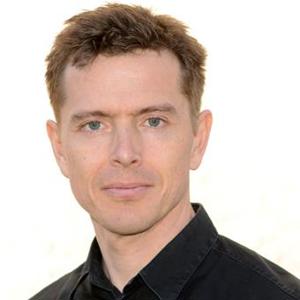
Dr. Kirill Nikitin is a Research Fellow at the School of Chemistry, University College Dublin (UCD), where he has been contributing to interdisciplinary research since June 2005. His work spans organic, supramolecular, and organometallic chemistry with a focus on reaction mechanisms and molecular systems. At UCD, he teaches multiple chemistry courses including 'Organic Chemistry for Chemical Engineers' and 'Equilibrium and Kinetics' for engineering students. Dr. Nikitin's educational background includes: PhD in Chemistry from Lomonosov Moscow State University His research interests focus on reaction mechanisms, stereoselectivity, molecular machines, and dynamics of smart molecular systems. He investigates rotaxanes, pseudorotaxanes, phosphorous compounds, and ferrocene derivatives including organometallic therapeutic agents. His current research emphasizes P-sustainability, green chemistry, and facilitating the circular economy to preserve phosphorus resources through two main approaches: developing commercially viable synthetic methods that minimize use of elemental phosphorus and creating new methods for phosphorus extraction from natural ores and waste streams. Analysis of Dr. Nikitin's recent publications reveals a strong focus on phosphorus chemistry, particularly exploring novel synthetic methodologies involving phosphonium salts and investigating stereochemical dynamics. His work bridges fundamental mechanistic studies with practical applications in green chemistry and sustainable resource management. The publications demonstrate expertise in NMR spectroscopy for elucidating reaction mechanisms and a consistent interest in developing more environmentally friendly chemical processes. Dr. Nikitin has extensive teaching experience at UCD, having redesigned multiple courses and developed new teaching materials. His teaching philosophy emphasizes engagement through real-world examples, revisiting content to combat the forgetting curve, and utilizing practical laboratory demonstrations as essential learning platforms. He has taught courses for chemical engineering students, biomolecules chemistry, instrumental analysis, and principles of scientific inquiry.