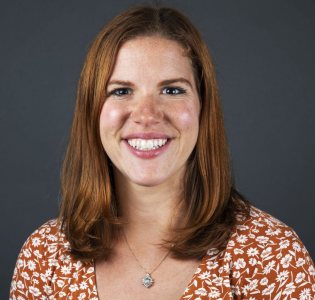
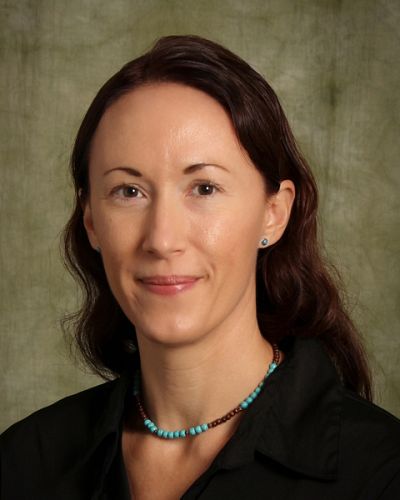
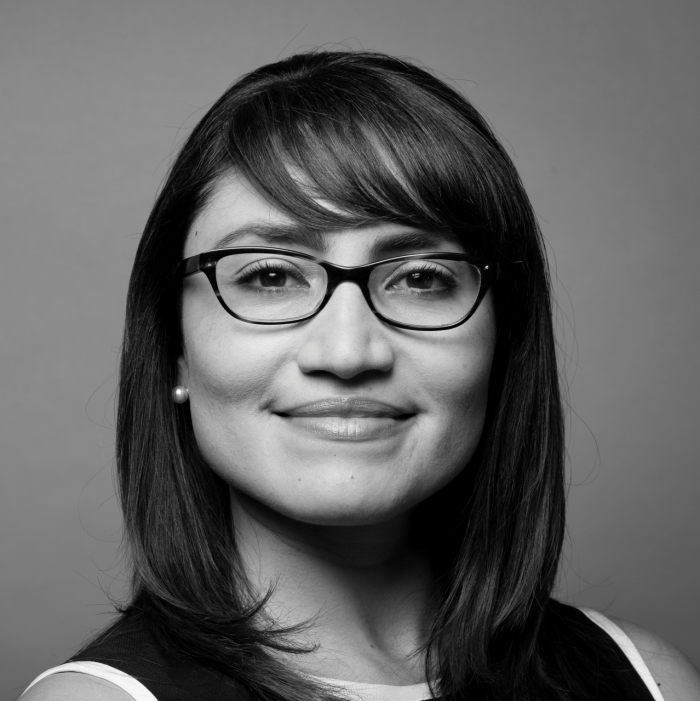
Stephanie M. Pridgeon is an Associate Professor of Hispanic Studies and Department Chair at Bates College. Her research focuses on 20th- and 21st-century Latin American film and literature, with an emphasis on intersections of race, ethnicity, gender, religion, and politics. She holds a Ph.D. from Emory University. Her first book, *Revolutionary Visions: Jewish Life and Politics in Latin American Film* (University of Toronto Press), received Honorable Mention from the LASA Visual Culture Studies section. Her second book, *Absorption Narratives: Jewishness, Blackness, and Indigeneity in the Cultural Imaginary of the Americas*, was published in 2025. Current research includes analyzing visual imagery of the Mexican Revolution in literature. Pridgeon’s scholarship spans diverse topics such as Jewish-Indigenous literary interactions, queer ethnic rite narratives, and documentary film politics. She contributes to public discourse through opinion pieces like her 2024 analysis on Jewish political leadership in North America. Key Expertise: Latin American cinema, cultural hybridity, memory studies, feminist theory, and Marxist analysis. Recent Work: Leading projects on transnational Jewish narratives and post-revolutionary imagery.
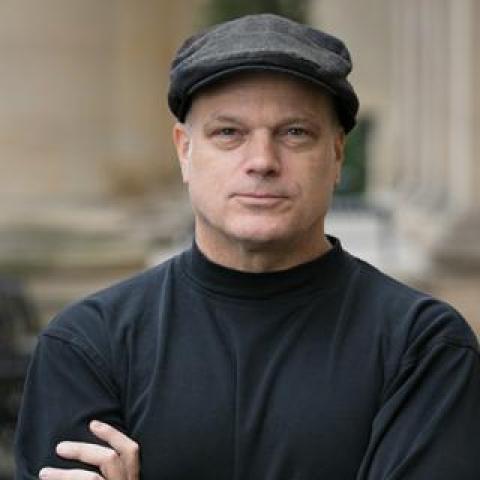
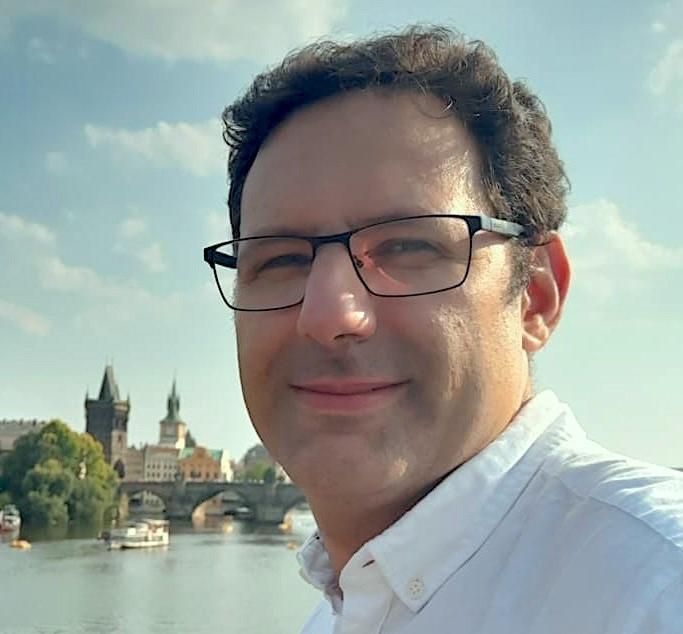
Raymond B. Craib serves as the Marie Underhill Noll Professor of History and Associate Chair at Cornell University, where he holds core faculty appointments in the Latin American and Caribbean Studies (LACS) program and serves on the LACS Steering Committee. His interdisciplinary work bridges historical scholarship with critical geography and political theory, focusing on spatial dimensions of power and resistance. His academic trajectory includes a BA in History from Eastern Michigan University (1990), an MA in Latin American Studies from the University of New Mexico (1994), and a PhD in History from Yale University (2001). Eastern Michigan University: BA History (1990) University of New Mexico: MA Latin American Studies (1994) Yale University: PhD History (2001) Craib's research interrogates the intersections of space, politics, and everyday practice through frameworks of critical geography, cartography, and radical political subjectivity. His scholarship spans Cultural History, Social History, Comparative and Transnational History, Empires and Colonialism, Historical Geography, and Political Thought, with particular emphasis on Latin America's global connections. He challenges transnational historical orthodoxy by centering the immediacy of place while maintaining global contextual awareness, especially regarding anarchist and leftist movements. His publications reveal a sustained engagement with libertarian and anarchist experiments across the 20th-21st centuries, examining how spatial imaginaries shape political projects from interwar Chile to contemporary Silicon Valley utopianism. Craib's work consistently analyzes the tension between state-centric cartographic control and fugitive landscapes of resistance, connecting historical case studies to modern phenomena like seasteading and digital colonialism. Scientific recognition includes: Global Public Voices fellow (2020-2021) Graduate and Professional Teaching Prize As an active educator and researcher, Craib mentors graduate students in historical methodology and supervises theses exploring spatial history and radical politics. His collaborative projects, such as the 2020-21 fellowship with José Ragas of Universidad Católica (Chile), demonstrate international scholarly engagement. Craib maintains deep institutional connections across Cornell's interdisciplinary landscape, contributing to the Latina/o Studies Program and Romance Studies department while leading innovative courses like 'Starting Your Own Country: From Utopia to the Network State.' His research methodology combines extensive multi-archival work across Latin America, the Caribbean, and Pacific Islands with critical theoretical frameworks.
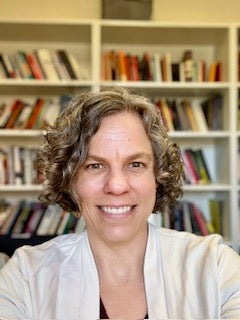
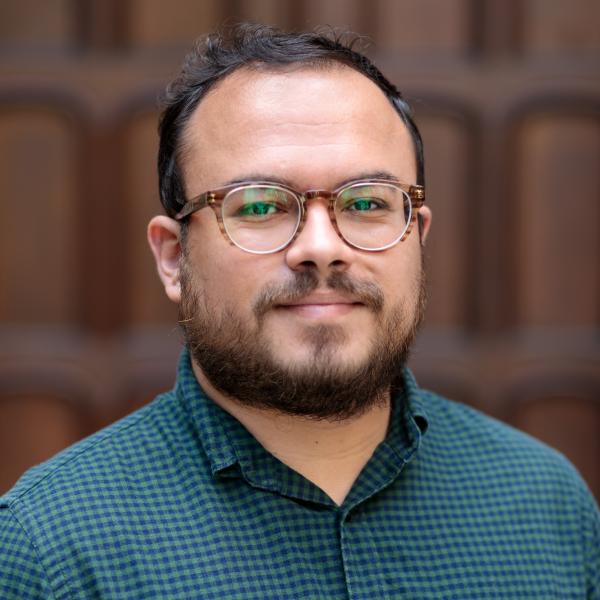
George Palacios, Ph.D., is an Associate Professor of Spanish in the Department of Languages at Clemson University's College of Arts and Humanities. His work focuses on racialization and multiculturalism in Latin American nation-states through an Afro-diasporic lens, examining socio-political mobilizations and cultural expressions reshaping identities across Latin America and the Global South. Education: Ph.D. in Spanish from the University of Pittsburgh (2013); M.A. in Spanish from Purdue University (2004). Courses taught include Hispanic Literary Texts, Latin American Cultural Studies, and Spanish Language Immersion programs. Research Interests: Afro-Latin America, Colombian and Brazilian Literatures, US-Latin American Relations, and Global South Cultural Dynamics. He has published extensively on Afro-Colombian intellectual figures like Manuel Zapata Olivella, earning the 2021 Best Book Award from the Asociación de Colombianistas and the 2022 Clemson University Research Award. Articles and Books: His 2020 monograph Manuel Zapata Olivella (1920-2004) analyzes Zapata Olivella's radical political thought. Recent works critique mestizaje narratives and explore Blackness in colonial contexts. Articles appear in Revista de Estudios Colombianos , PALARA , and Escritos . Awards: Recognized for scholarly excellence in Afro-Latin American studies, including awards highlighting his contributions to decolonial theory and cultural critique. Professional Activities: Maintains an active research profile via Google Scholar (FTvxUjgAAAAJ) and engages in international academic collaborations.
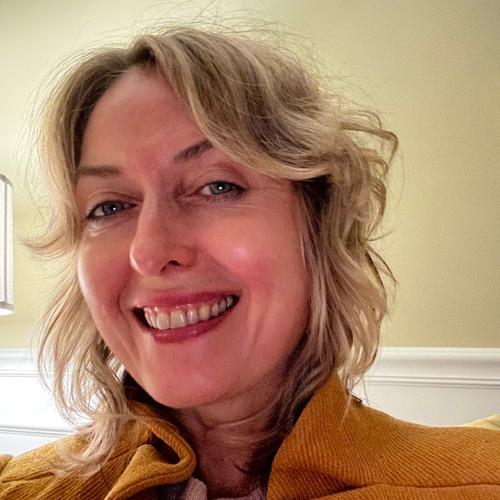
Lanie Millar is an Associate Professor of Spanish and Portuguese in the School of Global Studies and Languages at the University of Oregon, with affiliations across multiple academic units including African Studies, Black Studies, Comparative Literature, IRES, Portuguese, and Romance Languages. She teaches courses in Spanish and Portuguese literature with a focus on the Global South, Caribbean, Latin American, and African contexts. Her educational background includes: Ph.D. in Comparative Literature, The University of Texas at Austin (2011) M.A. in Spanish, Middlebury College (2003) B.A. in English and Spanish, Baylor University (2002) Millar is a comparative scholar of the Global South working in Spanish and Portuguese, with particular expertise in the Luso-African-Brazilian world and the Caribbean. Her research focuses on South-South comparison and transnational solidarity networks, drawing from literary and cultural studies, postcolonial studies, and theories of racialization. She has made significant contributions to understanding the poetics of disappointment in Cuban and Angolan narratives after the Cold War, as well as examining feminist solidarities and revolutionary masculinities in cultural memories of African empires. Her work demonstrates how literature from the Global South creates new formal and affective relationships to histories of revolution, decolonization, and racialization. Millar's scholarly output reveals consistent engagement with revolutionary narratives across the South Atlantic, particularly examining connections between Cuba, Angola, Brazil, and Mozambique. Her work increasingly focuses on gender dimensions within postcolonial contexts while maintaining a strong emphasis on literary form as political expression. The trajectory of her publications shows a deepening exploration of transnational solidarity networks and the cultural dimensions of decolonization movements across the Global South. Millar has received research support from prestigious institutions including the Kluge Center at the U.S. Library of Congress and the Luso-American Development Foundation/Arquivo Nacional Torre do Tombo in Lisbon, Portugal. Her 2024 translation of Mário Pinto de Andrade's works represents a significant contribution to making foundational African decolonization thought accessible to English-speaking audiences. As an educator, Millar teaches a diverse range of courses including Caribbean Crossings, Theorizing the Plantation, Runaways Rebellions and Revolutions in the Black Atlantic, and Afro-Latin American Literature. Her teaching portfolio demonstrates a commitment to interdisciplinary approaches that connect literary studies with broader questions of race, empire, and decolonization. She has developed specialized courses examining Hispanic cultures through literature, narrative techniques, and the Chinese diaspora in Latin America, reflecting her broad scholarly interests and multilingual capabilities in Spanish and Portuguese.
Chisu Teresa Ko is Associate Professor and Department Chair of Modern Languages at Ursinus College. She holds a Ph.D. from Columbia University and teaches Spanish language courses at all levels alongside Latin American Studies courses in English, including SPAN 201 (Conversation and Composition), SPAN 340 (Racial Discourses in Argentina), LAS 200 (Introduction to Latin American Studies), and interdisciplinary offerings like CIE 200 (Common Intellectual Experience). Her research specializes in 19th- and 20th-century Latin American literary and cultural studies, with emphases on: Race, ethnicity, and multicultural identity formation Historical and contemporary racial discourses in Argentina Asian diaspora communities in Latin America Afro-Argentine cultural production Criollo Popular Theater traditions Her scholarship—including the forthcoming book Argentina: Race in a Raceless Nation —consistently examines intersections of national identity, racial representation, and transnational connections, with recent work expanding into Afro-Argentine historical documentation and Korean-Argentine cinematic narratives. Awards and fellowships include: 2020 ACLS Fellowship (American Council of Learned Societies) 2021 UMBC Inclusion Imperative Visiting Faculty Fellowship
Inela Selimovic is an Associate Professor of Spanish and Portuguese at Wellesley College. Her research and teaching center on 20th-21st century Latin American literature and cinema , with a focus on Argentine women filmmakers , gender politics , cultural memory , and affect theory . Education: B.A., Sewanee: The University of the South M.A. and Ph.D., University of Kentucky Research Interests explore intersections of affect and emotion in Latin American cinema , particularly works by Albertina Carri , Lucrecia Martel , and Paula Markovitch . Her studies highlight political dissent , multisensorial storytelling , and marginalized communities in Argentine contexts. Article Trends demonstrate a trajectory from 2007 to 2023 , emphasizing intermediality , gendered trauma , and post-dictatorship narratives . Collaborative projects with scholars across UK , Holland , and Latin America expand her interdisciplinary impact. Service Roles include: Chair, International Study Committee (2020-2021, 2024-2025) Casa Cervantes Faculty Advisor/Director (2019-2021) Albright Faculty Research Affiliate (2025-2026) Contributor to Fulbright Committee (2020-present) Human Rights Projects have engaged organizations like the United Nations Security Council and ICTY , influencing her interdisciplinary research on memory and marginality .
Cheri Robinson is a Lecturer in the Department of Romance Languages and Literatures at Binghamton University. Her research spans transnational and interdisciplinary approaches to cultural studies, film, and literature in 20th and 21st-century Latin America, with additional focus on borderlands theory, child/adolescent protagonists in trauma narratives, and intersections between Holocaust memory and Latin American contexts. PhD in Hispanic Languages and Literatures (UCLA) MA in Spanish Literature (UCLA) Honors BA in French and International Studies (Oregon State University) Her publications explore themes of memory, political resistance, and trauma through cinematic and literary analysis, particularly in Argentine and Caribbean contexts. Recent articles examine documentary filmmaking, urban violence, and pedagogical uses of media. Civil Dialogue Teaching Fellow (2024-2025, inaugural cohort), Center for Civic Engagement She teaches courses on Spanish language, Latin American culture, and interdisciplinary topics at Binghamton University.
Pablo Larreátegui Plaza is an Adjunct Professor at the George Washington University's Columbian College of Arts and Sciences, Department RGSLL. He holds a Ph.D. (Dr. Phil.) in Latin-American Studies from Freie Universität Berlin (Germany) and a Master's in Cultural Studies with a focus on Hispano-American Literature from Universidad Andina Simón Bolívar (Ecuador). His research emphasizes transnational literatures, ekphrasis, postmodernity in Latin America, and contemporary Ecuadorian literature. Before joining GW, he taught at Otto-Friedrich-Universität Bamberg (Germany), VHS Bamberg-Stadt (Germany), and Universidad de las Américas (Ecuador). His publications include La poética de lo flotante de Leonardo Valencia (2022) and Entre la memoria y el olvido. Literaturas y postmodernidad en América Latina (2013), with articles featured in Czech Republic, Italy, and Ecuador. No specific grants, awards, or lab affiliations are mentioned in the provided texts. His academic work spans interdisciplinary literary analysis with a focus on visual and textual intersections in modern Latin American contexts.
Jonathan P. Eburne is a Professor of Comparative Literature, English, and French and Francophone Studies at Pennsylvania State University, serving as Director of Undergraduate Studies in Comparative Literature. He holds a Ph.D. from the University of Pennsylvania and an A.B. from Dartmouth College. His research explores experimental artistic movements, 20th/21st-century literature, transnational intellectual relations, and literary/cultural theory. He is author of Outsider Theory (2018), which won the MLA’s James Russell Lowell Prize, and Surrealism and the Art of Crime (2008). Eburne co-edits books such as Leonora Carrington and the International Avant-Garde (2017) and serves as series editor for 'Refiguring Modernism' and 'International Surrealism.' His editorial roles include founding co-editor of ASAP/Journal and former President of ASAP and ISSS. He collaborates on interdisciplinary projects, including the nonprofit bookstore The Print Factory. Key awards include the 2020 James Russell Lowell Prize. His work bridges avant-garde studies, cultural theory, and surrealist scholarship, emphasizing speculative inquiry and marginalized intellectual traditions.
Andrea Fanta serves as an Assistant Professor of Spanish in the Department of Modern Languages at Florida International University (FIU), specializing in Contemporary Latin American literature and culture with a distinct focus on Colombian cultural production from the late 20th century to the present. Education: Ph.D. from University of Michigan, Ann Arbor (2008) M.A. from Louisiana State University (2002) B.S. from Louisiana State University (1998) B.A. from Universidad de los Andes, Colombia (1996) Her research centers on violence, memory, and abandonment in Colombian literary and visual narratives, examining works by authors like Santiago Gamboa and Héctor Abad Faciolince through interdisciplinary lenses of cultural studies and critical theory. She investigates how spatial dynamics, temporal representations, and socio-political trauma manifest in contemporary Hispanic fiction. Analysis of Fanta's publications from 2001-2018 reveals an evolution from regional Antioquian literary studies to expansive analyses of Colombia's cultural responses to conflict. Her work consistently bridges literary criticism with post-conflict cultural theory, highlighting narrative strategies for processing violence across visual and textual media in the Hispanic world. Scientific Awards No scientific awards are documented in available sources. Advising and Grants Information on academic advising activities and research grant funding is not provided in the current documentation.
Beth Green-Nagle is an Associate Professor of Spanish and Spanish Program Coordinator at Northeastern State University's College of Liberal Arts. She has taught Spanish language and literature courses since 2012, with affiliations to the Religious Society of Friends through Friends World Committee for Consultation. Her academic background includes a PhD in Spanish (University of Oklahoma, 2016), MA in Hispanic Literature (UNC Chapel Hill, 1996), and BA in Spanish (Hendrix College, 1993). PhD: Spanish, University of Oklahoma (2016) MA: Hispanic Literature, University of North Carolina at Chapel Hill (1996) BA: Spanish, Hendrix College (1993) Research focuses on poetry by women authors, maternal themes, and feminist studies in Spanish and Latin-American contexts. She explores intersections of gender, education, and creative subjectivity in literature. Her dissertation analyzed Concha Méndez's Niño y sombras . She actively promotes international understanding through Quaker initiatives. No recent articles listed; primary scholarly contribution appears to be her doctoral work and ongoing research in gender studies and Hispanic literature.
Eduardo Leão is an Assistant Instructional Professor in Spanish at the University of Chicago, affiliated with the Department of Hispanic and Luso-Brazilian Studies. He teaches courses in Spanish, Portuguese, and English as a Foreign Language, emphasizing language acquisition and cultural immersion. His office is located at Gates-Blake 222B, and he holds regular office hours on Mondays, Wednesdays, and Fridays from 3:30 to 4:30 p.m. Eduardo Leão earned a degree in Portuguese from the Universidade do Estado do Amazonas in Brazil and completed his Ph.D. in Hispanic and Luso-Brazilian Studies at the University of Chicago. His academic journey intertwines multiple linguistic and cultural domains, reflecting his expertise in transnational literature and education. His research interests center on Latin American contemporary literature, with a focus on science fiction and Amazonian studies. These areas explore themes such as cultural identity, environmental narratives, and socio-political critiques in the region. His work bridges disciplinary boundaries, engaging with literature, cultural studies, and environmental analysis. Recent courses include SPAN 10100 Beginning Elementary Spanish I (Autumn 2024) SPAN 10300 Beginning Elementary Spanish III (Winter 2023, Spring 2023, Spring 2024, Winter 2025) SPAN 20100 Language, History, and Culture I (Winter 2025) SPAN 21955 Latin American Literatures and Cultures: 20th and 21st Centuries (Winter 2023, Autumn 2023) PORT 23424 Building a Nation: Brazilian Culture from Modernism to the Present (Winter 2024) While no scientific awards are explicitly listed, his scholarly contributions highlight innovative approaches to literary analysis and cultural studies. His teaching and research reflect a commitment to interdisciplinary education and the exploration of underrepresented narratives in Latin America.
Gema Kloppe-Santamaría is an Associate Research Professor of Latin American History at George Washington University, specializing in violence, crime, religion, and gender in 20th and 21st century Mexico and Central America. She holds affiliations with the Woodrow Wilson International Center for Scholars and Noria Research’s Mexico & Central America Program. Her work bridges historical analysis with contemporary policy, focusing on how state institutions and societal norms shape perceptions of justice and violence. Education: Ph.D. in Social Research from The New School (2016). Her research explores: Lynchings as manifestations of state-citizen tensions Religious influences on violence legitimacy Gender dynamics in crime and security Cross-border gang networks Key publications include In the Vortex of Violence (2020), analyzing post-revolutionary Mexico's lynching culture, and co-authored projects on comparative violence in Mexico and Central America. Her current projects investigate religious violence legitimacy in Mexico and transnational crime dynamics. Awards: 2022 LASA Mexico Section Best Article 2022 CLAH Book Prize Honorable Mention 2021 Mellon Emerging Faculty Leaders Award Harry Frank Guggenheim Distinguished Scholar Award (2020) Grants and collaborations include the David Rockefeller Center for Latin American Studies and the Kellogg Institute for International Studies. Her work appears in Foreign Affairs , Harvard ReVista , and other outlets.
Delia Solomons is an Associate Professor and Program Director of Art History at Drexel University’s Westphal College of Media Arts & Design. Her research examines intersections between exhibition practices, Cold War politics, transnational exchange, and visual culture across the U.S. and Latin America in the 20th and 21st centuries. She has authored significant works including her 2023 book Cold War in the White Cube , which analyzes U.S. institutional exhibitions of Latin American art during inter-American tensions. PhD, MA, and BA in Art History (Institute of Fine Arts, NYU/Washington University in St. Louis) Solomons’ research explores themes like monument critique , gendered visual narratives , and U.S.-Latin American cultural diplomacy , with a focus on artists such as Marisol. She investigates how art constructs national and transnational imaginaries during periods of political upheaval, including the Cuban Revolution and Alliance for Progress. Her recent publications span analyses of Marisol’s sculpture The Generals , Cold War-era collecting practices at MoMA, and co-edited journals on gun representation in American visual culture. Awards include grants from the Kress Foundation and the Institute for Studies on Latin American Art . At Drexel, she teaches courses on Contemporary Art , Latin American Art , and Art and Revolution , while developing a new class on Global Pop Art .
State University of New York at New PaltzUnited States
Patricia Fitzpatrick is an Associate Professor at SUNY New Paltz, holding roles in three departments: Languages, Literatures & Cultures; Latin American and Caribbean Studies; and serving as Interim Chair of Theatre Arts. She joined SUNY New Paltz in 2007 after teaching at the University of Miami and Florida International University, with prior experience as a secondary-level Spanish teacher, department chair, and language instructor in Spain. Her academic background includes a Ph.D. from Florida International University, an M.A. from New York University in Spain, and a B.A. from SUNY Albany. Her teaching focuses on Spanish language, literature, cultures, and film, including seminar courses on 20th-21st century Peninsular literature/film and Transatlantic Studies. Research interests encompass the Spanish Avant-Garde, contemporary Peninsular poetry/theatre, mystic poetry, poetry/theatre in translation, and Spain-Latin America cultural ties. She has published a monograph and scholarly articles on Federico García Lorca’s late works, poets Ernestina de Champourcin and Antonio Gamoneda, and media portrayals of Dominican immigrants in Spain. No scientific awards are explicitly mentioned, though her extensive publications highlight scholarly contributions. Advising and grants details are not detailed in the provided text. She is involved in interdisciplinary work across departments and has held administrative roles including department chair positions.