Max Planck Institute for Empirical AestheticsGermany
Jan Jokisch is a Researcher and PhD student at the Max Planck Institute for Empirical Aesthetics in Frankfurt am Main, Germany, affiliated with the Heisenberg research group. His academic background includes a Master's in Comparative Literature from Johannes Gutenberg University Mainz and the University of Massachusetts Amherst, and a Bachelor's in Comparative Literature and Philosophy from Mainz. He has lectured in German language and literature at Argentine universities and served as a translator for the DEFA Film Library. His research focuses on drama history, quantitative and digital literary studies, and methodologies in the humanities, with current collaboration on the DFG-funded 'Forager Folklore Database (FFDB)' project. Education highlights include a thesis on 'Epistemological Horror in Literature' (2021) and a BA thesis reinterpreting Shklovsky's literary theory through Heidegger's phenomenology (2018). Jokisch has been recognized with DAAD scholarships (2019, 2021) and the Gutenberg Lehrkolleg Award (2018). He has authored and edited conference proceedings, including works on distant reading methodologies and interdisciplinary language studies. His academic work bridges computational analysis with traditional humanities, emphasizing the role of technology in literary research. Collaborations and editorial roles reflect his commitment to fostering international student scholarship and innovative research practices.
Dr. Stephan Lesker is a Researcher at the Institute for German Studies within the Faculty of Philosophy at the University of Rostock, serving as a research and teaching assistant to Prof. Dr. Lutz Hagestedt at the Chair of Modern and Contemporary Literature since April 2015. His educational background includes: Bachelor of Arts in German and Philosophy, University of Rostock (2005-2008), thesis on narrative aspects in Edgar Hilsenrath's Jossel Wassermann's Homecoming Master of Arts in German and Linguistic Communication/Communication Disorders, University of Rostock (2011), thesis on crisis experiences in Hermann Hesse and Ernst Jünger Dr. Lesker's research centers on 20th-century German literature with specialized focus on narrative theory, media staging and simulation (particularly in Rainald Goetz and Walter Kempowski), and the complex interplay between autobiography and fiction. His scholarly approach examines how literary texts negotiate historical representation and personal narrative boundaries through theoretical frameworks of simulation and mediality. Analysis of his recent publications reveals sustained engagement with German literary figures Matthias Claudius and Walter Kempowski, exploring themes of intellectual history, travel literature, and the tension between factual and fictional elements. His editorial work on the Kempowski Yearbook and contributions to Claudius scholarship demonstrate methodological consistency in examining autobiographical impulses within literary production. No scientific awards were documented. Information regarding student advising, research grants, or laboratory teams was not provided in the source materials.
Prof. Dr. Christoph U. Werner is the Chair of Iranian Studies at Otto-Friedrich-University Bamberg since 2019, following his 12-year professorship at Marburg University (2007-2019) and previous academic roles. He specializes in Iranian Studies with focus areas in social history , legal institutions , Shiite religious structures , and Persophone literary history . As a Research Dean of Humanities and Cultural Studies (2023-2025) Managing Director of the Institute of Oriental Studies (2021-2025) President of Societas Iranologica Europaea (2019-2023) , he leads major academic initiatives. His research spans Qajar-era legal contracts Waqf (endowment) systems Persian-Ottoman-Georgian historical interconnections Manuscript studies of Persian documents , often combining archival analysis with interdisciplinary approaches. Recent publications focus on 20th-century Persian cultural politics, early modern Persian-Ottoman interactions, and legal epigraphy. He collaborates extensively with institutions like the University of Oxford's Invisible East and DFG Priority Programme Transottomanica . His editorial work includes Orientalistische Literaturzeitung (2022-) Persimone blog (2022-) Bamberg University Press publications and multiple Iranian academic journals.
Zaur Gasimov is a Lecturer at Johannes Gutenberg University Mainz and currently serves as DAAD Departmental Coordinator and Co-Head at the Faculty of Economics and Administrative Sciences, Turkish-German University. He holds a habilitation in Modern History and Eastern European History, with a focus on Eastern European History, political science, and sociology. Education : B.A. in International Relations from Baku State University; M.A. from Catholic University of Eichstätt-Ingolstadt; Doctorate in Eastern European history Research : Concentrates on Russian-Turkish relations, nationalism in Eastern Europe, cultural transfer processes, and historical narratives. His habilitation thesis analyzed Polish-Turkish anti-Soviet alliances. Publications : Authored monographs on Prometheism, Azerbaijani historiography, and Russification policies. Collaborated on comparative studies of cultural transfer and Ottoman-Russian entanglements.
Prof. Ann Heylen is a Professor at the Department of Taiwan Culture, Languages and Literature (TCLL) at National Taiwan Normal University (NTNU), Taipei, Taiwan since 2008. She also serves as Executive Director of the International Taiwan Studies Center at NTNU. Holding a Ph.D. in Chinese Studies (Sinology) from Catholic University Leuven (KULeuven), her research focuses on Taiwan’s historical narration, colonial periods (Dutch and Japanese), sociolinguistics, and digital humanities. Education: Ph.D. in Chinese Studies (Sinology), Catholic University Leuven (KULeuven), Belgium Research Interests: Prof. Heylen explores Taiwan’s historical discourse through digital newspaper corpora and language planning. Her work applies Einar Haugen’s sociolinguistic matrix model to analyze Taiwanese language standardization. She also investigates 17th-century European presence in East Asia, particularly Dutch-Taiwan relations, and uses ego-documents (diaries, oral histories) to study Taiwanese national identity. Publications: Her work bridges historical analysis and modern methodologies, with recent focus on digital humanities and colonial historiography. Affiliations: Founding board member of the European Association of Taiwan Studies (EATS) Editor-in-Chief of the East Asian Journal of Popular Culture (Intellect Books) Current Projects: Monograph on Formosa media narratives in Benelux newspapers (19th-20th centuries) and 400-year Dutch-Taiwan relations commemoration studies.
Leibniz Institute for Jewish History and CultureGermany
Dr. Enrico Lucca serves as a Research Fellow at the Dubnow Institute, where he has held the position of Research Associate since January 2018. He concurrently coordinates the Research Unit 'Knowledge', the Institute's Forum, and oversees peer reviewing for the Dubnow Institute Yearbook. His academic work centers on twentieth-century European-Jewish history and thought, with specialized focus on knowledge transfer between Europe and Israel/Palestine, intellectual history, and institutional history within Jewish contexts. Lucca completed his Master's degree in Philosophy at the University of Milan in 2007, followed by doctoral studies (2009-2012) at the same institution, culminating in a dissertation titled 'A Dialectic Vision of Jewish History. Gershom Scholem and the Legacy of Messianism.' His academic training includes post-graduate specialization in Cultural Studies at Scuola Alti Studi in Modena (2009) and visiting research periods at the University of Chicago Divinity School (2009-2010) and Hebrew University of Jerusalem (2011). His research traverses European-Jewish intellectual history, Jewish cultural studies, and philosophy of religion, with particular emphasis on messianic thought, Kabbalah studies, and Hebrew literature. Lucca's scholarship frequently examines biographical and institutional frameworks that shaped Jewish thought in the twentieth century, especially through figures like Gershom Scholem, Franz Rosenzweig, and Hugo Bergmann. His methodological approach integrates cultural history with philosophical analysis to explore knowledge transmission across geographical and temporal boundaries. Analysis of his 15 most recent publications reveals consistent engagement with Central European Jewish intellectual migration to Palestine/Israel, institutional history of the Hebrew University, and critical reinterpretations of Scholem's legacy. His work demonstrates interdisciplinary breadth across history, philosophy, and literary studies, with recurring themes of linguistic identity, cultural transfer, and the interplay between mysticism and modernity in Jewish thought. No scientific awards are documented in the provided materials. While no formal students are listed, Lucca has secured significant research funding including a Gerda Henkel Foundation fellowship (2016-2017) for 'German-Jewish Knowledge and Cultural Transfer 1918–1948' and currently serves as Principal Investigator for the German Research Foundation-funded International Research Training Group 'Belongings: Jewish Material Culture in Twentieth-Century Europe and Beyond' (since 2024). Lucca actively leads the Research Unit 'Knowledge' and co-directs the International Research Training Group 'Belongings'—a tripartite collaboration between the Dubnow Institute, Leipzig University, and Hebrew University of Jerusalem—focusing on material culture approaches to Jewish history through comparative, transnational frameworks.
Robert Schumann University of Music DüsseldorfGermany
Enrique Sánchez Lansch is a Professor of Media Dramaturgy at the Institute for Music and Media at Robert Schumann University of Düsseldorf, appointed in 2018. Born in Gijón, northern Spain, and raised in Cologne, he has established himself as a prominent documentary filmmaker with a strong focus on music-related subjects. His educational background includes studies in music with a focus on singing, Romance languages, philosophy, and German studies. He completed his master's thesis on adaptation of literature into music films. After gaining professional experience in fictional series production, he pursued further studies in film and screenwriting at Columbia University and UCLA. Sánchez Lansch's research and creative interests center on the intersection of music and visual media. His work explores how musical experiences can be effectively translated to film, examining the relationship between sound and image. He has particular expertise in documenting musical institutions, historical contexts of music, and the educational aspects of musical performance. His approach combines rigorous historical research with innovative visual storytelling techniques that respect the integrity of musical performance while creating compelling cinematic narratives. His filmography reveals a consistent focus on music documentaries that bridge cultural and historical contexts. Early works focused on major musical institutions and figures, while more recent projects have expanded to examine the relationship between music and broader social, political, and cultural phenomena. His films consistently demonstrate a sophisticated understanding of both musical content and cinematic storytelling. His notable awards include: German Film Award German Documentary Film Award Bavarian Film Award German Critics' Award German Kinogilde Award Franz Hofer Prize Best Documentary Film at Los Angeles Latino International Film Festival Best Documentary Film at SEMINCI Festival de Valladolid Diapason d'Or Emmy nomination for "A Celebration for Gershwin" Sánchez Lansch has served as a mentor to young filmmakers, notably curating and presenting music short films by young talents for the Beethovenfest Bonn from 2006 to 2013. His professional activities extend beyond filmmaking to include teaching at institutions such as the dffb (German Film and Television Academy Berlin) and his current professorship at Robert Schumann University. He is an active member of both the German Film Academy and the European Film Academy, contributing to the broader film community through these organizations. As Professor of Media Dramaturgy, Sánchez Lansch contributes to the academic framework of the Institute for Music and Media, bringing his extensive professional experience to bear on the education of future media creators. His work bridges the gap between academic study and professional practice in the field of music-related visual media.
Zhao Baisheng is a Professor and Chair of the Institute of World Literature at Peking University, where he also serves as Secretary General for Cross-Cultural Studies. During Summer Semester 2005, he was a Guest Professor at Johannes Gutenberg University Mainz, affiliated with the Department of English and Linguistics. His research focuses on cross-cultural dynamics, East-West interactions, and global literary frameworks. He led a seminar titled "Cross-culturalism – Toward a World Literature and Culture" , examining themes like immigration, colonization, and globalization through works by Defoe, Eliot, Hu Shi, and others. His lecture series explored topics such as Westernization in 20th-century China, the role of Marxism in Chinese contexts, and representations of China in media. Zhao’s academic contributions include Theory of Auto/Biography (2003), analyzing auto/biographical forms in cultural contexts. His work bridges literary theory with interdisciplinary cross-cultural studies.
Irene Albers is a full Professor at Free University of Berlin's Department of Philosophy and Humanities, holding dual appointments at the Peter Szondi Institute for General and Comparative Literature and Institute for Romance Philology since 2004. She chairs both the Examination Board and Doctoral Committee for General and Comparative Literature, serves as Trustee of Studienstiftung des deutschen Volkes since 2004/05, and has been Principal Investigator for the Friedrich-Schlegel Graduate School for Literary Studies and Cluster Languages of Emotion since 2007. Her research bridges comparative literature, anthropology, and visual culture with institutional leadership spanning editorial projects and international conferences. Her educational background includes: Born in Bremen (1967) Romance Studies, Philosophy, and German Studies at Universities of Tübingen, Tours, and Konstanz M.A. from University of Konstanz (1993) Ph.D. from University of Konstanz (1999) on literature and photography in Émile Zola, Proust, and Claude Simon Albers' core research examines literary anthropology through colonial/postcolonial lenses, focusing on French literary engagement with Africa, surrealism, and literature-photography intersections. She pioneered studies on Michel Leiris' ethnological poetics and Claude Simon's photographic techniques, extending to historical emotion research (anatomy of affects, body language) and romance novella traditions. Her work consistently challenges Eurocentric literary canons through primitivism critique and heteronomy aesthetics, emphasizing textual restitution and cultural reclamation. Recent publications (2018-2025) reveal a sharp turn toward colonial restitution ethics, particularly in oral literature provenance. Articles increasingly analyze literature as colonial loot, connecting French modernism with African/Caribbean contexts through collaborative projects with anthropologists like Eléonore Devevey. This trajectory builds from earlier surrealist studies to concrete frameworks for decolonizing literary scholarship, spotlighting institutional complicity in cultural appropriation while advancing symmetrized modernity revisions. Scientific awards include: Senior Fellow and Prize Winner of the Zukunftskolleg, University of Konstanz (2009) Albers supervises master's and doctoral students through dedicated AVL colloquia while securing major research funding as Principal Investigator for Friedrich-Schlegel Graduate School (2007-present) and Cluster Languages of Emotion (2007-2012). Her current DFG-funded project 'Literature as Colonial Loot?' with Andreas Schmid pioneers philological provenance research. Earlier, she contributed to Collaborative Research Center 511 'Literature and Anthropology' (Konstanz, 1999-2002) and DFG-funded conferences on Claude Simon. She leads the DramaNet research project and co-edits the 'machina' series at transcript Verlag since 2010. As board member (2007-2009) and deputy (2008-2012) of Cluster Languages of Emotion, she coordinates Area D 'Cultural Codings of Emotions'. Her Zukunftskolleg fellowship (2012-2013) and Marcel Proust Society collaborations underscore sustained engagement with literary anthropology networks.
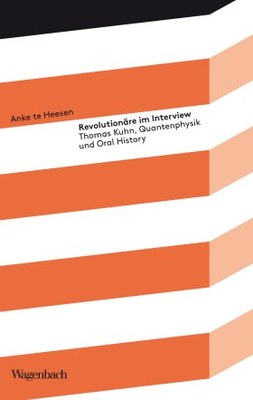
Professor Anke te Heesen is Chair of the History of Science with a focus on the history of education and the organization of knowledge in the 19th and 20th centuries at Humboldt-Universität zu Berlin. She has held this position since 2011 and is also the spokesperson (since 2024) of the DFG Center for Advanced Studies 'Applied Humanities – Politics and Genealogy,' alongside Professor Viktoria Tkaczyk. Previously, she served as Professor for Empirical Cultural Studies at the University of Tübingen (2008-2011) and founding director of the Museum of the University of Tübingen (2006-2008). Her academic career includes research positions at the Max Planck Institute for the History of Science in Berlin (1999-2006), the German Hygiene Museum Dresden (1998-1999), and the Research Center for the European Enlightenment (1996-1997). Professor te Heesen's research spans multiple interconnected fields including the history of humanities, natural history in the early modern period, museum and exhibition history, organization and notation methods of sciences, and the relationship between science and art. She has a particular interest in how knowledge is formed, organized, and presented through various material and institutional practices. Her work often examines the intersection of academic knowledge production with material culture, focusing on objects, collections, and exhibition practices as sites of knowledge formation. Her recent publications reveal a strong focus on the history of interviews as research methodology, the development of exhibition catalogs as scholarly monographs, and the material history of knowledge practices. The analysis of her 15 most recent articles shows consistent engagement with themes of materiality, the organization of knowledge, and the historical development of scholarly practices, particularly in the humanities. Her work frequently bridges historical analysis with contemporary scholarly concerns about knowledge production and dissemination. Spokesperson of the DFG Centre for Advanced Studies 'Applied Humanities: Genealogy and Politics' (since 2024) Senior Fellow, Collegium Helveticum, Zurich (WS 2023/24) Visiting Scholar, Max Planck Institute for History of Science (since 2021) Dibner Research Fellowship, Huntington Library (2020) Senior Research Fellowship, Lichtenberg Kolleg (2020) Professor te Heesen has held significant leadership roles including Ombudsperson of Humboldt University of Berlin (since April 2024) and Head of the Commission for Studies and Teaching at the Institute of History (since April 2024). She serves on multiple advisory boards including the Scientific Advisory Board of the project 'Serious Donations' at the Museum of Natural History in Berlin (since 2020), the DFG Review Board for History (2020-2024), and the Robert K. Merton Center for Science Studies at Humboldt University (since 2019). She is also a member of the editorial boards of several scholarly journals including Reports on the History of Science and History of Science and Humanities. Her work extends to museum practice and curation, with significant contributions to understanding how universities can leverage their collections to create meaningful educational experiences that connect historical context with contemporary research. She has initiated important publication series including 'Sonderdruck' (since 2016) and 'Minima Literatur- und Wissensgeschichte kleiner Formen' (since 2020).
Sergiusz Michalski is a Professor at the Institute of Art History within the Faculty of Philosophy at the University of Tübingen, where he has held his position since 2001. Previously, he served as Managing Director of the Art History Institute at TU Braunschweig from 1996-2001 and completed his Habilitation at Goethe University Frankfurt in 1995. His distinguished academic career spans multiple European institutions including universities in Munich, Leipzig, Frankfurt, Kiel, Fribourg, Zurich, and Torun. Michalski's research focuses encompass Reformation and Art, Mannerism, 16th and 17th century Dutch and Flemish painting, Art theory, 18th century French painting, 20th century art, Public monuments, and Methodological questions in art history. His scholarly output includes approximately 270 publications with notable books such as 'The Reformation and the Visual Arts' (1992), 'Public Monuments' (1998), 'L'art de l'Europe Centrale' (2008), and 'Einführung in die Kunstgeschichte' (2015). His recent publications demonstrate continued engagement with contemporary issues in art history, particularly in public monument discourse, digital methodologies, and Central European art traditions. Michalski has edited several prominent art history journals including Ars Artibus et Historiae, Folia Historiae Artium, and Ikonotheka. Member of Royal Swedish Academy for Literature and Humanities Member of Polish Academy for Sciences and Arts Member of Göttingen Academy of Sciences Member of Academia Europaea / The Academy of Europe London Member of Latvian Academy of Sciences Member of Council of Experts of European Science Foundation Michalski maintains an active research profile with recent publications addressing digital methodologies in art history, contemporary monument discourse, and Central European art traditions. His international scholarly network is reflected in his editorial roles and academy memberships across Europe.
Christine Gerhardt is a Full Professor of American Literature and Culture at the University of Bamberg, Faculty of Humanities and Cultural Studies, Department of English and American Studies. She has held this position since October 2010 after serving as Director of the German-American Institute / Carl Schurz House in Freiburg (2008-2010) and as Acting Professor for North American Literature at the University of Freiburg (2008). She declined a W3 professorship at the University of Augsburg in 2017. Her research focuses on 19th and 20th/21st-Century American Literature with specializations in Ecocriticism, Literature of Migration and Mobility, Walt Whitman and Emily Dickinson studies, African American Literature, and Literature of the American South. Her recent publications demonstrate a strong engagement with environmental imagination, mobility studies, and the intersection of nature writing with cultural history. She has edited significant works including The American Novel of the Nineteenth Century (2017) and co-edited the special issue Environmental Imagination on the Move (2017). Professor Gerhardt has received numerous honors including the 2015 CHOICE Award for A Place for Humility: Whitman, Dickinson, and the Natural World and the Harris Distinguished Professorship at Dartmouth College (2015). She holds memberships in several professional associations including the Emily Dickinson International Society, Transnational Walt Whitman Association, and American Studies Association. Her teaching portfolio includes courses on American Literature I & II, Baldwin, The American Civil War, Presidential Elections, Walt Whitman, Toni Morrison, Herman Melville's Moby-Dick , Emily Dickinson, and various seminars on nature, environment, and contemporary American literature. She has organized numerous conferences including the International Conference on 'The Environment and Human Migration' (2016) and the Symposium on 'Nature – Mobility – Literature' (2014).
Konstantin Voigt, Professor of Musicology II , serves at the University of Würzburg within the Faculty of Philosophy and Institute of Music Research. His research spans medieval Latin song traditions, music theory, notation systems, and digital humanities applications. He also explores 20th-century composers like Arnold Schoenberg and the reception of medieval music in popular culture. Current: Chair of Musicology II, University of Würzburg (2024–) Previous: Tenure-track Professor, University of Freiburg (2020–2024) Education: PhD (Würzburg), MA (Erlangen-Nürnberg), Musicology & Art History Voigt's research bridges premodern music history with digital methodologies, focusing on: Medieval Latin song structures (9th–13th centuries) Development of musical notation and visualization Digital editions as tools for manuscript analysis Intermedial relationships in postmodern composition Stefan George’s poetry in Schoenberg’s works His recent publications analyze scribal practices in Paris 1139 manuscripts and digital approaches to monophonic music. He co-leads the Weave Lead project on French music reception in Central Europe before 1350 and contributes to the Corpus monodicum digital edition. Collaborations include PD Dr. Hana Vlhova-Wörner (Prague) and institutions like the Schola Cantorum Basiliensis.
Prof. Benedikt Stuchtey is a Professor of Modern History (19th and 20th century) at Philipps-Universität Marburg, where he also served as Dean of the Department of History and Cultural Studies (2015–2018). He leads Subproject C08 in the CRC/Transregio 138 'Dynamics of Security', focusing on 'Security and Empire' in colonial British spaces (1780–1920). His research interests span comparative imperialism, global history, historiography, knowledge transfer, and family history since the 19th century. Education: Studies in philosophy, history, and German language/literature at the Universities of Münster, Trinity College Dublin, and Freiburg. Research emphasizes transnational imperial dynamics and colonial governance structures. His recent work explores security mechanisms in colonial contexts and reconfigurations of imperialism theories. Awards & Fellowships: 2022 Philipps-Universität Marburg Award for excellent doctoral supervision 2019 Visiting Fellowship in Global History (LMU Munich) 2018 Visiting Fellowships at University of Cambridge and Forschungskolleg 'Human Sciences' Leadership & Memberships: Member of Senate and Academic Committees at Philipps-Universität Scientific Advisory Board member for ERC (SH6), Alexander von Humboldt Foundation, and Swiss National Science Foundation Board member of the Merian Centre for Advanced Studies in the Maghreb He co-founded research networks like Re-Configurations and holds editorial roles in journals such as European Review of History and Schweizerische Zeitschrift für Geschichte.
Dr. Jan Andres is a faculty member at the University of Bielefeld's Faculty of Linguistics and Literary Studies, specializing in Literary Studies, Romance Studies and Latin. He serves as Dean of Studies, Chairman of the Academic Advisory Board, and has multiple administrative roles including representation for students with disabilities and contact point for disadvantage compensation. His office is located in UHG D4-120 with office hours typically held on Thursdays from 2:30 p.m. to 4 p.m. during lecture periods. Dr. Andres's research focuses on German literary studies with particular expertise in the Stefan George Circle, modern German literature, and cultural criticism. His work explores the intersections of literature, politics, and aesthetics across the 19th and 20th centuries, examining how literary traditions shape and are shaped by historical contexts. He has published extensively on German intellectual history with special attention to aesthetic conservatism, literary networks, and the relationship between literature and political thought. His recent publications (2022-2024) demonstrate continued scholarly engagement with German literary traditions while addressing contemporary concerns such as the Anthropocene in poetry and the concept of trigger warnings in literature. These works maintain his longstanding focus on literary analysis while expanding into new theoretical frameworks that connect historical literary practices with current cultural debates. His research shows remarkable continuity in examining the Stefan George Circle alongside evolving interests in modern poetic expression and contemporary literary criticism. As Dean of Studies and academic leader, Dr. Andres oversees curriculum development and student advising within his department. His administrative roles reflect his commitment to educational excellence and inclusive practices, particularly through his dedicated work supporting students with disabilities and managing disadvantage compensation. His module responsibilities include German-language literature, English-language literature, and specialized philological studies in German and American studies.