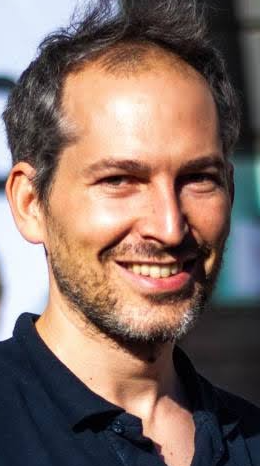
Quentin Bramas is an Associate Professor at the University of Strasbourg, France, and a member of the ICUBE Laboratory in the Networks Team. He is currently (2023-2024) affiliated with LIP6 Laboratory in Paris at 50% capacity. His research focuses on Autonomous Mobile Robots , Distributed Ledgers , Wireless Sensor Networks , and Dynamic Graphs . Education : PhD in Computer Science from LIP6, Paris (2016), under Sébastien Tixeuil; Mathematics from University of Clermont-Ferrand; Computer Science from University of Paris 5. Academic Roles : Defended HDR thesis in June 2023; Coordinator of ANR TSIA TURFU-Net (2025-2029) and ANR JCJC BASE-BLOC (2023-2027). Conference Leadership : Held roles as PC member, PC co-chair, and General Chair across AlgoTel, ADHOC-NOW, Tokenomics, and OPODIS conferences (2018-2025). Advising : Supervised multiple PhD, Master’s, and L2-L3-M1 students, including Jean-Romain Luttringer, Jean-Philippe Abegg, and Amina Moalla. Tools & Software : Developed open-source tools like FileHanger (Swift), TexItEasy (LaTeX editor), and Pure Password Manager.
Alex Lallement is an Associate Professor at the University of Strasbourg , affiliated with the MIV department and the IMAGeS team (IMages, leArning, Geometry and Statistics). His research focuses on dimensional metrology, quantitative 3D reconstruction, computer vision, polarimetric imaging, and associated image processing applications. Key contributions include: Research : Systems knowledge base for computer vision, controlled feature extraction, 3D reconstruction automation, and polarization-based analysis for transparent objects. Supervised Theses : Ammar Hannachi (in progress): Multimodal imaging and interactive planning for 3D reconstruction and dimensional metrology (co-supervised with Ernest Hirsch, Sophie Kohler). Romain Roux (2009): 3D Shape recovery of transparent objects based on polarization state of light analysis (co-supervised with Ernest Hirsch, Jihad Zallat). Redouane Khemmar (2005): Controlled extraction of image features and 3D automation of 3D reconstruction: Application to vision-based dimensional measurement (co-supervised with Ernest Hirsch). Teaching : Object-oriented programming (C++), software tools for signal processing and image, and man-machine interface (Microsoft .NET) at Telecom Physique Strasbourg for 1A and 2A students. Contact: alex.lallement@unistra.fr .
Professor Hyung Seok Kim is a distinguished academic at Sejong University, currently serving as Professor in the Department of AI and Robotics. He also holds significant administrative positions including Dean of the College of Software Convergence at Sejong University. Professor Kim leads the MINES LAB (Mobile Intelligent Embedded Systems Lab), located in Room 211, Chungmu Hall at Sejong University, where he directs research in cutting-edge AI and embedded systems technologies. Professor Kim's educational background includes: Bachelor of Engineering: Department of Electrical Engineering, Seoul National University Master of Engineering: Department of Electrical and Computer Engineering, Seoul National University Doctor of Engineering (Ph.D.): Department of Electrical and Computer Engineering, Seoul National University Professor Kim's research spans multiple domains at the intersection of artificial intelligence and embedded systems. His work focuses on AI robots, wearable AI devices, Large Language Models (LLMs), and on-device AI technologies . His research group develops innovative solutions for emotion recognition, medical imaging analysis, and IoT applications. The MINES LAB specifically targets the integration of AI with embedded systems to create efficient, low-latency solutions for real-world problems ranging from healthcare monitoring to industrial applications. Analysis of Professor Kim's recent publications reveals a strong focus on medical AI applications, federated learning for IoT networks, and multimodal emotion recognition . His work demonstrates consistent innovation in applying deep learning techniques to medical imaging (particularly ophthalmology and cardiology), developing efficient edge-AI solutions for wearable devices, and creating novel network optimization approaches for industrial IoT. The publications show a clear trajectory toward more integrated, privacy-preserving AI systems that can operate effectively on resource-constrained devices. While specific awards to Professor Kim aren't detailed in the provided information, his research group has achieved notable recognition: Dr. Song Seung-hwan, a Ph.D. candidate at the lab, received the Presidential Industrial Service Medal Professor Kim has mentored an extensive number of students throughout his career, with alumni pursuing diverse career paths at leading organizations worldwide. His former students have secured positions at major technology companies including Samsung Electronics, LG Electronics, Kakao, and Amazon, as well as academic positions at universities globally. The MINES LAB currently supports multiple graduate students, post-doctoral researchers, and research assistants working on various AI and embedded systems projects. Professor Kim's research appears to be well-funded, with connections to industry partners including Hyundai Motor Company and Samsung Electronics, though specific grant details aren't provided in the text. The MINES LAB serves as the central hub for Professor Kim's research activities, focusing on AI robots, wearable AI devices, and LLM applications. The lab maintains active collaborations with industry partners and has produced numerous commercial applications through its alumni network. Current research directions include developing low-latency emotion recognition systems, medical imaging analysis tools, and efficient network protocols for IoT applications. The lab environment appears highly collaborative, with both full-time and part-time researchers contributing to various projects across the AI and embedded systems spectrum.
Dr. Antonina Begicheva is a Lecturer and Postgraduate Student at the Faculty of Computer Science , Department of Software Engineering of the National Research University Higher School of Economics (HSE) since 2014, with 10 years of combined scientific and teaching experience. She also works as a Research Intern at the Research and Educational Laboratory of Process-Oriented Information Systems (POIS) . Master's degree in Software Engineering (2022) Current postgraduate research on Extracting readable patterns from event logs Research Interests include: Process Mining and Business Process Analysis Mathematical Modeling with Finite State Machines and Petri Nets Model discovery from event logs and data patterns Publication Trends show expertise in: Process discovery algorithms Conformance checking techniques Import substitution strategies in software Simulation models for healthcare systems Scientific Recognition Recipient of the Young Teachers Allowance (2022-2023) Member of HSE's High Professional Potential Group (personnel reserve) Featured in CPHCATI-2024 and ICID 2022 conferences Teaching Responsibilities include C# Programming (undergraduate level) Requirements Engineering across multiple campuses Software Architecture Design and Economics of Software Engineering at the Faculty of Computer Science.
Chenyang Shen is an Assistant Professor in the Department of Radiation Oncology at the University of Texas Southwestern Medical Center. He earned his B.S. from Yangzhou University and his M.S. and Ph.D. from Hong Kong Baptist University, followed by a medical physics residency at UT Southwestern. His clinical focus includes RefleXion and EROC TPOD, while his research integrates machine learning and deep learning into medical imaging, image processing, and intelligent treatment planning for radiotherapy. Education: B.S. (Yangzhou University), M.S. and Ph.D. (Hong Kong Baptist University) Dr. Shen’s research spans medical physics , AI-driven treatment optimization , and image-guided radiation therapy . His work emphasizes deep learning for dose calculation, real-time adaptive planning, and synthetic CT generation from CBCT/MRI data. Key publications highlight innovations in PET-guided liver motion tracking and AI for brachytherapy applicator digitization . He has received the ASTRO Basic/Translational Science Award for junior investigators and AAPM Best in Physics (Therapy) . His grants and collaborations focus on improving radiation dose accuracy and enabling biology-guided therapy via PET-Linac systems. Labs and teams he works with include the Division of Medical Physics and Engineering at UT Southwestern.
Mike Hazas is a Professor of Human-Computer Interaction at the Department of Information Technology , Uppsala University . He also holds a position at the Institute for Research on Conflicts of Interest in Sustainable Social Transformation/Uppsala . Research Focus: Sustainability in digital technologies, energy demand analysis, thermal comfort automation, and environmental impacts of internet services. Methodology: Combines qualitative and quantitative approaches to study socio-technical systems. Selected Recent Research Trends: His work addresses the hidden sustainability costs of digital proliferation (streaming, gaming, social networks), energy implications of domestic automation, and thermal comfort policies for net-zero transitions. Publications span journals like IEEE Pervasive Computing , Building Research & Information , and International Journal of Human-Computer Studies , with a strong focus on environmental justice in computing.
Prof. Wil van der Aalst is a full professor at RWTH Aachen University leading the Process and Data Science (PADS) group. He holds part-time affiliations with multiple institutions, including the Fraunhofer-Institut für Angewandte Informationstechnik (FIT) , Technische Universiteit Eindhoven (TU/e) , and Queensland University of Technology (QUT) . Additionally, he is a distinguished fellow of Fondazione Bruno Kessler (FBK) and serves on the Board of Governors of Tilburg University . His research focuses on process mining , leveraging business process management , Petri nets , and process modeling to analyze and optimize workflows. His work intersects with software engineering , big data , and data engineering , emphasizing the application of data science to process-aware systems. Wil van der Aalst has been recognized with numerous scientific awards, including the prestigious Alexander-von-Humboldt Professorship (2018), doctor honoris causa from Hasselt University (2012), and Distinguished University Professor title at TU/e (2013). He is an IFIP Fellow and elected member of several European academies. He has co-chaired major academic conferences such as Business Process Management , IEEE International Conference on Services Computing , and Petri Nets . His editorial contributions span journals like Business & Information Systems Engineering and IEEE Transactions on Services Computing . He advises organizations including Celonis and Fluxicon and has been cited over 100,000 times (h-index 148).
Jérôme Leroux is a Directeur de Recherche (DR CNRS) at the Laboratoire Bordelais de Recherche en Informatique (LaBRI) , affiliated with the University of Bordeaux , France. His research focuses on formal verification of infinite-state systems, vector addition systems, Presburger arithmetic, and acceleration techniques for symbolic computation. Key research themes include: Vector Addition Systems (VASS) and Petri Nets Automata-based representations for Presburger arithmetic Abstract interpretation and CEGAR frameworks Verification of asynchronous distributed systems His recent publications highlight work on acceleration techniques for convex binary relations, serialized digit automata, and regular acceleration methods for number decision diagrams. These contributions are implemented in tools like the Talence Presburger Arithmetic Suite (TAPAS) and the FAST tool for symbolic verification. Scientific awards include a Best Paper Award at TURING'100 . He has advised several Ph.D. students and postdoctoral researchers, including Alexander Heußner and Thibault Hilaire (current Ph.D. candidate). Leroux is actively involved in organizing conferences like MFCS'23 and serving on program committees for venues such as VMCAI'26 .
Piotr Hofman is an Assistant Professor at the Institute of Informatics, Faculty of Mathematics, Informatics and Mechanics , University of Warsaw. His research focuses on theoretical computer science, particularly automata theory, formal verification, and computational complexity related to systems with infinite alphabets and data constraints. PhD in Computer Science (2014) from the University of Warsaw under Sławomir Lasota. Postdoc (2013-2014) at University of Bayreuth with Wim Martens. Postdoc (2014-2016) at LSV de Cachan with Stefan Göller. His work explores algorithmic problems in automata over infinite alphabets, including one-counter nets, Petri nets with data, and unambiguous vector addition systems (VASS). Key contributions include decidability results for bisimulation and simulation problems, complexity bounds for equivalence checking, and novel techniques for reachability and coverability analysis. Recent publications address orbit-finite linear equations, Parikh's theorem for infinite alphabets, and lower bounds for coverability in pushdown VAS. He has received grants like NCN UMO-2016/21/D/ST6/01368 for algebraic invariants in data nets. He supervises research projects and collaborates with institutions in Poland, France, and India. His teaching includes concurrency theory and software engineering courses.
Andrew Schwarz is a Professor at Louisiana State University in the Stephenson Department of Entrepreneurship & Information Systems within the E. J. Ourso College of Business. He holds the Francis M. "Dud" Coates Professor of Humanities distinction and serves as MBA Online Advisor for the Flores MBA Program. His industry background includes market research for Fortune 500 firms developing advertising campaigns and forecasting models. His educational credentials include a PhD in Management Information Systems from the University of Houston (2003) and a BA in Social Psychology from Florida Atlantic University (1997). Professor Schwarz maintains exceptional research productivity, ranked in the top 1% globally for publications in premier journals. Research focuses span four interconnected domains: IT acceptance and use (post-adoption behavior, usage inhibitors), IT management (governance, boundary choice, alignment), technology implementation (multilevel diffusion, virtual worlds), and emerging technology trends . His work bridges theoretical rigor with practical business applications, particularly in healthcare IT adoption. His recent publications demonstrate consistent output in top-tier outlets including MIS Quarterly and Information Systems Research, with strong emphasis on methodological innovation (e.g., process-based acceptance models, 3C virtual world framework) and real-world impact (e.g., EMR adoption by physicians). Major recognitions include: ATLAS Award and IS World Net Challenge Award (Association for Information Systems) E. J. Ourso College Research Excellence Awards (2013, 2014) Baton Rouge Business Report "Top 40 Under 40" Invitation to MIS Camp (Association for Information Systems) Ranked top 1% globally for research productivity Professor Schwarz actively mentors MBA students as Online Advisor and leads the Mobility and Measurement Enhancement research lab, supported by Louisiana Board of Regents funding. His service includes DATA BASE journal editorship (2012-2016), AMCIS leadership (2011-2018), and current role as Co-Editor-in-Chief of International Journal of Information Management (2025). The Mobility and Measurement Enhancement lab provides students opportunities to work on funded projects, publish in top journals, and address real-world challenges in healthcare IT, enterprise architecture, and emerging technologies through interdisciplinary collaboration.
Denis Kuperberg is a CNRS researcher at LIP (Laboratoire de l'Informatique du Parallélisme), ENS Lyon, where he is part of the Plume research team. His work bridges theoretical computer science with interdisciplinary applications, particularly in systems biology. His primary research interests include automata theory, synthesis, verification, games, logics, decidability procedures, complexity, and proof theory. Kuperberg's work often explores the connections between formal methods and practical applications, as evidenced by his recent interdisciplinary publications on thermodynamic consistency of autocatalytic cycles. His research demonstrates a strong focus on both theoretical foundations and practical implementations, with several software tools developed for research purposes. Kuperberg's publication record shows a clear evolution from purely theoretical work in automata and logic toward more interdisciplinary research. His recent papers (2022-2025) demonstrate increasing engagement with biological applications while maintaining strong theoretical foundations. Key themes across his publications include history-determinism in automata, cyclic proof systems, positive fragments of logic, and applications to verification problems. Best Paper Award at ICALP 2025 (with Thomas Colcombet and Amina Doumane) Kuperberg actively supervises multiple students at various levels, including PhD candidates (Iris Magniez–Papillon, Émile Hazard, Laureline Pinault), postdoctorates (Thomas Kosc, Marc Bagnol), and numerous interns. His teaching portfolio includes advanced courses on Graphs, Machines and Logics at ENS Lyon Master 2 program, Theory of Regular Languages at EPITA Lyon, and specialized topics like Mathematical Aspects of Automata Theory. He leads the development of research software including EmergeNS (for simulating chemical reaction networks and tracking autocatalytic dynamics), Stamina and Acme (for solving decision problems from automata theory), and Electrum (a specification language analyzer). These tools demonstrate his commitment to bridging theoretical computer science with practical implementations.
Achiya Elyasaf is an Assistant Professor at the Software and Information Systems Engineering Department of Ben-Gurion University of the Negev, Israel. He received all his academic degrees in computer science from Ben-Gurion University and completed postdoctoral research in David Harel's group at the Weizmann Institute. In 2021, he co-founded Provengo Technologies, which develops software-testing solutions leveraging his expertise in software engineering and artificial intelligence. Dr. Elyasaf's research focuses on creating synergies between software engineering and artificial intelligence. He pioneered Context-Oriented Behavioral Programming, a paradigm for developing context-aware systems through natural and incremental behavior specification. His work on utilizing expert knowledge for evolving solvers to combinatorial games has been recognized as one of the most important achievements in AI gaming, mentioned alongside Deep Blue's victory over Kasparov and Watson's Jeopardy! win in Nick Bostrom's 2014 book 'Superintelligence: Paths, Dangers, Strategies'. His recent publications demonstrate strong activity in model-based testing, combinatorial sequence testing, and behavior composition. The articles reveal consistent focus on applying AI techniques to software engineering challenges, particularly in testing and verification domains, with practical implementations like the Provengo tool suite and EC-KitY framework. Dr. Elyasaf has received significant recognition for his work, including three HUMIE Awards from the Genetic and Evolutionary Computation community (Gold in 2013 and 2011, Bronze in 2009). He is actively recruiting MSc students, PhD students, and post-docs with funded positions, indicating an expanding research program at Ben-Gurion University. His GitHub profile shows active development of EC-KitY, a scikit-learn-compatible Python toolkit for evolutionary computation.
Professor Jerzy Brzeziński is a distinguished academic at Poznań University of Technology, where he serves in the Faculty of Computer Science and Telecommunications within the Institute of Computer Science. With a career spanning several decades, he has established himself as a leading researcher in distributed systems and networking, maintaining active research productivity with publications as recent as 2022. Professor Brzeziński's research interests focus on distributed systems, peer-to-peer networks, service-oriented architecture, mobile ad hoc networks, and distributed shared memory systems. His work bridges theoretical foundations with practical applications, particularly in areas like gaming platforms, secure data exchange, and reliable communication protocols. Recent publications demonstrate continued innovation in sybil-proof data exchange mechanisms and broadcast protocols for mobile networks. Analysis of his publication trends reveals an evolution from foundational work on memory systems and consistency models in the early 2000s toward more applied research in peer-to-peer systems, gaming applications, and sustainable computing in recent years. His work consistently addresses core challenges in distributed computing while adapting to emerging technological contexts. Professor Brzeziński has supervised at least 10 doctoral students throughout his career, including Andrzej Stroiński, Michał Kalewski, and Łukasz Piątkowski. His mentorship has produced significant contributions to the field, with students researching topics like Petri Net models, reliable broadcast protocols, and server synchronization. His research is characterized by strong collaborative networks, frequently working with colleagues at Poznań University of Technology and former students. This collaborative approach has resulted in numerous high-impact publications in reputable journals and conference proceedings across the distributed systems domain.
Iain Morrison is a Lecturer in Communication Design at Gray's School of Art, Robert Gordon University, where he serves as Stage 4 Coordinator for the BA (Hons) Communication Design program and provides MA Specialist Subject Tutoring. With over thirty-six years of combined commercial and academic experience in graphic design and photography, Morrison brings practical industry insights to his teaching approach. Morrison's research focuses on visual communication for sustainability, particularly through information graphics that document Scotland's path to Net Zero by 2045. His work is designed to engage secondary school students with complex environmental topics, aligning with multiple UN Sustainable Development Goals including quality education, climate action, and sustainable cities. Previously, he documented the visual history of Crathes Castle through information graphics as part of his Master's in Design. Morrison has received notable recognition including the National Trust for Scotland's Emerging Artist Award for his Master's work and Senior Fellowship of the Higher Education Academy in 2018. His conference paper 'Developing and disseminating software skills whilst making it both accessible & stimulating' earned the 'Best Paper' award at RGU's Teaching and Learning Conference. As an educator, Morrison developed the Personal Professional Development (PPD) program at Gray's School of Art, bridging academic learning with professional practice. He has presented multiple papers on teaching innovations and maintains an active role in curriculum development. His current research collaborations include work with Professor James Njuguna at the National Sub Sea Centre and Dr. Chris Freemantle at Gray's on sustainability-related visualization projects. Morrison's online presence includes his professional website at www.mozweb.co.uk and a dedicated project site for his Net Zero initiative at www.achievingnetzero.scot , showcasing his commitment to making complex sustainability concepts accessible through design.
Dr. Mohamed Ouf is an Associate Professor in the Department of Building, Civil and Environmental Engineering at Concordia University's Faculty of Engineering and Computer Science. His research focuses on integrating stochastic occupant behaviour modeling in building performance simulations and optimization of building design and operations. Dr. Ouf holds a B.Sc. in Construction Engineering from the American University in Cairo and a Ph.D. in Civil Engineering from the University of Manitoba. Prior to joining Concordia University in 2019, he was a Post-doctoral Research Fellow at Carleton University and previously worked for the Provincial Government of Manitoba on their Green Building Policy. His research interests center around occupant-building interactions, with specific focus on: Occupant-Building interactions research Building Performance Optimization Occupant-Centric Building Controls Data-Mining and Machine Learning for Building Operations Net-Zero Energy Buildings Dr. Ouf's recent publications (2018-2019) demonstrate a strong focus on occupant behavior modeling and its impact on building performance. His work spans multiple aspects of building science, from developing methods to generate occupant schedules for simulations to investigating the effect of occupant behavior on energy consumption in school spaces. The research shows a consistent theme of using data-driven approaches to optimize building operations while considering human factors. Dr. Ouf has received recognition for his work, including a Best Paper award at the IBPC conference in 2018. His publications appear in leading journals such as Building and Environment, Energy and Buildings, and the ASHRAE Journal. As an educator, Dr. Ouf teaches courses including BLDG 691 – Occupant Centric Building Design and Operation, BLDG 371 – Building Service Systems, BCEE 478 – Project Management for Construction, and BLDG 464/6851 – Project Cost Estimating. He supervises MASc and PhD students in Building Engineering. Dr. Ouf is affiliated with Concordia University's Centre for Zero Energy Building Studies and is an active member of several professional organizations including ASHRAE, IBPSA, and CSCE. He also participates in the International Energy Agency (IEA) Annex 79: Occupant-Centric Building Design and Operation.