معرفی
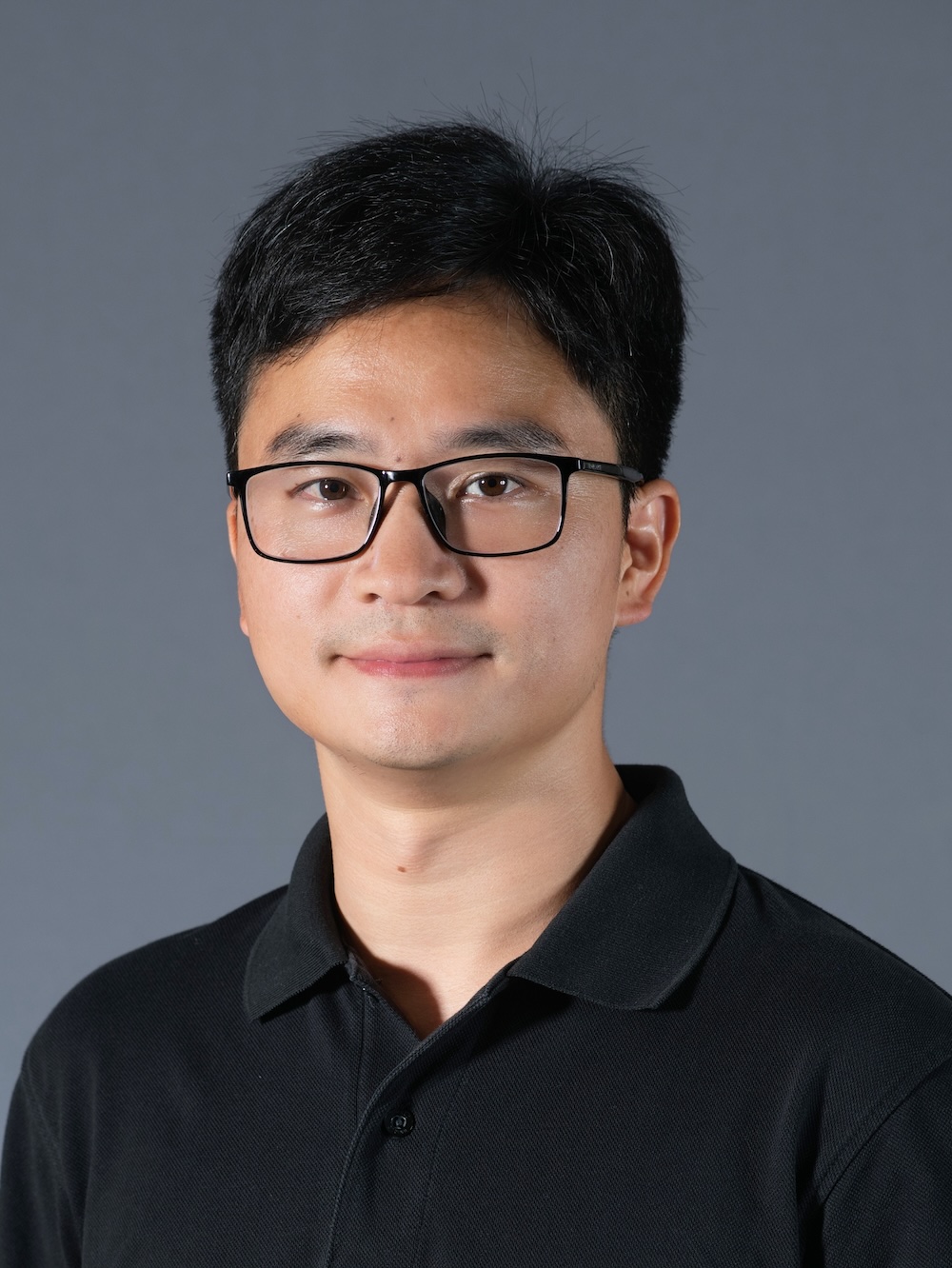
Zhizhong Han serves as an Assistant Professor in the Department of Computer Science at Wayne State University, specializing in 3D computer vision and artificial intelligence. Prior to his current position, he completed a three-year postdoctoral fellowship in the Department of Computer Science at the University of Maryland, College Park.
His academic credentials include:
- Bachelor of Engineering (B.E.) in Pattern Recognition and Intelligent Systems from Northwestern Polytechnical University (2009)
- Master of Engineering (M.E.) in Pattern Recognition and Intelligent Systems from Northwestern Polytechnical University (2012)
- Doctor of Philosophy (Ph.D.) in Pattern Recognition and Intelligent Systems from Northwestern Polytechnical University (2017)
Dr. Han's research centers on 3D Computer Vision, Digital Geometry Processing, and 3D Deep Learning, with emphasis on interpreting 3D structures through point clouds, meshes, and voxel grids. His work tackles fundamental challenges in shape recognition, segmentation, and reconstruction, often leveraging unsupervised learning frameworks to model complex 3D geometries without extensive labeled data.
His publication record reveals a concentrated research trajectory in geometric deep learning, evidenced by 10+ papers at premier venues including CVPR, ICCV, and NeurIPS. Key innovations include differentiable rendering techniques, multi-view representation learning, and novel architectures for 3D shape completion—demonstrating consistent contributions to advancing 3D scene understanding capabilities.
No scientific awards were documented in the source material.
Teaching responsibilities include graduate and undergraduate courses such as Introduction to Deep Learning (CSC4760) and specialized topics in 3D shape analysis (CSC6991), with upcoming instruction in Computer Vision (CSC4860) for Fall 2025. No student advising details or grant funding information were provided.
Research activities appear centered on algorithmic development for 3D vision tasks, though specific laboratory affiliations or collaborative teams were not mentioned in the available text.