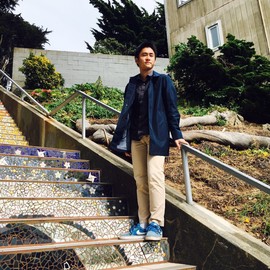
معرفی
Zhen Fang is a Lecturer at the Faculty of Engineering and Information Technology, University of Technology Sydney (UTS), and a member of the Decision Systems and e-Service Intelligence (DeSI) Research Laboratory at the Australian Artificial Intelligence Institute. He earned his PhD from UTS in 2021 and has established himself as a leading researcher in trustworthy machine learning and responsible AI, particularly in out-of-distribution detection and transfer learning.
His research interests span Transfer Learning, Statistical Learning Theory, Generalized Out-of-Distribution Learning, and Foundation Models. Dr. Fang has pioneered theory-driven approaches to out-of-distribution detection, establishing critical theoretical foundations that explain when and why OOD detection is learnable. His work bridges theoretical guarantees with practical algorithms for reliable machine learning systems.
Dr. Fang's publication record demonstrates significant impact across multiple domains. His research shows consistent progression from theoretical foundations (establishing generalization bounds for OOD detection) to practical applications (developing algorithms for domain adaptation in complex scenarios). His work frequently appears in top-tier venues including NeurIPS, ICML, ICLR, IEEE TPAMI, and JMLR, with particular strength in addressing distribution shift challenges.
- NeurIPS 2022 Outstanding Paper Award for first-author paper 'Is Out-of-Distribution Detection Learnable?'
- ARC Discovery Early Career Researcher Award recipient
- 2023 Australasian AI Emerging Researcher Award
- NeurIPS 2022 Outstanding Reviewer Award
- AJCAI 2023 Outstanding Service Award
Dr. Fang actively supervises multiple PhD and Master's students, focusing on cutting-edge problems in reliable machine learning. His collaborative network includes leading researchers from institutions worldwide, including the University of Sydney, University of Wisconsin-Madison, and Hong Kong Baptist University. His current ARC-funded project 'Transfer Learning for Reliable Data Detection in Open-set Environments' (2025-2028) continues his impactful research trajectory.