معرفی
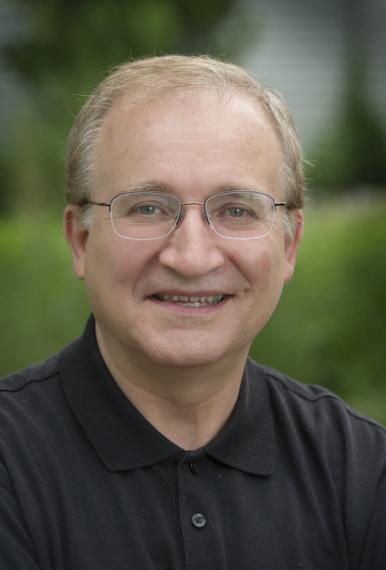
Zachary Huang is an Associate Professor in the Department of Entomology at Michigan State University (MSU), part of the College of Agriculture and Natural Resources. His work focuses on honey bee behavior and physiology, with a strong emphasis on addressing challenges like parasitic mites (Varroa destructor), pathogens (Nosema), pesticide impacts, and environmental stressors. He holds a PhD from the University of Guelph (1988) and a BS from Hunan Agricultural University (1982).
Research Interests: Huang’s lab explores how parasites, pathogens, and environmental factors stress honey bees. Key contributions include the social inhibition model explaining nurse-to-forager transitions, the non-chemical Varroa control tool 'mitzapper,' and the extension-focused website Cyberbee.net. His work on Varroa mite host preferences and Nosema infection dynamics has advanced colony management practices. He also investigates immune priming strategies to protect bees against pathogens.
Professional Experience: Huang has been at MSU since 2004, progressing from Assistant Professor (1998–2004) to his current role. Earlier, he held postdoctoral positions at UIUC and the University of Missouri-Columbia. His extension program bridges research and beekeeper needs, providing updates on varroa biology, pesticide effects, and transportation impacts.
Awards: In 2008, he received the J.I. Hambleton Award for Outstanding Research from the Eastern Apicultural Society, joining luminaries like Gene Robinson and Thomas Seeley.
Labs & Collaborations: The Huang Laboratory studies honey bee health and behavior. Notable collaborations include work on microRNA regulation of foraging behavior and epigenetic changes in olfactory learning. He also contributes to initiatives like the 2024 American Bee Research Conference proceedings.