معرفی
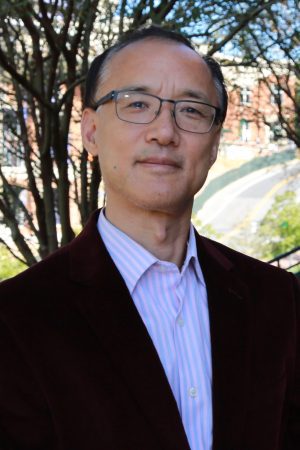
Yongge Wang is a Professor at the Department of Software and Information Systems within the College of Computing and Informatics at the University of North Carolina at Charlotte. His research spans cryptography, blockchain, post-quantum cryptography, deep learning, and secure communications. He has contributed to industry standards such as IEEE 1363.2 (SRP5) and IEEE 1363.3 (WANG-KE), as well as IETF RFC 4050 for ECDSA with XML-Signature syntax.
- Research Interests:
- Cryptography: Focused on post-quantum schemes (e.g., RLCE, polarRLCE), garbled computation, and secure authentication protocols.
- Blockchain: Led work on consensus protocols (XP for asynchronous networks), DeFi mechanisms, and censorship-resistant systems.
- Algorithmic Randomness: Pioneered LIL testing techniques for pseudorandom generators, analyzing vulnerabilities in Debian OpenSSL.
- Publications: His recent articles (2016-2024) address blockchain security, code-based cryptography, garbled circuits, and quantum-resistant algorithms, with trends emphasizing decentralized systems and secure cloud computation.
- Grants and Funding: Secured multiple NSF and UNC Charlotte grants for cybersecurity research, including projects on privacy-preserving databases and secure storage systems.
- Education: Holds a PhD in Mathematics from Heidelberg University (Germany), focusing on randomness and computational complexity.
- Teaching: Courses include Applied Cryptography, Cloud Data Storage, and Network Security, with a strong emphasis on academic integrity and hands-on projects.
- Software Tools: Developed the LIL statistical testing package for pseudorandomness, available as a Java application.
۰مقاله منتشرشده