معرفی
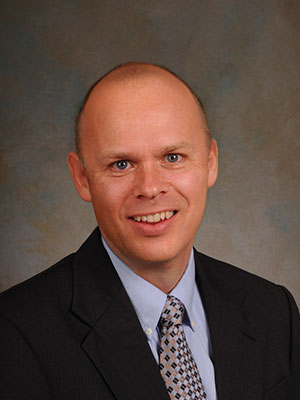
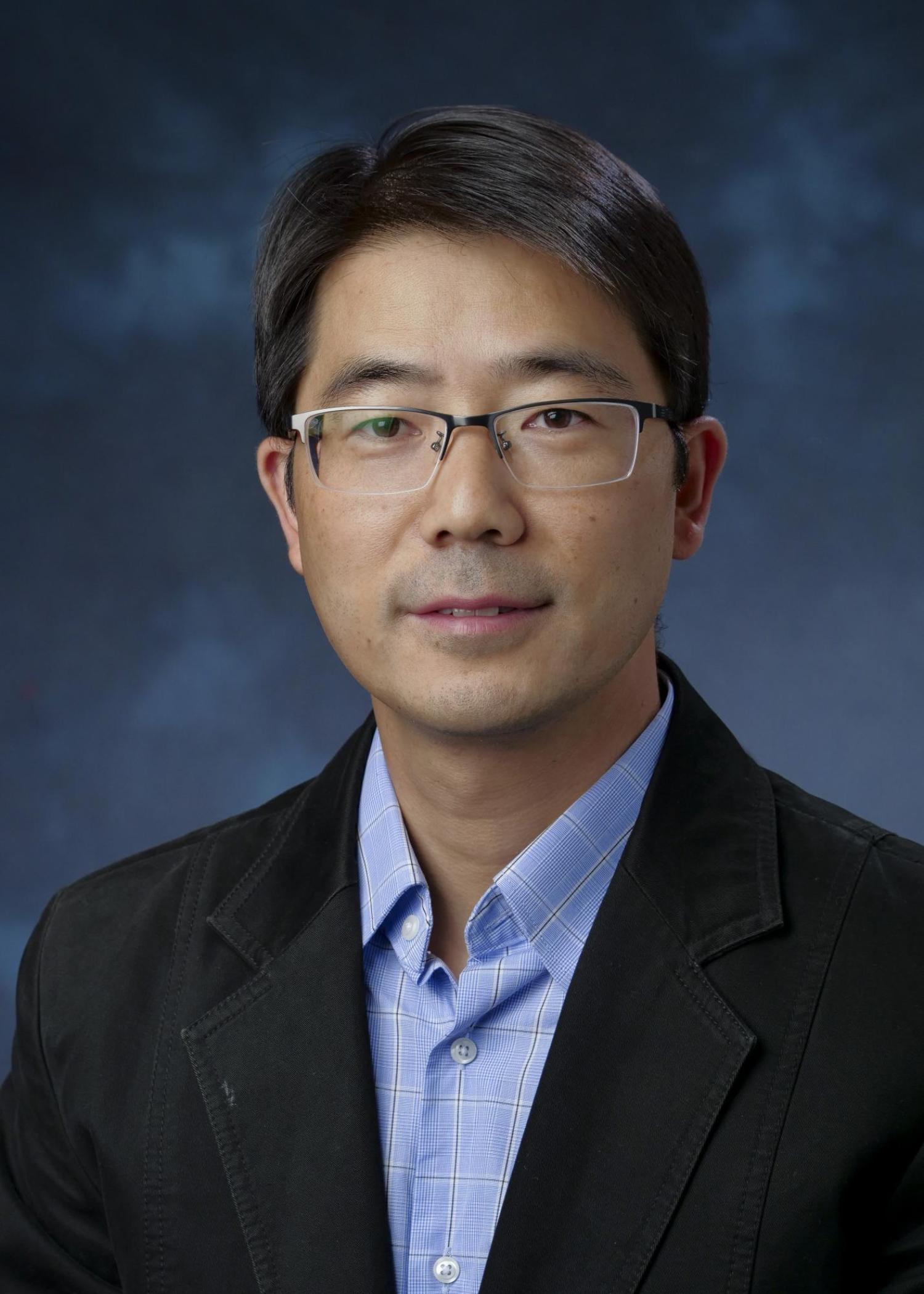
Yifu Ding serves as Professor and Director of the MAST Center at the University of Colorado Boulder, where he maintains laboratory facilities in ECME 102 and an office in ECME 269A. His research program focuses on advanced polymer systems and membrane technologies, with particular emphasis on nanostructured materials for separation applications and energy-related processes.
Dr. Ding's primary research interests center on polymer structure-dynamics relationships under confinement, fabrication of polymer-based nanostructures and nanocomposites, and development of smart materials including responsive surfaces and particles. His work investigates mechanical and viscoelastic properties of these materials through innovative characterization techniques, with applications spanning water treatment, gas separation, and hydrogen production. Recent publications demonstrate growing emphasis on surface patterning, nanofiller integration, and mechanical property enhancement in membrane systems.
Analysis of his 2023-2025 publications reveals three dominant research thrusts: (1) Advanced membrane fabrication techniques including femtosecond laser ablation and 3D printing, (2) Nanoengineered materials for hydrogen separation featuring atomic-scale tuning and metal nanorod networks, and (3) Surface modification strategies for fouling mitigation in water treatment applications. His work increasingly integrates multi-scale characterization with computational modeling to establish structure-property-performance relationships.
Scientific Awards: No specific awards were documented in the provided materials.
Regarding academic advising and research funding, the available information does not specify graduate students, postdoctoral researchers, or grant details. His leadership of the MAST Center suggests involvement in collaborative research initiatives, though specific project details remain undocumented in the provided text.
Dr. Ding directs the MAST Center and operates laboratory facilities focused on membrane characterization and nanofabrication. His research group employs techniques including nanoimprint lithography, electrochemical patterning, and advanced microscopy to develop next-generation separation membranes. Current work emphasizes practical applications in water sustainability and clean energy production, with strong industry relevance in environmental engineering sectors.