Yasser Khan
استادیار · Flexible and Stretchable Electronics
University of Southern Californiaمعرفی
Yasser Khan is an Assistant Professor of Electrical and Computer Engineering at the University of Southern California's Ming Hsieh Department. He leads the Khan Lab, which focuses on sensor systems for precision health and psychiatry. His lab is part of the USC Institute for Technology and Medical Systems (ITEMS), a joint Keck-Viterbi initiative with presence in both the USC Viterbi School of Engineering and Keck School of Medicine of USC.
Dr. Khan received his B.S. and M.S. in Electrical Engineering from the University of Texas at Dallas and King Abdullah University of Science and Technology, respectively. He completed his Ph.D. in Electrical Engineering and Computer Sciences at UC Berkeley in 2018, followed by postdoctoral research in Stanford University's Department of Chemical Engineering.
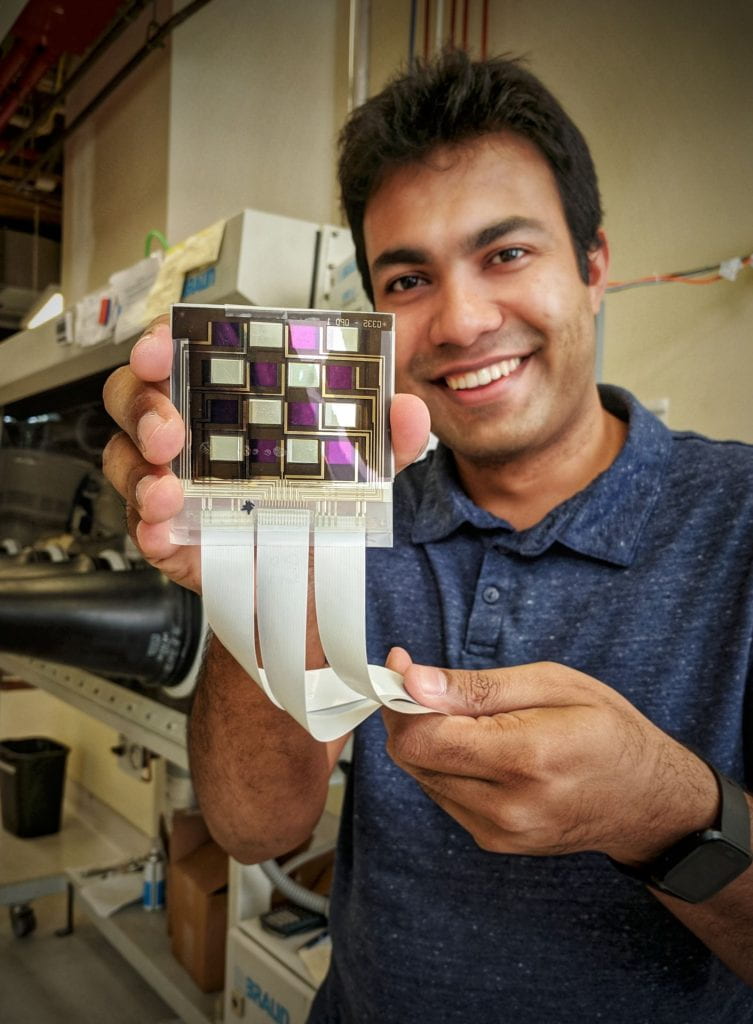
As an expert in flexible and stretchable electronics, Khan's research focuses on additive manufacturing and hardware AI to produce skin-like wearables, implantables, and ingestibles for precision health and psychiatry. His lab's core expertise spans biophotonic devices, bioelectronic interfaces, biochemical sensors, flexible hybrid electronics, and hardware-enabled AI systems that enable near- and in-sensor data classification.
His publication record shows a progression from fundamental flexible electronics research to increasingly sophisticated medical applications, with recent work focusing on ingestible electronics, AI-enabled sensing, and precision health applications. His work has been published in top journals including Nature Electronics, PNAS, Nature Communications, and Advanced Materials.
- 2025 USC Viterbi Junior Faculty Research Award
- 2025 AFOSR Young Investigator Award
- 2024 Packard Fellowship
- 2024 Zumberge Award
- Elevated to IEEE Senior Member (2024)
- Best Paper Award at IEEE BioCAS
Professor Khan actively mentors students in his lab and has secured significant funding from NIH, AFOSR, Packard Foundation, and other agencies for projects developing multimodal AI and sensing technology for mental health, ingestible electronics, and precision psychiatry applications. His lab collaborates with institutions including Binghamton University, i3 Electronics, Lockheed Martin, and American Semiconductor on flexible hybrid electronics projects.
The Khan Lab at USC is dedicated to making medical devices accessible to everyone through innovations in flexible and stretchable electronics. The lab's vision encompasses developing skin-like wearables that seamlessly measure vital signs, ingestible electronics for gastrointestinal monitoring, and implantable devices for precision psychiatry applications.