معرفی
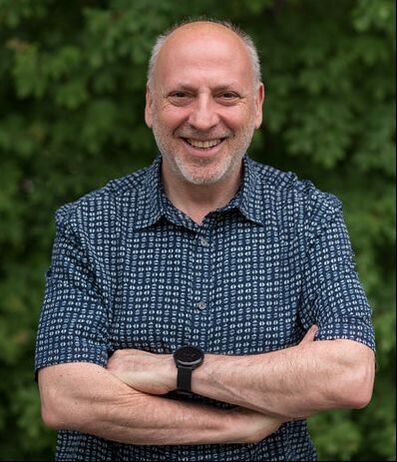
Professor Xuerong Mao is a leading figure in stochastic analysis and holds the 1969 Chair of Statistics at the University of Strathclyde, within the Department of Mathematics and Statistics, Faculty of Science. He is a Fellow of the Royal Society of Edinburgh (FRSE) and a recipient of the Royal Society Wolfson Research Merit Award, reflecting his international stature in mathematical sciences.
- Institution: University of Strathclyde
- School: Faculty of Science
- Department: Department of Mathematics and Statistics
- Rank: Professor
His research focuses on stochastic differential equations (SDEs), particularly their existence, uniqueness, stability, numerical solutions, and applications in ecology, finance, and engineering. He pioneered foundational results in SDEs under local Lipschitz conditions and discovered that environmental noise can suppress population explosions, a breakthrough in mathematical biology.
The recent publications highlight a consistent trend in nonlinear SDEs, hybrid systems, numerical methods (especially Euler-Maruyama variants), and control strategies based on discrete observations. His work bridges theoretical mathematics with practical applications in biological modeling and control engineering.
Scientific Awards and Recognition:
- Fellow of the Royal Society of Edinburgh (FRSE)
- Royal Society Wolfson Research Merit Award
- Ranked #3 in UK and #75 globally in Mathematics (Research.com, 2025)
- Award of Highly Ranked Scholar - Lifetime (ScholarGPS, 2024, 2025)
- Strathclyde Teaching Excellence Award (Most Memorable Category, 2024)
- Award of Foreign Expert (2011, 2014)
Mao has led multiple significant research projects funded by EPSRC and NSF, focusing on stabilization, numerical analysis, and mean-field interactions in stochastic systems. He has supervised numerous students and early-career researchers, with 24 supervised works recorded. He is actively involved in the academic community as an organizer of major conferences and editorial board member of journals like Numerical Algorithms.
He is also engaged in interdisciplinary research, contributing to UN Sustainable Development Goals through mathematical modeling and education. His work includes datasets on HIV transmission and epidemic modeling, showing applied impact beyond pure theory.