معرفی
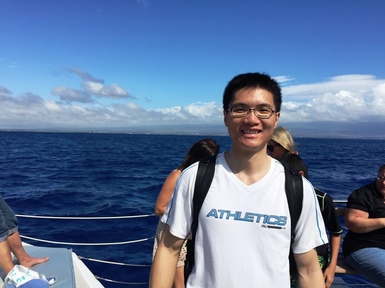
Xianrui Cheng serves as Assistant Professor in the Department of Biological Sciences at the University of Southern California's Dornsife College of Letters, Arts and Sciences, where he investigates cytoplasmic spatial organization and its implications for neurological diseases, developmental disorders, and cancer.
His educational background includes:
- Ph.D. in Computational Biology and Bioinformatics from Duke University (2012)
- Postdoctoral training at Stanford University (2013-2020) under Professor James Ferrell
Cheng's research centers on the self-organization of cytoplasmic structures using Xenopus laevis egg extracts to study de novo assembly of microtubule cytoskeleton and endoplasmic reticulum networks. His work bridges biophysics, cell biology, and systems biology to uncover fundamental design principles of living systems, with applications in synthetic biology and understanding disease mechanisms through the lens of spatial architecture.
Analysis of his publications (2013-2022) reveals a progression from computational modeling of gene networks to experimental dissection of cytoplasmic self-organization. Key discoveries include enhanced protein diffusion in organized cytoplasm, trigger-wave propagation of apoptosis, and spontaneous emergence of cell-like structures in scrambled extracts. His interdisciplinary approach consistently integrates live imaging with mathematical modeling to explore emergent properties of biological systems.
No scientific awards were mentioned in the provided text.
The provided text does not specify student advising roles or research grant details.
Cheng's laboratory employs a multidisciplinary methodology combining molecular biology, biochemistry, and engineering tools. His team utilizes Xenopus egg extracts for in vitro reconstitution of cytoplasmic organization while extending to in vivo models including C. elegans and sea urchin embryos. The lab focuses on four core questions regarding microtubule-ER organization, pattern length scales, cell cycle functions, and synthetic cell engineering through live imaging, quantitative image analysis, and mathematical modeling.