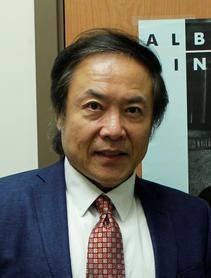
Xiangyang Shi
استاد · Dendrimer Chemistry
DWI – Leibniz Institute for Interactive Materials, Aachenمعرفی
Xiangyang Shi is a Professor at Donghua University's College of Chemistry, Chemical Engineering and Biotechnology and holds an Invited Chair in Nanotechnology at the University of Madeira. His primary academic affiliations demonstrate strong international collaboration between Chinese and Portuguese research institutions, with significant contributions to nanomedicine and materials science.
His research focuses on dendrimer chemistry and nanomedicinal applications, particularly in cancer diagnosis and therapy. Additional research areas include nanofiber-based technology for bioscaffolding materials in tissue engineering, pharmaceutical applications, and environmental nanotechnology through immobilization of reactive nanoparticles. His work bridges chemistry, materials science, and biomedical engineering with strong translational potential.
Analysis of his recent publications (2025) reveals a strong emphasis on combination cancer therapies integrating chemotherapy, immunotherapy, and imaging modalities. Key trends include development of metal-phenolic networks, stimuli-responsive nanogels, and dual-targeting nanovaccines for enhanced tumor treatment. His work increasingly focuses on disrupting tumor microenvironment mechanisms like hypoxia and adenosine pathways while enhancing immune checkpoint blockade.
His research has been supported by significant grants including:
- DENDIMAGE - Development of Novel Dendrimer-Based Nanoparticles for Dual Mode Computed Tomography and Magnetic Resonance Imaging of Tumors (2013-2015)
- Self-assembled nanoparticles based on PEG-PLA-dendrimer building blocks for dual gene/drug delivery (2012-2015)
Professor Shi leads research activities centered around dendrimer-based nanoplatforms with strong international collaboration networks. His laboratory focuses on translating fundamental nanomaterial discoveries into therapeutic applications, particularly for cancer treatment and tissue engineering solutions. Current work emphasizes multimodal therapeutic approaches that combine imaging capabilities with targeted treatment modalities.