معرفی
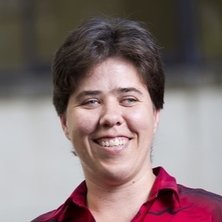
Professor Winnifred Louis is a distinguished academic in the School of Psychology within the Faculty of Health, Medicine and Behavioural Sciences at the University of Queensland. She holds the position of Professor and is also affiliated with both the Social Identity and Groups Network (SIGN) Research Centre and the Centre for Research in Social Psychology (CRiSP).
Her educational background includes a Masters (Research) of Science from McGill University. Professor Louis is currently not available for supervision but has an extensive history of supervising doctoral students across various topics related to social psychology, identity, and political behavior.
Professor Louis's research spans multiple domains within social psychology, with particular emphasis on intergroup relations, collective action, prejudice and discrimination, political psychology, and peace psychology. Her work often examines how social identities and group norms influence political attitudes, conflict resolution, climate change activism, and responses to terrorism. She employs both qualitative and quantitative methodologies across diverse cultural contexts including Australia, Indonesia, and international comparative studies.
Her recent publications demonstrate a strong focus on contemporary social issues including climate change activism, intergroup conflict, peace psychology, political extremism, and responses to global crises like the COVID-19 pandemic. Her research shows consistent themes around how social norms, identity processes, and perceived efficacy influence political engagement and social change.
Professor Louis has secured significant research funding including current projects such as 'From conspiracy to extremism: Biased thinking and social influence in a post-truth world' (2024-2027) and 'The effect of unconventional advocates on public support for climate policy' (2022-2025). Her past funding includes projects on terrorism, climate gridlock, and collective action.
She is recognized as a media expert on decision-making (both health and politics), political attitudes and actions, prejudice and discrimination, psychology of conflict, and terrorism. Her work has substantial real-world applications in understanding social movements, political behavior, and pathways to social change.