
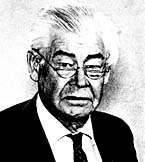
معرفی
William Maurice Ewing (1906–1974) was a renowned geophysicist and academic, holding professorial roles at institutions including Columbia University and the University of Texas at Austin. He served as Higgins Professor of Geology at Columbia (1947–1972) and later joined UT-Austin's Department of Geology while contributing to the Marine Biomedical Institute in Galveston. Ewing pioneered oceanographic research, notably discovering the SOFAR channel and advancing seismological techniques. His career spanned over 40 years, during which he advised over 200 graduate students, many of whom became leaders in geophysics.
Education:
- B.A. in Physics and Mathematics (1926)
- M.A. (1927) and Ph.D. (1931), all from Rice Institute.
Research Contributions: Ewing’s work focused on ocean basin structure, seismology, and marine geology. He invented the piston corer and collaborated on long-period seismographs. His discoveries, such as the Sigsbee salt-cored knolls and the SOFAR channel, revolutionized oceanography. He emphasized collaborative research, co-authoring over 350 papers with students and colleagues.
Awards:
- 11 honorary degrees from U.S. and international universities.
- Medals from the Royal Astronomical Society, Geological Society of London, and American Geophysical Union.
Legacy: Ewing’s efforts established Columbia’s Lamont-Doherty Geological Observatory. At UT-Austin, he contributed to the Division of Earth and Planetary Sciences. Known for his relentless work ethic, he led over 50 oceanographic expeditions and mentored generations of geoscientists.
William Maurice Ewing در سایتهای دیگر
جستوجوهای مرتبط
شاید اینها هم برایتان مناسب باشند
 Robert Hamilton CuylerUniversity of Texas at Austin · دانشیار
 Jeffrey G. PaineUniversity of Texas at Austin · استاد پژوهشی
- FFrank PressCalifornia Institute of Technology (Caltech) · استاد
 James A AustinUniversity of Texas at Austin · استاد پژوهشی
- AAlexandros SavvaidisUniversity of Texas at Austin · استاد پژوهشی
 Keith D. KoperUniversity of Utah · استاد