معرفی
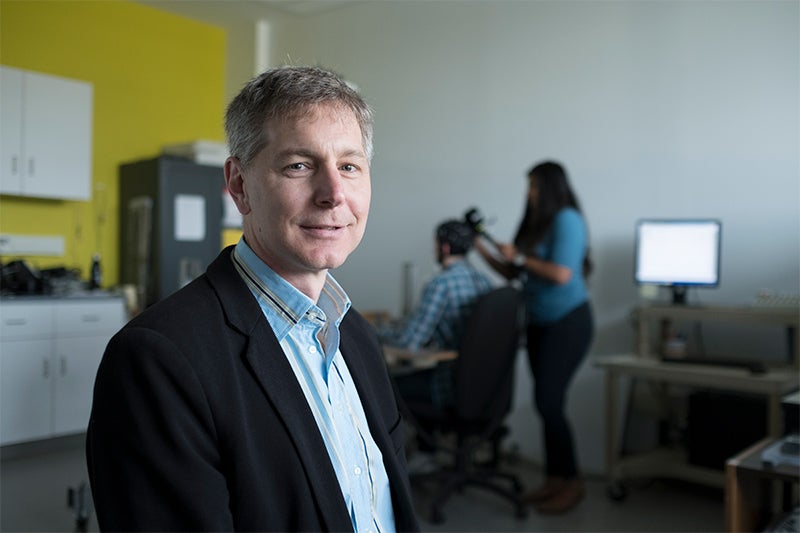
W. Richard Staines is a Professor in the Department of Kinesiology at the University of Waterloo, Canada. He leads the Sensorimotor Integration and Neuroadaptive Plasticity (SINAPs) Lab, focusing on understanding how the brain processes and integrates sensory inputs to guide motor behavior, particularly in healthy populations and those recovering from brain injury. His work combines neuroimaging and neurophysiological techniques to study neural mechanisms underlying movement control and adaptation.
Education:
- BSc in Human Kinetics from the University of Guelph
- PhD in Kinesiology from the University of Guelph
Research Interests:
His research explores sensorimotor integration, neuroplasticity, and the effects of brain injury on sensory-motor systems. Key areas include the role of aerobic exercise in enhancing neural plasticity, the impact of cannabis use on neurological conditions like multiple sclerosis, and the modulation of somatosensory processing in post-concussion recovery. Dr. Staines also investigates cerebellar contributions to motor adaptation and cortical reorganization post-stroke.
Publications:
His work spans over 130 peer-reviewed articles, including studies on cannabis abstinence effects, cerebellar modulation of motor activity, and the long-term impacts of concussion. Recent studies highlight the use of neuroimaging to map neural pathways involved in sensory gating and motor learning.
Awards & Grants:
While no explicit awards are listed, his extensive publication record reflects sustained research excellence. He has secured grants to support projects on neuroplasticity and rehabilitation strategies post-injury.
Teaching & Supervision:
Dr. Staines teaches courses in human anatomy, clinical neurophysiology, and neuroscience. He supervises graduate students in MSc and PhD programs, offering opportunities in his lab for thesis research, co-op placements, and postdoctoral fellowships.
Labs & Teams:
His SINAPs Lab collaborates with clinical and academic partners to advance translational research in neurorehabilitation and sensorimotor neuroscience.