معرفی
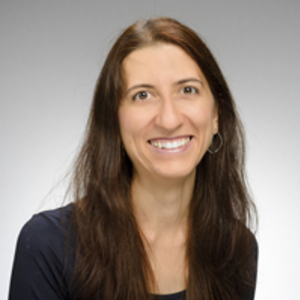
Vesta Coufal is a Professor and Department Co-Chair of Mathematics at Gonzaga University in the College of Arts and Sciences. She holds a Ph.D. in Mathematics from the University of Notre Dame and is actively engaged in teaching and research. Her courses include Calculus, Abstract Algebra, Topology, and Precalculus, with a focus on active learning pedagogy.
Education:
- Ph.D., Mathematics, University of Notre Dame
- M.S., Mathematics, University of Notre Dame
- M.A., Mathematics, University of California at San Diego
- B.A., Mathematics, Mount Holyoke College
Her research lies primarily in topology and knot theory, with additional contributions to graph theory, particularly L(2,1)-colorings. She frequently collaborates with students, fostering undergraduate research. Her work also extends to mathematics education through inquiry-based modules and reference writing.
The recent publications show a strong focus on classifying and analyzing Klein links and their relationship to torus links, alongside structural studies in L(2,1)-colorings of graphs. Several papers involve categorical and groupoid-based approaches to orbispaces, indicating depth in algebraic and geometric topology. Her 2016 co-authored textbook Knots, Molecules, and the Universe serves as an accessible introduction to topology.
Scientific Awards:
- No awards listed in the provided text.
Dr. Coufal is actively involved in mentoring students, as evidenced by numerous publications with undergraduate co-authors. She has contributed to curriculum development through inquiry-based learning modules and has no indication of external grants in the text. Her research integrates pure mathematics with educational innovation, and she leads in both scholarly and academic service roles as department co-chair. She also contributes to reference literature in mathematics.
Labs and Research Groups:
- Active research group in knot theory and topology with student collaborators.
- Collaborative projects in graph colorings and fixed point theory.
- Part of the Women in Topology network, as seen in the 2015 publication.