معرفی
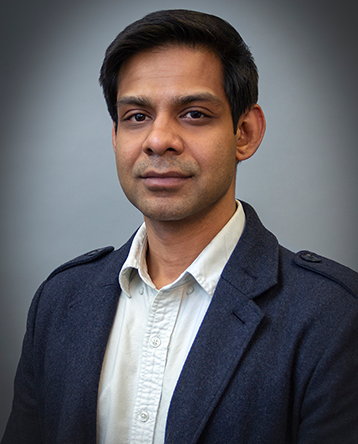
Vassil Alexandrov is a Professor at the School of Systems Engineering, University of Reading, specializing in high-performance computing, Monte Carlo methods, and grid-based scientific computing. His research integrates fault tolerance, virtual environments, and e-Science infrastructures, with strong collaborations in interdisciplinary projects such as eMinerals and P-GRADE.
- PhD in Computational Science (inferred)
- Extensive research in parallel and distributed algorithms
His research interests lie at the intersection of computational science and distributed systems. He has pioneered the use of Monte Carlo methods for matrix computations and large-scale environmental modeling, particularly in air pollution simulation. His work extends into immersive virtual environments for medical training, psychological modeling, and collaborative e-learning. He has contributed significantly to fault-tolerant computing using intelligent agents and swarm-array paradigms.
The recent publications show a strong trend toward intelligent fault tolerance, agent-based recovery, and immersive virtual environments. His work spans both theoretical numerical methods and practical implementations in grid and cluster computing. The integration of cognition models in fault-tolerant systems reflects a unique interdisciplinary approach.
While no formal scientific awards are listed in the provided text, his editorial roles and leadership in major computational science conferences indicate recognition in the field.
He has collaborated extensively with researchers across Europe and has been involved in advising and mentoring through collaborative projects like eMinerals and P-GRADE. His work has been supported by e-Science and grid computing initiatives, particularly in the UK. He has contributed to the development of collaborative tools, portals, and workflows for virtual organizations.
He has been involved in the development of the eMinerals virtual organization, the P-GRADE grid portal, and immersive virtual environments for education and medical training, reflecting a strong focus on collaborative and user-centered research infrastructures.