معرفی
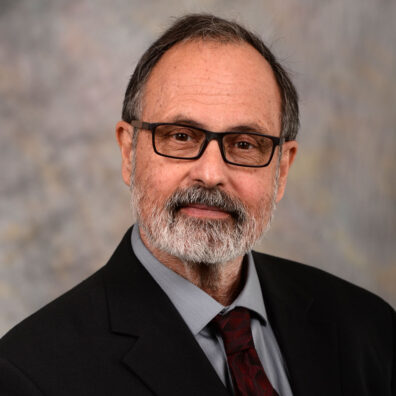
Professor Ursula Mazur is a faculty member in the Department of Chemistry at Washington State University (WSU) and holds an affiliate professorship in the School of Materials and Mechanical Engineering. She joined WSU in 1982 and is internationally recognized for her work in tunneling spectroscopy, STM-based imaging, and the study of molecular-scale properties of nanostructured aggregates. Mazur earned her Ph.D. in Physical Inorganic Chemistry from the University of Michigan and a B.S. in Chemistry and Mathematics from Wayne State University.
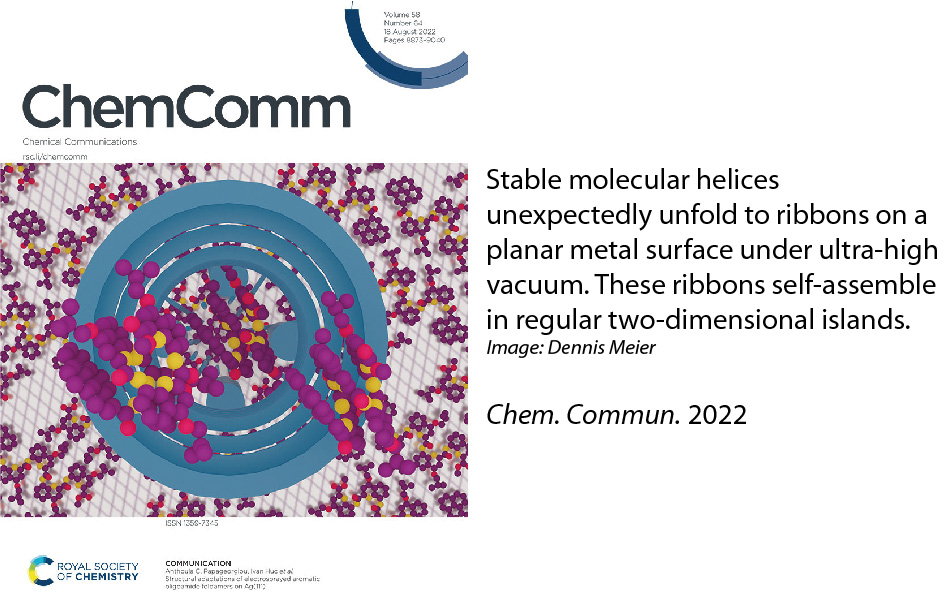
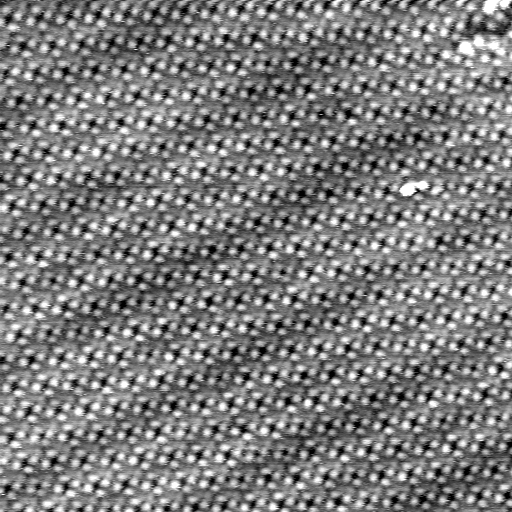
Her research focuses on understanding structure-function relationships in photosensing ionic organic materials and the optoelectronic properties of porphyrin-based nanostructures. She uses advanced techniques like scanning tunneling microscopy (STM), atomic force microscopy (AFM), and computational modeling to study molecular organization, energy transfer, and electronic behavior at nanometer scales. Key areas include hyperbranched crystalline nanostructures, self-assembled monolayers, and cooperative ligand binding at interfaces.
Mazur has received prestigious awards, including Fellowships from the American Chemical Society and the American Association for the Advancement of Science, and holds the Westinghouse Distinguished Professorship in Materials Science and Engineering. Her research has led to breakthroughs in understanding nanoscale phenomena, such as oxygen coordination to cobalt porphyrins and the dynamics of surface reactions.
Her labs and collaborative efforts integrate experimental and theoretical approaches to design functional materials for applications in molecular electronics, sensors, and catalysis. Current projects explore cooperative processes at surfaces, solvent effects on molecular assembly, and the development of novel nanostructured semiconductors.