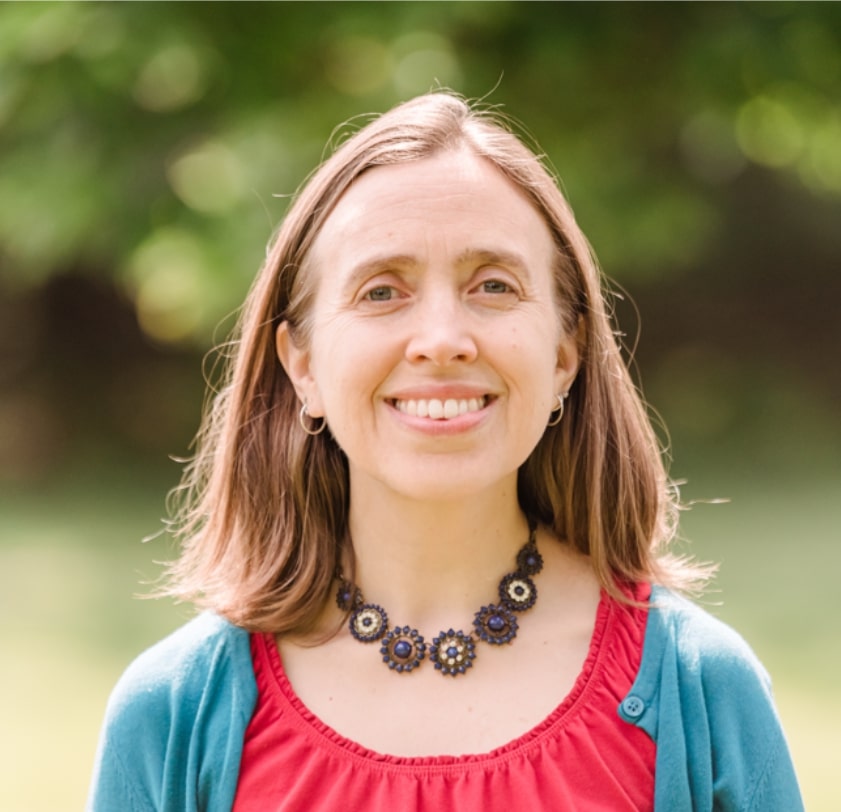
Uli Beisel
استاد · spatialisation of global inequalities
Max Planck Institute for Social Anthropologyمعرفی
Professor Uli Beisel is a distinguished academic at the Free University of Berlin, where she holds the position of Professor of Human Geography within the Institute of Geographical Sciences. Her work focuses on the Chair of Human Geography Geographies of Global Inequalities, examining how spatial dynamics intersect with global health, environmental justice, and social transformation processes. With an interdisciplinary approach spanning feminist and postcolonial science and technology studies, she investigates complex human-nonhuman relationships in contexts of health and environmental change, particularly through her research on mosquito-parasite-human entanglements in malaria control and broader questions of coexistence with organisms harmful to human health.
Beisel's research centers on the spatialization of global inequalities and social transformation processes, particularly in the areas of naturecultures, planetary health, and environmental justice. Her work explores practices of boundary drawing between human and non-human organisms and critically examines how we can coexist well with organisms and substances harmful to human health. She investigates mutating mosquitoes and resistant parasites; zoonotic diseases; insecticides, pesticides and toxins; and technologies and infrastructures in global health. Her feminist and postcolonial perspective provides critical insights into power dynamics in global health interventions, environmental management, and the politics of scientific knowledge production across different geopolitical contexts.
Analysis of Professor Beisel's publication record from 2014-2022 reveals consistent research trajectories focusing on multispecies relations in global health contexts, particularly around mosquito control and malaria interventions. Her scholarship demonstrates deep engagement with postcolonial and feminist STS frameworks, examining how health technologies travel across contexts and the political implications of these translations. A significant thread throughout her work is the examination of trust in medical systems, particularly in African contexts during health crises like Ebola. Her recent publications increasingly address multispecies cohabitation in urban environments and vaccine equity in the Global South, reflecting evolving concerns with planetary health and global justice in the Anthropocene.
Professor Beisel leads multiple significant research projects including a DFG-funded project on 'Uneven geographies of vaccine manufacturing in the Global South' (2021-22), a Volkswagen Foundation project on 'Mobile Mosquitoes' examining human-mosquito mobilities across four countries (2022-26), and a Berlin University Alliance project on 'Re-Scaling Global Health' (2022-25). She also contributes to the Cluster of Excellence Africa Multiple with research on electronic waste and circular economies. These projects involve extensive international collaboration across Africa, Europe, and the Americas, demonstrating her commitment to transdisciplinary scholarship that bridges theoretical innovation with practical health and environmental challenges while addressing questions of global justice and equity.
Professor Beisel is actively involved in multiple research networks and collaborative frameworks. She is part of the editorial collective of Mattering Press, an open access book publisher committed to accessible scholarly communication. Her 'Mobile Mosquitoes' project establishes an interdisciplinary consortium studying human-mosquito mobilities across India, Mexico, Tanzania, and Germany. The 'Re-Scaling Global Health' project brings together scholars from social sciences, humanities, urban design, ecology, and virology to examine urban health through a multispecies lens. She also contributes to the LOST Research Network (Law, Organization, Science and Technology), which examines intersections of anthropology of law, organization studies, and science and technology studies with a focus on Africa. These collaborations reflect her commitment to transdisciplinary approaches that bridge theoretical innovation with practical interventions in global health and environmental justice.
حوزههای پژوهشی