معرفی
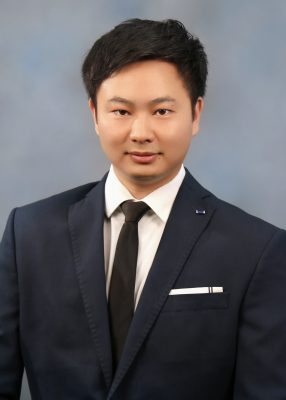
Tyler H. Summers is an Associate Professor of Mechanical Engineering at the University of Texas at Dallas (UT Dallas), with an affiliate appointment in Electrical Engineering. He holds a PhD in Aerospace Engineering from the University of Texas at Austin and conducted postdoctoral research as an ETH Postdoctoral Fellow at ETH Zurich. His research focuses on control and optimization in complex dynamical networks, with applications to power grids, distributed robotics, and cyber-physical systems.
Education:
- PhD, Aerospace Engineering, University of Texas at Austin (2010)
- MS, Aerospace Engineering, University of Texas at Austin (2007)
- BS, Mechanical Engineering, Texas Christian University (2004)
Research Interests: Summers' work emphasizes theoretical tools and computational methods for control and optimization in large-scale networks. Key areas include stochastic optimal power flow for energy systems, distributed formation control for robotic teams, and robust control under uncertainty. His lab, the Control, Optimization, and Networks Lab, explores cyber-physical systems integration, resilient coordination in robotics, and smart grid technologies.
Awards: He has received notable honors such as the Air Force Office of Scientific Research Award (2019), Army Research Office Young Investigator Award (2016), and NSF grants for research in water networks and distributed systems. His work bridges foundational control theory with practical applications in energy and robotics.
Advising & Grants: Summers advises PhD students and postdocs in systems, control, and optimization. His research is supported by funding from the NSF, Air Force Office of Scientific Research, and industry collaborations. Notable projects include optimizing power grid resilience with renewable energy integration and developing spoof-resilient robotic networks.
Labs & Teams: The Control, Optimization, and Networks Lab at UT Dallas focuses on interdisciplinary research, combining insights from control theory, optimization, and computer science. Collaborations span academic and industrial partners, advancing applications in autonomous systems and smart infrastructure.