معرفی
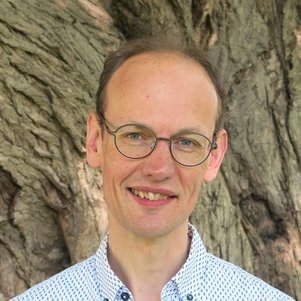
Dr. Tommy H.G. Wils is a Postdoc Researcher at Delft University of Technology in the Faculty of Civil Engineering and Geosciences, Department of Geoscience and Engineering, and holds the position of Assistant Professor at Utrecht University in the Department of Human Geography and Spatial Planning. His research centers on environmental change, peatland management, and dendrochronology, with a focus on Dutch peatlands and the Horn of Africa.
- PhD in Environmental Change, Swansea University
- MSc in Physical Geography, Utrecht University
- BSc in Teaching Geography, Utrecht University
His research interests include dendrochronology, climate change, hydrology, and environmental reconstruction. He investigates how tree rings can serve as proxies for historical climate patterns, particularly in tropical regions like Ethiopia, and how land use affects soil subsidence and greenhouse gas emissions in Dutch peatlands. His work bridges paleoclimatology and contemporary environmental management.
The recent publications highlight a strong trend in using tree-ring data to understand climate variability, ecological responses, and hydrological changes. Key areas include tropical dendrochronology, CO2 effects on tree water-use efficiency, and peatland sustainability. His work integrates field data with isotopic analysis and climate modeling.
- Research Highlight in Nature, 30 June 2016: African trees cope with warming
Dr. Wils supervises Master's students in thesis research and has been involved in multiple collaborative research projects funded by external grants. He has contributed to textbook development and science communication. He collaborates with international research teams across Europe, Africa, and North America, working on projects related to climate reconstruction, forest ecology, and water resource management.
He is part of the Geo-Engineering research staff at TU Delft and contributes to interdisciplinary teams focusing on sustainable land use and climate adaptation strategies. His work supports policy-relevant research on flood risk, carbon emissions, and ecosystem resilience.