معرفی
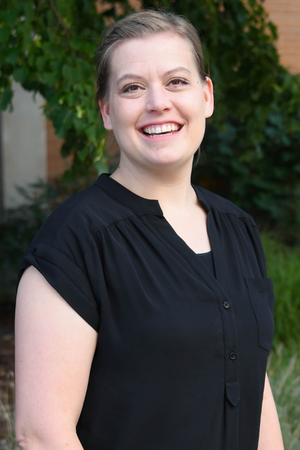
Todd Partridge serves as a Lecturer in the Department of Mathematics and Statistics at Utah State University, based at the Brigham City Campus. He teaches foundational statistics courses across multiple campus locations including Brigham City, Salt Lake, and Statewide Campuses, with active teaching assignments through Spring 2025.
Education:
- PhD in Statistics (Instructional Technology & Learning Science), Utah State University, 2023. Dissertation: Using Gamification to Foster Student Resilience and Motivation to Learn, and Using Games to Teach Significance Testing Concepts in the Statistics Classroom
- BS in Mathematics & Statistics (with minors in Computer Science, Economics, Psychology, and Family & Human Development), Utah State University, 2017
Partridge's research pioneers the integration of game mechanics into statistics pedagogy, focusing on how gamified grading systems cultivate student resilience and intrinsic motivation. His work strategically addresses common psychological barriers in quantitative learning by designing classroom environments that promote student autonomy and ownership of statistical concepts. This approach directly targets the development of positive statistical affect and confident mathematical identity among learners.
His publication trajectory reveals a concentrated investigation into gamification's measurable impact on educational outcomes, with consecutive journal articles in College Teaching establishing methodological rigor in assessing motivation metrics. The research demonstrates particular innovation in translating game design principles to significance testing instruction—a traditionally challenging statistics topic.
As an educator, Partridge has systematically refined introductory statistics curricula since 2021, teaching diverse courses from STAT 1040 (Introduction to Statistics) to STAT 3000 (Statistics for Scientists). His teaching portfolio shows consistent focus on creating dynamic, accessible learning environments that implement his research findings, particularly through interactive classroom techniques that reduce mathematical anxiety.