معرفی
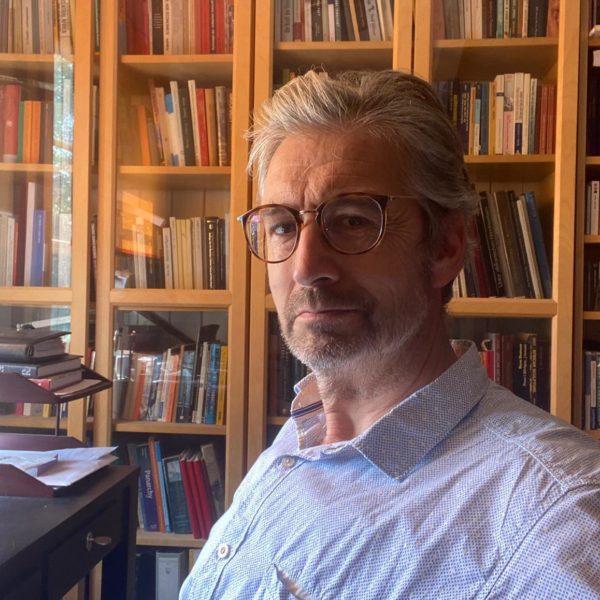
Tobias Haller is an Extraordinary Professor in Social Anthropology at the Institute of Social Anthropology, University of Bern, Switzerland, and also serves as a lecturer at ETH Zurich. His research focuses on sustainable local resource management, with special emphasis on collective goods (commons), nature conservation areas, and major agricultural investments. He has conducted extensive fieldwork in Africa, particularly in Cameroon and Zambia.
His educational background includes studies in social anthropology, geography, and sociology at the University of Zurich, where he also completed his PhD and habilitation. After serving as project leader in the NCCR North-South, he became Director of the Swiss Network for International Studies in Geneva (2008) before joining the University of Bern as Associate Professor (2009), later promoted to Extraordinary Professor (2014).
Haller specializes in economic and ecological anthropology, with research interests spanning common pool resource management, New Institutionalism, local environmental perception, peasant and agro-pastoralist communities, fisheries, oil exploitation, protected areas, and community-based natural resource management. His theoretical framework combines New Institutionalism in social anthropology with political ecology, examining how stakeholders with varying negotiating power establish ideological legitimation and shape regulatory frameworks through 'legal institution shopping.'
His publication portfolio reveals a consistent focus on the intersection of resource governance, institutional change, and community participation. Haller's work demonstrates increasing attention to gender relations in agricultural investment contexts and bottom-up institution building processes (constitutionality), reflecting evolving priorities in anthropological approaches to resource management across Africa, Europe, Latin America, and Asia.
Among his scientific recognitions is a Runner-Up paper award (2nd place) at the "Rabel J. Burdge and Donald R. Field Outstanding Article Award" for his 2016 article on constitutionality and local ownership of institution-building processes.
Haller currently supervises eight doctoral students and has led major comparative research projects including "Disputing the Floodplains" (2010) on institutional change in African floodplain areas, "People, Protected Areas and Global Change" (2008) on participative resource management, and studies on oil and mining industry implications. Through the Centre for Development and Environment (CDE) at the University of Bern, he is closely involved in BA and MA programs on Sustainable Development and various interdisciplinary projects.
As a board member of the Swiss Society for African Studies and member of the Institute for Ecology and Action Anthropology (INFOE CH), Haller maintains active professional engagement. His current research examines gender relations in regions of major agricultural investment and participative constitution-building processes in sustainable resource governance, with recent publications including "Drylands Facing Change" (2024) and "Balancing the Commons in Switzerland" (2022).