معرفی
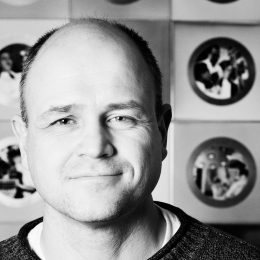
Tina Sundelin is an Associate Professor and Director of Studies at the Department of Psychology, Stockholm University. She is affiliated with the Center for Cultural Evolution and the Sleep and Wakefulness Research Unit, where she conducts interdisciplinary research on sleep, social interactions, and well-being.
Her research focuses on the social effects of sleep deprivation and how they relate to motivation, attention, and cognitive ability. She also investigates how sleep affects daily interactions and well-being in contexts such as families and workplaces. Another significant research interest is social perception of illness - specifically how people perceive someone who is sick and what cues allow others to determine whether a person is sick or healthy.
Tina's publication record demonstrates expertise in examining how sleep, social interactions, and well-being interrelate. Her research spans multiple methodologies, integrating laboratory-based experimental studies with field studies. Her work has explored topics including parental sleep patterns, social perception of illness across cultures, cognitive effects of sleep deprivation, and the relationship between sleepiness and social activity. Her publications frequently appear in high-impact journals across sleep science, psychology, and neuroscience.
Her research projects include ongoing studies on sleep inequality among parents with young children, the relationship between sleep and social cohesion, and whether people are aware of their cognitive impairments when sleep-deprived. She also has completed research on social interactions during sleep deprivation.
Tina earned her PhD at Stockholm University in 2015, focusing on social perception of sleep loss (dissertation: 'The Face of Sleep Loss'). After this, she began a postdoc at Karolinska Institutet to study social interactions during sleep deprivation. She was awarded the Swedish Research Council's International Postdoctoral Grant in 2016 to continue her research with Dr. Tessa West at New York University. During this period, she focused on physiological aspects such as HRV and activity in the sympathetic nervous system, in addition to behavioral measures and dyadic tasks after sleep deprivation.
Since 2019, she has been employed as a University Lecturer at Stockholm University. Her ongoing research integrates laboratory-based experimental studies with field studies to investigate how sleep, social interactions, and well-being relate to each other.