معرفی
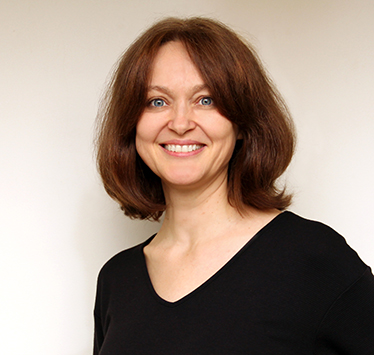
Dr. Timothy W. O'Neil serves as Professor and Department Chair of Computer Science within the College of Engineering and Polymer Science at the University of Akron. He joined the university in 2002 after teaching positions at The University of Notre Dame, The University of Texas at Dallas, Manchester College, Bowling Green State University, The Ohio State University, and Clarion Area Junior-Senior High School.
His educational background includes a Ph.D. in Computer Science and Engineering from the University of Notre Dame (2002), dual M.S. degrees in Computer and Information Sciences and Mathematics from The Ohio State University (1993, 1991), and dual B.S. degrees in Computer Science and Secondary Education Mathematics from Clarion University of Pennsylvania (1989).
Dr. O'Neil's research focuses on Parallel Processing, Loop Transformation, and Scheduling techniques, with significant contributions to data flow graph scheduling and compiler optimization. His work bridges theoretical computer science with practical applications in high-performance computing systems. The research demonstrates consistent focus on static scheduling algorithms, dependency analysis in multi-dimensional loops, and rotation scheduling techniques for data flow graphs.
His publication record shows strong activity in parallel processing conferences between 2008-2009, with particular emphasis on scheduling algorithms for data flow architectures. The publications reveal expertise in both theoretical algorithm development and practical compiler implementation techniques.
- Current teaching responsibilities include CPSC 589 (Computing Concepts for Educators), CPSC 677 (Parallel Processing), and CPSC 4/526 (Operating Systems)
- Previously taught extensive curriculum covering Operating Systems, Compiler Design, Computer Architecture, Data Structures, and Parallel Processing courses
- Active Principal Investigator on multiple research grants
- Maintains membership in the Institute of Electrical and Electronics Engineers (IEEE)
Dr. O'Neil has advised numerous graduate students and contributed significantly to computer science education through innovative teaching methods documented in his educational research publications.