معرفی
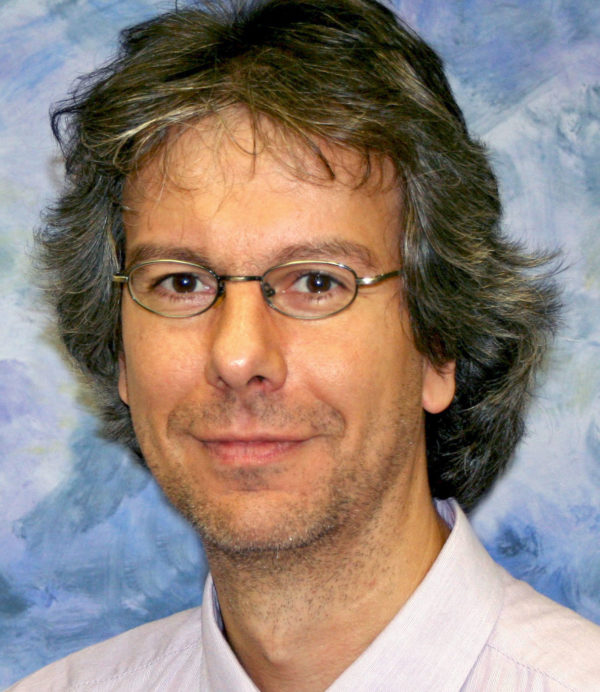
Prof. Dr. Tilo Wettig is a full Professor in the Faculty of Physics at the University of Regensburg since 2004, specializing in high-energy physics and computational methods. He leads the High Energy Physics group and serves as principal investigator for the SFB/TRR-55 project focused on lattice QCD simulations.
His academic journey includes a Ph.D. from Stony Brook University (1994), Habilitation at Heidelberg University (1998), postdoctoral positions at Max-Planck-Institute Heidelberg and Technical University of Munich, and faculty roles at Yale University (Assistant Professor 1999-2003, Associate Professor 2003-2004).
- High School diploma (1985)
- Paramedic training, German Red Cross (1985-1988)
- Undergraduate physics, University of Tübingen (1988-1990)
- Graduate studies, Stony Brook University (1990-1994)
- Postdoc, Max-Planck-Institute Heidelberg (1995-1996)
- Postdoc, Technical University of Munich (1997-1999)
- Heisenberg Fellow (1999)
- RIKEN-BNL Research Center Fellow (1999-2004)
Wettig's research integrates theoretical physics with advanced computing, focusing on quantum field theory applications in lattice QCD and random matrix theory. His group pioneers energy-efficient supercomputer architectures through the QPACE series, achieving top rankings on the Green 500 list for computational efficiency. This work enables large-scale simulations of quantum chromodynamics while advancing sustainable computing practices.
He actively mentors graduate students for master's and doctoral theses in computational physics and secures substantial research funding through the SFB/TRR-55 collaboration. His team maintains strategic partnerships with IBM, Intel, Fujitsu, and Cray for hardware co-design.
Wettig organizes major international conferences including the biennial 'QCD on and off the lattice' series and specialized workshops on random matrix theory at venues like ECT* Trento. His leadership in the High Energy Physics group drives innovation in both theoretical frameworks and computational infrastructure for subatomic physics research.