معرفی
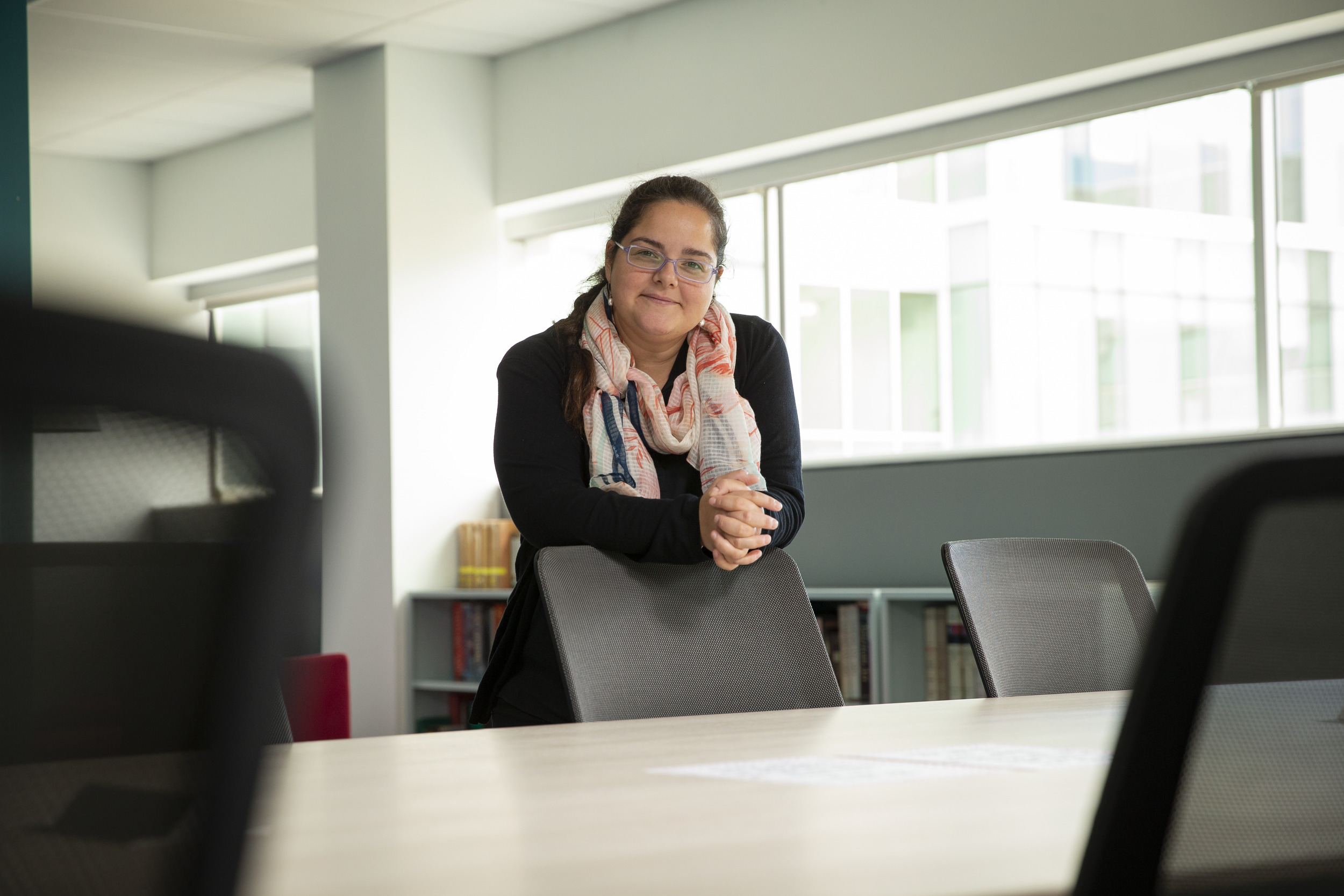
Dr. Tiffany Earley-Spadoni is an Associate Professor in the Department of History at the University of Central Florida, specializing in ancient Near Eastern archaeology and spatial history. She directs the Kurd Qaburstan Project, a large-scale archaeological excavation of a Middle Bronze Age city in northern Iraq, and has previously led the Vayots Dzor Fortress Landscapes Project.
Her educational background includes a Ph.D. in Near Eastern Studies from The Johns Hopkins University (2015).
Dr. Earley-Spadoni's research focuses on spatial historical approaches to understanding ancient societies. Her expertise spans Ancient Near East studies, Digital Archaeology, GIS applications, Fortifications, and Spatial History. She has pioneered methodologies that integrate scientific precision with humanistic interpretation to analyze ancient landscapes, particularly examining how warfare, social inequality, and place-making shaped urban organization and cultural development.
Her scholarly work demonstrates how ancient societies developed sophisticated communication and defense networks, with particular emphasis on fire beacon systems and fortified road networks that connected settlements and provided security across challenging terrain.
- 2024 American Society of Overseas Research (ASOR) Membership Service Award
- 2024 National Science Foundation Senior Archaeology Award for "Investigating Spatial Organization of Early Urban Life"
- 2023 American Society of Overseas Research (ASOR) Membership Service Award
- 2022 National Endowment for the Humanities Summer Stipend Fellowship
- 2022 American Institute of the South Caucasus Research Fellowship
- 2021 UCF Teaching Incentive Program Award
- 2018 American Institute of the South Caucasus Cultural Heritage Management Fellow
- 2016-2017 ASOR Mesopotamian Fellowship
Dr. Earley-Spadoni has secured significant research funding from the National Science Foundation and National Endowment for the Humanities. Her current Kurd Qaburstan Project represents a major international collaboration involving fieldwork in Iraq and advanced digital methodologies for analyzing ancient urban organization.
She leads a multidisciplinary team that employs digital mapping, drone photogrammetry, and spatial analysis techniques to investigate how Middle Bronze Age societies organized urban space, managed resources, and responded to challenges like warfare and social inequality.