معرفی
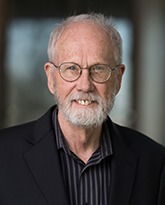
Thure E. Cerling serves as Department Chair of the Department of Geology & Geophysics and holds the Francis H. Brown Presidential Chair at the University of Utah's College of Mines and Earth Sciences. A Distinguished Professor of both Geology & Geophysics and Biology since joining the institution in 1979, he has established himself as a global leader in isotope applications across earth and life sciences.
Cerling's research revolutionized stable isotope methodology, enabling breakthroughs in reconstructing ancient environments through studies of East African hominin sites, Grand Canyon flood chronology, and a 7-million-year global vegetation transition. His work uniquely bridges fundamental science and real-world applications, including wildlife poaching investigations, counterfeit drug detection, and human remains identification. This interdisciplinary approach stems from his core expertise in biogeochemical cycling and paleoenvironmental reconstruction.
His exceptional contributions are recognized through:
- International honors including the quadrennial Emile Argand Award
- Membership in the National Academy of Sciences
- Nine prestigious fellowships across geological and geochemical societies
- Co-discovery of the mineral Rowleyite
- A patent for travel history reconstruction technology
As an educator, Cerling co-founded IsoCamp in 1996—a transformative two-week program that has trained nearly 1,000 scientists worldwide in stable isotope techniques—and established IsoForensics in 2001 to apply isotope science to criminal investigations. His mentorship legacy includes graduate students who now lead research programs at top universities. During the pandemic, he spearheaded digital innovation through 3D geological models and virtual field resources that permanently enhance educational accessibility.
His departmental leadership since 2016 features faculty mentorship systems, diversity initiatives, K-12 outreach programs including school visits and Open House Nights, and community-focused communication strategies that embody his philosophy of academic service as both duty and opportunity.