معرفی
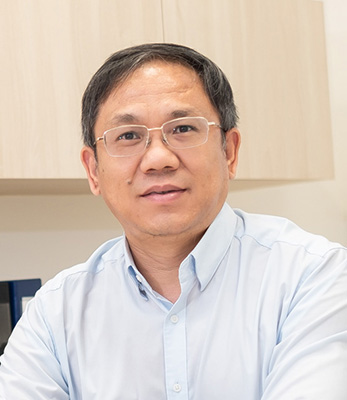
Thomas S. Hughes is an Associate Professor of Chemistry and Biochemistry at Siena University, where he has served since 2010 after joining as an Assistant Professor. Previously, he held an Assistant Professor position at the University of Vermont (2002-2010) following postdoctoral research at the University of Illinois at Urbana-Champaign. His academic foundation includes a Ph.D. and M.S. in Chemistry and Biochemistry from Cornell University and a B.S. in Chemistry from Temple University.
Dr. Hughes' educational background:
- Ph.D. in Chemistry and Biochemistry, Cornell University
- M.S. in Chemistry and Biochemistry, Cornell University
- B.S. in Chemistry, Temple University
Professor Hughes leads a dynamic research program focused on the synthesis of polycyclic aromatic hydrocarbon (PAH) architectures including graphene ribbons and carbon nanobelts, alongside novel cycloaromatization reactions and phenylene macrocycle chemistry. His work bridges organic synthesis with materials science to develop carbon-based nanomaterials for potential applications in electronics and sensing. This research sits at the intersection of synthetic methodology development and functional material design.
His publication record demonstrates consistent innovation in macrocyclic chemistry and carbon nanomaterial synthesis, with recent computational work (2022) complementing decades of experimental breakthroughs. The publications reveal a sustained focus on molecular architecture control through tailored synthetic routes, particularly in creating shape-persistent structures for nanotechnology applications.
Dr. Hughes actively mentors undergraduate researchers, regularly co-authoring conference presentations at American Chemical Society meetings and regional symposia. His laboratory at Siena University serves as a training ground for students in advanced organic synthesis techniques and characterization methods.
His research group maintains strong activity in carbon nanomaterial synthesis, with ongoing projects exploring molecular origami approaches to carbon nanotube segments and novel supramolecular assemblies of phenylene-based macrocycles.