معرفی
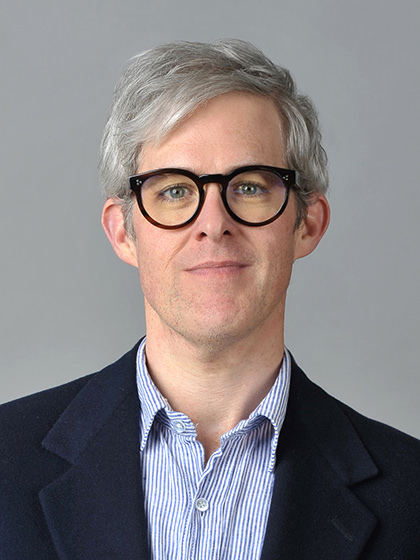
Thomas Peattie serves as an Associate Professor of Music in the Department of Music at the University of Mississippi's College of Liberal Arts. He holds a B.Mus. in composition and M.A. in musicology from the University of Calgary, plus a Ph.D. in historical musicology from Harvard University (2002).
His educational credentials include:
- Bachelor of Music in Composition, University of Calgary
- Master of Arts in Musicology, University of Calgary
- Doctor of Philosophy in Historical Musicology, Harvard University (2002)
Peattie specializes in Historical Musicology, with core interests spanning Romanticism, Modernism, Postwar Avant-Garde, Music and Environment, Transcription, and Historiography. His work critically examines landscape as a structural element in symphonies and the cultural intersections of visual arts with musical modernity.
Recent publications trend toward interdisciplinary analysis of Romantic and Modernist eras, emphasizing how environmental concepts shape symphonic form and avant-garde transcription practices, particularly in the long 19th century and post-1945 Europe.
His accolades comprise:
- Social Sciences and Humanities Research Council of Canada Fellowship
- Boston University Society of Fellows Fellowship
- Paul Sacher Foundation Fellowship (Basel)
- Italian Academy for Advanced Studies in America Fellowship (Columbia University)
- Northrop Frye Centre Fellowship (University of Toronto)
- Dr. Mike L. Edmonds New Scholar Award for Fine and Performing Arts (2018)
Peattie advises no documented students but holds significant editorial roles: he serves on the Advisory Board of the Gustav Mahler Research Center (Dobbiaco, Italy), contributes to the editorial boards of Mahler Dimensions and Gustav Mahler Research Centre (Hollitzer Verlag, Vienna), and has taught courses including History of Western Music I/II, Romantic Music, and Music after 1900.
He leads international Mahler scholarship through institutional boards and is preparing a monograph on Luciano Berio's transcribing practices, extending his expertise in symphonic landscape theory to modernist contexts.