Teri Belecky-Adams
استاد · Cell Biology
Indiana University-Purdue University Indianapolisمعرفی
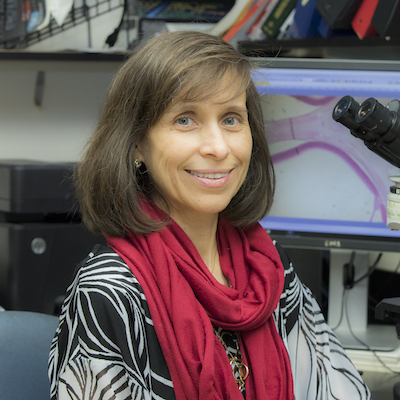
Teri Belecky-Adams is a Professor and Department Chair of Biology at Indiana University, where she leads research in developmental biology with a focus on eye development. Her work investigates the cellular and molecular mechanisms underlying retinal differentiation and patterning, particularly through the lens of TGF-Beta family signaling pathways. As Department Chair, she oversees academic programs and research initiatives within the Biology department.
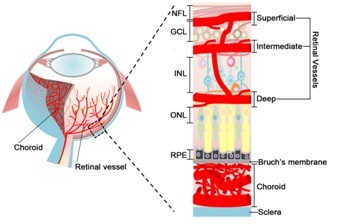
Dr. Belecky-Adams' research interests center on understanding how homogeneous populations of cells acquire specific fates during eye development and how cells establish proper topographical connections within the visual system. Her laboratory employs techniques including microinjection of retroviruses carrying transgenes into developing eyes and in vitro addition of factors to retinal cultures to study growth factor signaling effects on differentiation and neural outgrowth. These investigations aim to uncover mechanisms that could inform treatments for congenital eye defects and neurodegenerative conditions.
Analysis of her recent publications reveals a strong focus on retinal development, neuroinflammation in diabetic retinopathy, and the role of various signaling pathways in eye formation. Her work spans multiple model systems including chick embryos, murine models, and axolotl for regeneration studies. The research demonstrates consistent investigation into cellular differentiation mechanisms with applications to understanding and potentially treating vision disorders.
Dr. Belecky-Adams maintains an active research program with recent publications in high-impact journals including Diabetologia, Frontiers in Ophthalmology, and American Journal of Physiology. Her collaborative work extends across multiple institutions, indicating strong professional networks in ophthalmology and developmental biology research communities.
Her laboratory continues to investigate fundamental questions about eye development with potential translational applications for treating vision loss. Current work appears to be expanding into metabolic aspects of eye disorders, particularly examining connections between diabetes and retinal pathology, suggesting evolving research directions that bridge developmental biology and clinical ophthalmology.