معرفی
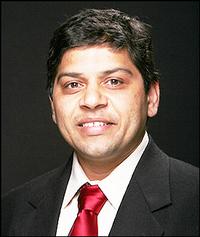
Tejas Gokhale is an Assistant Professor in the Department of Computer Science and Electrical Engineering at the University of Maryland, Baltimore County (UMBC), where he directs the Cognitive Vision Group and serves as Affiliate Faculty at the UMBC Center for AI. His research focuses on perception, learning, reasoning, and communication, with particular emphasis on conceptual characterization of visual scenes.
- Ph.D. from Arizona State University
- M.S. from Carnegie Mellon University
- B.E. from BITS Pilani
Dr. Gokhale's research explores interpretation of visual data with incomplete information, recognizing and adapting to novelty and variations, leveraging external knowledge for generalization across contexts, and communicating visual knowledge to machines and humans. His work spans computer vision, machine learning, and artificial intelligence with applications in text-to-image generation, spatial reasoning, and domain generalization.
His recent publications demonstrate a strong focus on improving spatial understanding in text-to-image models, concept learning in diffusion models, and enhancing robustness in vision systems. His research has been recognized with a Best Paper Award at CVPR 2024 and featured in AI Magazine.
- Best Paper Award at VDU Workshop @ CVPR 2024
- AI Magazine Article summarizing his work (2024)
- Tutorial Chair for ICCV 2025
- Co-PI for DARPA SciFy program grant (2024)
Dr. Gokhale actively mentors students, currently supervising seven Ph.D. students and one M.S. student at UMBC, while also collaborating with students at Arizona State University and other institutions. He has received multiple funding awards including CIDER funding, Cybersecurity Institute funding, START funding, and SURFF funding from UMBC. His teaching includes courses on Computer Vision, Neural Networks, and Robust Machine Learning.
He leads the Perception, Prediction, and Reasoning Seminar at UMBC and has organized tutorials at major vision conferences including ECCV 2024 and WACV 2024. His lab, the Cognitive Vision Group, focuses on developing reliable and robust computer vision systems that can understand and reason about visual content.