معرفی
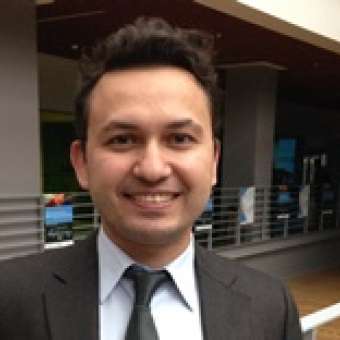
Dr. Taner Yılmaz is an Assistant Professor in the Department of Civil Engineering at Özyeğin University, Istanbul, Turkey. He holds a Ph.D. in Civil Engineering (Structural Engineering) from The Pennsylvania State University (2015), and M.Sc. and B.Sc. degrees in Civil Engineering from Middle East Technical University (2008, 2005). His academic career spans roles as a Graduate Research Assistant at Penn State (2011-2015) and Teaching Assistant at METU (2009-2011), alongside professional experience as a structural engineer in Turkey (2005-2007, 2007-2008).
- Education
- Ph.D., Civil Engineering (Structural Engineering), Penn State University (2015)
- M.Sc., Civil Engineering (Structural Engineering), METU (2008)
- B.Sc., Civil Engineering, METU (2005)
His research focuses on structural and earthquake engineering, with emphasis on risk and reliability analysis, multi-hazard performance assessment, and resilient infrastructure systems. Key areas include structural health monitoring, soil-structure interaction, and seismic base isolation. His recent work investigates seismic performance degradation of RC buildings under the 2023 Kahramanmaraş earthquakes and time-dependent risk of aging bridges under combined hazards.
Selected trends from his publications (15 most recent) include multi-hazard risk modeling, aftershock effects on infrastructure, confidence interval analysis for seismic risk, and sensitivity studies for bridge response under uncertain parameters. His work bridges computational methods with real-world applications in seismic and flood-prone regions.
- Scientific Awards
- Research Scholar, National Science Foundation (2011-2015)
- Fellowship, College of Engineering Recruitment Fund, Penn State (2012)
- Best M.Sc. Thesis Award, Turkish Road Association (2009)
Dr. Yılmaz advises graduate students in topics like surrogate models for aftershock risk, reduced-order models for building assessment, and infill wall effects on seismic performance. He leads multiple TÜBİTAK-funded projects, including DRIFT (disaster forecasting) and EQLOSS (earthquake insurance modeling), with a vision to create sustainable, risk-resilient built environments.