معرفی
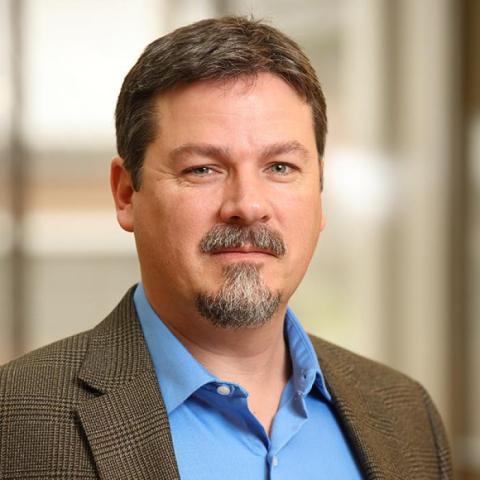
T. Brent Gunnoe is the Commonwealth Professor of Chemistry in the Department of Chemistry at the University of Virginia, College of Arts and Sciences. He leads an active research group focused on advancing catalytic methods for energy and sustainability.
Education:
- B.A., West Virginia University, 1993
- Ph.D., University of North Carolina at Chapel Hill, 1997
- Postdoctoral Associate, University of Virginia, 1997–1999
His research spans organometallic chemistry, inorganic chemistry, and homogeneous catalysis, with a focus on C–H bond activation, alkane functionalization, and electrocatalysis. His group designs transition metal complexes (particularly Ru, Rh, Ir, Pd, Pt) to enable novel synthetic transformations, such as arene alkylation and alkenylation via C–H activation, and the selective oxidation of light alkanes to alcohols. Recent efforts include integrating molecular catalysts into conductive supports for low-temperature methane oxidation and electrocatalytic water splitting.
The 15 most recent publications highlight a strong trend in rhodium-catalyzed C–H functionalization, aerobic oxidation processes, and mechanistic studies of catalytic cycles. The work bridges fundamental organometallic chemistry with applications in energy conversion and green synthesis, frequently appearing in high-impact journals like JACS, ACS Catalysis, and Science.
Scientific Awards and Recognition:
- NSF Graduate Research Fellowship (awarded to former student Paige Piszel)
- Multiple features in Chemical & Engineering News
- Cover article and JACS Spotlight (2016)
- Organometallics Most Read Article (2020)
Gunnoe has secured significant research funding, particularly in energy-related catalysis, and collaborates with institutions such as Colorado School of Mines. He advises graduate students and postdoctoral researchers, contributing to training the next generation of chemists. His lab, the Gunnoe Research Lab, is active in both fundamental discovery and applied energy research, with ongoing projects in methane conversion, water oxidation, and catalyst design. Future work is expected to focus on improving catalyst durability, scalability, and integration into renewable energy systems.