معرفی
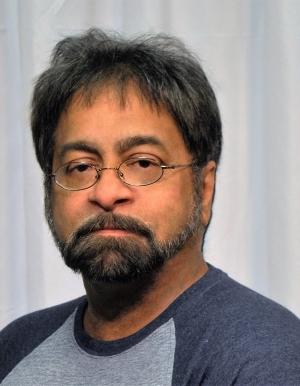
Suresh Menon serves as the Hightower Professor of Engineering at the Georgia Institute of Technology, where he has been a faculty member since 1992 after rising from associate professor to full professor in 1997. His expertise centers on computational fluid dynamics and combustion science within aerospace engineering, with significant contributions to propulsion systems and fluid mechanics research.
His academic credentials include:
- B.S. in Aeronautical Engineering from the Indian Institute of Technology (1976)
- M.S. in Aeronautical Engineering from the Indian Institute of Technology (1978)
- Ph.D. in Aerospace Engineering from the University of Maryland (1984)
Professor Menon is globally recognized for pioneering large-eddy simulation (LES) techniques in turbulent reacting flows, with research spanning combustion instability, shock-to-detonation transition, and multi-phase blast modeling. His work develops advanced simulation capabilities for analyzing pollutant formation, high-altitude jet plume effects, and propulsion systems, integrating experimental fluid mechanics with computational approaches to advance sustainable energy solutions.
Analysis of his 2002-2015 publications reveals consistent focus on large-eddy simulation applications across complex flow regimes, with growing emphasis on machine learning integration for chemical kinetics and uncertainty quantification in shock-driven phenomena like aerosol neutralization and energetic material behavior.
His distinguished honors include:
- Fellow of the American Association for the Advancement of Science (AAAS)
- Associate Fellow of the American Institute of Aeronautics and Astronautics (AIAA)
Menon has secured major research funding as principal investigator from NASA, Department of Energy, Air Force Office of Scientific Research, Office of Naval Research, and Defense Threat Reduction Agency, alongside industry support from General Electric, Pratt & Whitney, Boeing, and international partners. He actively reviews for leading journals and federal research proposals while mentoring graduate students through his Computational Combustion Laboratory.
The Computational Combustion Laboratory (CCL) and Ben T. Zinn Combustion Laboratory form his primary research hubs, focusing on high-fidelity simulations of turbulent combustion, propulsion systems, and fluid dynamics using advanced computational methods.