معرفی
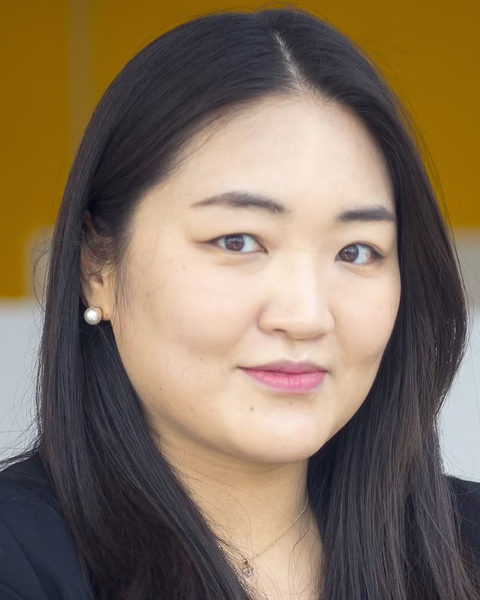
SueYeon Chung is an Assistant Professor of Physics at Harvard University (starting September 1, 2025), where she will also serve as an Investigator at the Kempner Institute for the Study of Natural and Artificial Intelligence and the Center for Brain Science. Prior to joining Harvard, she was an Assistant Professor of Neural Science at New York University and a Project Leader at the Center for Computational Neuroscience at the Flatiron Institute. Her academic journey includes postdoctoral work at Columbia University's Center for Theoretical Neuroscience and as a Fellow in Computation at MIT's Department of Brain and Cognitive Sciences. She received her Ph.D. in applied physics from Harvard University and her B.A. in physics and mathematics from Cornell University.
Her research investigates the fundamental principles of neural computation in biological and artificial neural networks, integrating concepts from statistical physics, machine learning, and neuroscience. Her work focuses on:
- Developing theoretical frameworks to model the geometry and dynamics of neural population activity
- Designing ANN-based models with neurally plausible architectures and biologically inspired learning rules
- Understanding how neural systems encode, transform, and process information across scales
- Connecting phenomena from individual neurons to population dynamics and emergent cognitive functions
- Bridging neuroscience and AI to inform the development of interpretable, efficient, and robust AI systems
Chung's research spans multiple disciplines, with particular emphasis on the geometry of neural representations, population coding, and the computational principles underlying both biological and artificial intelligence. Her interdisciplinary approach has led to significant contributions in understanding how neural systems process information through the lens of high-dimensional geometry and statistical physics.
Her recent work has focused on neural manifold capacity, representational geometry, and the alignment between artificial and biological neural networks. This research has important implications for both understanding brain function and developing more brain-inspired AI systems that are robust, reliable, and efficient.
Chung has received recognition for her work, including spotlight presentations at major conferences like ICML and NeurIPS, and having a paper selected for Editors' Suggestion in Physical Review Letters.
She is actively involved in the academic community, serving on program committees for major conferences like Computational and Systems Neuroscience (COSYNE) and organizing workshops on analytical connectionism and theoretical neuroscience. She also teaches courses on statistical mechanics, neural networks, and computational neuroscience at both the graduate and undergraduate levels.