معرفی
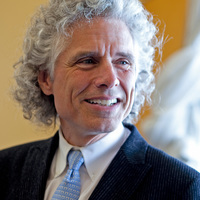
Steven Piantadosi is an Assistant Professor of Psychology at the University of California, Berkeley. His research integrates formal computational methods and behavioral experiments to investigate how humans learn language, form conceptual systems, and process numerical/mathematical information. He holds a PhD in Psychology from MIT and is affiliated with the Department of Psychology, contributing to interdisciplinary research on cognition and culture.
His academic journey includes a focus on the intersection of cognitive science, linguistics, and computational modeling. Key research areas include the cultural evolution of numerical systems, the cognitive mechanisms underlying language acquisition, and the neural basis of conceptual representation. Dr. Piantadosi's work often explores how computational principles shape human learning, bridging theoretical and empirical approaches.
Recent studies highlight themes such as cross-cultural mathematical cognition, the role of vector semantics in the brain, and the dissociation between deductive/inductive reasoning processes. His research emphasizes the importance of cultural context in shaping cognitive abilities, as seen in studies of indigenous Amazonian groups and comparisons across species. While no specific advising details are provided, his work likely involves collaborations with graduate students and postdoctoral researchers in computational psychology and neuroscience.
Notable contributions include challenging traditional nativist theories of concept formation and advancing models of symbolic learning through metaprogram search. His findings have implications for education, artificial intelligence, and our understanding of human uniqueness in cognitive capacity.