معرفی
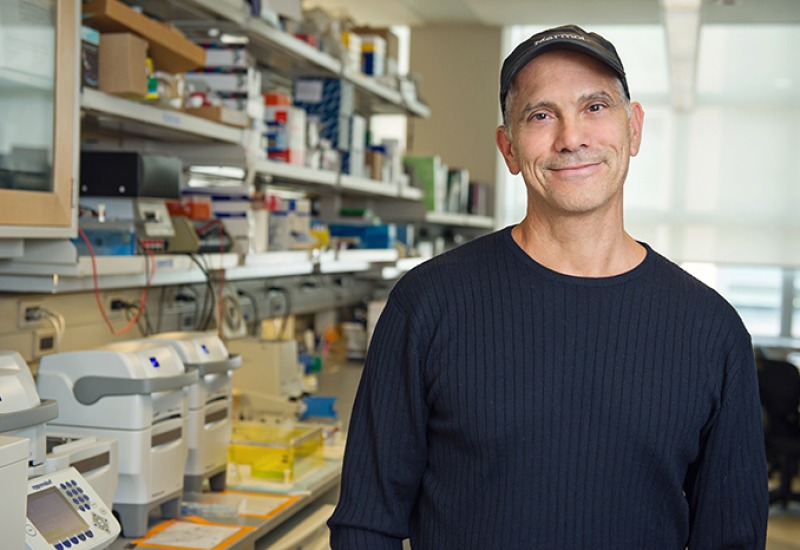
Stephen J. Weiss, M.D., a Research Professor at the Life Sciences Institute and E. Gifford and Love Barnett Upjohn Professor of Internal Medicine and Oncology at the University of Michigan Medical School, investigates how cells remodel extracellular matrix (ECM) to drive cancer growth, stem cell behavior, and inflammation. His work bridges matrix biology, protease regulation, and epithelial-mesenchymal transition (EMT) programs.
- Education: B.A. in Biological Sciences and Biochemistry (1973), M.D. (1977) from Ohio State University.
Weiss’s research focuses on membrane-type matrix metalloproteinases (MT-MMPs), particularly MT1-MMP, as master regulators of ECM dynamics. His lab explores how these proteases enable cancer cells, stem cells, and vascular networks to traverse tissues, with implications for metastasis, bone remodeling, and inflammatory diseases. His studies also reveal cross-talk between oxidative stress and protease activation, linking HOCl (bleach) to collagenase activity.
His 15 most recent articles (2025-2018) span metabolic regulation of osteoclasts, MT-MMP pathways, Wnt signaling in stem cells, and sympathetic nerve-adipose interactions. Keywords include Cancer Biology, Matrix Remodeling, and Metabolic Axes, with sub-fields like collagen degradation, Snail1/Slug interactions, and osteoclast activation.
Scientific Awards include election to the American Society for Clinical Investigation (1984), National Academy of Medicine (2001), and AAAS Fellow (2008). He received a NIH MERIT Award (1993-2003) and the U-M Distinguished Faculty Lectureship (2009).
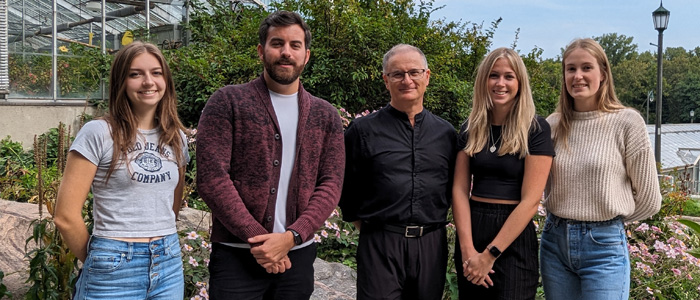
Weiss mentors students in the Cellular & Molecular Biology Graduate Program and advises PhD candidates and postdoctoral fellows. His lab at the University of Michigan includes graduate students, research staff, and alumni who continue impactful work in academia and industry.
Current projects aim to identify therapeutic targets in ECM remodeling pathways for cancer, rheumatoid arthritis, and metabolic diseases, supported by collaborations across the Rogel Cancer Center and Life Sciences Institute.