معرفی
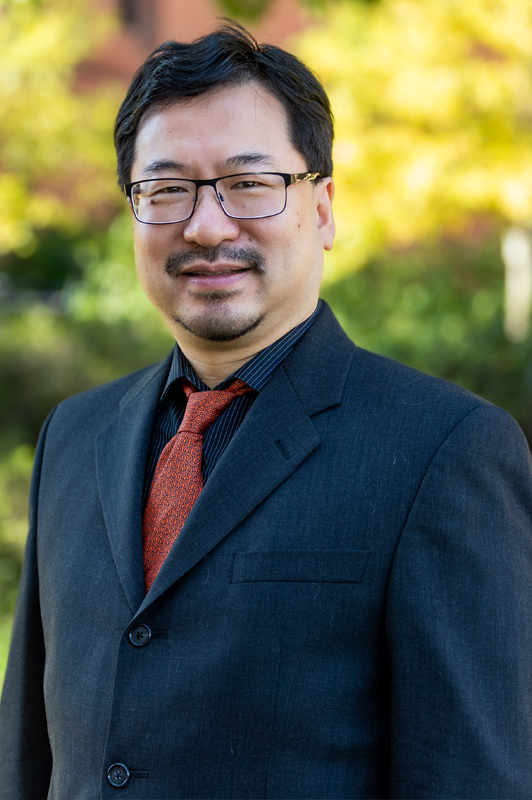
Stephen Hanly is a Professor in the School of Engineering at Macquarie University, specializing in Electrical and Electronics Engineering. He serves as Discipline Lead for the Electrical and Electronics Engineering teaching program and is part of the School's leadership team. His research is centered at the Future Communications Research Centre and Advanced Drone Systems Research Centre.
His research focuses on next-generation wireless communications systems, with primary expertise in millimeter wave networks, UAV communications, satellite IoT systems, and beamforming technologies. Key investigation areas include distributed data collection using rechargeable UAVs, LEO satellite communications for IoT, millimeter wave beam alignment algorithms, and delay-Doppler domain waveforms for high-mobility scenarios. His work bridges theoretical communication theory with practical implementation challenges in dense wireless environments.
His recent publication trends demonstrate strong emphasis on 6G-enabling technologies, particularly UAV trajectory optimization for IoT data harvesting, LEO satellite terminal protocols, and millimeter wave beam acquisition techniques. These works consistently address scalability challenges in ultra-dense networks while maintaining quality-of-service guarantees.
- IEEE Fellow
- INFOCOM Best Paper Award
- IEEE Information Theory Society and IEEE Communication Society Joint Paper Award
- IEEE Communications Society Tutorial Paper Award
Professor Hanly actively supervises PhD students and postdoctoral researchers, with current projects including DP23: Enabling wide area mm-wave mobile broadband networks and LP20: Scaling Up Satellite Communications for the Internet of Things. His industry collaborations include the CSIRO Macquarie University Chair in Wireless Communications and the Macquarie University WiMed Research Centre. His research group develops novel algorithms for resource allocation, beam management, and network optimization in heterogeneous wireless environments.
He leads the Future Communications Research Centre and Advanced Drone Systems Research Centre, focusing on practical implementations of theoretical communication models. Current research directions include UAV swarm coordination for wide-area coverage, LEO satellite IoT protocols, and millimeter wave beam alignment for mobile users in urban environments.