معرفی
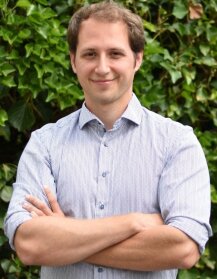
Dr. Stephan Kupfer is a PostDoc and group leader in the Physical Chemistry Department at Friedrich-Schiller-University Jena, Germany, where he received his PhD in 2013. His research spans theoretical chemistry with a focus on photo-induced processes, solar energy conversion, and plasmonic hybrid systems. He works within the Professorship of Theoretical Chemistry and maintains an active research program with numerous publications in high-impact journals.
Stephan Kupfer's primary research interests center on the theoretical modeling of photo-induced processes for applications in solar energy conversion and plasmonic hybrid systems. His work investigates light-harvesting applications in dye-sensitized solar cells and light-driven water-splitting, requiring detailed understanding of fundamental photophysics and photochemistry. He aims to elucidate and tune excited state relaxation dynamics in molecular photocatalysts and light-harvesting antenna systems, focusing on charge separation, recombination, and photodegradation processes. Additionally, his research involves theoretical description of plasmon-enhanced spectroscopy, particularly tip-enhanced Raman spectroscopy, pursuing a holistic approach that combines electromagnetic effects with chemical effects including non-resonant, resonant, and charge transfer contributions.
Analysis of Dr. Kupfer's recent publications reveals a strong focus on computational photochemistry and theoretical modeling of transition metal complexes for energy applications. His work spans multiple disciplines including solar energy conversion, hydrogen production, and plasmon-enhanced spectroscopy. A significant portion of his research investigates ruthenium, iron, and other transition metal complexes for light-harvesting applications, with particular attention to excited state dynamics and electron transfer processes. His publications demonstrate expertise in both computational methods (DFT, quantum dynamics) and experimental validation through spectroscopic techniques.
Dr. Kupfer's research group appears to focus on collaborative work with multiple research teams across Germany and internationally, as evidenced by the co-authorship patterns in his publications. His work bridges theoretical chemistry with practical applications in renewable energy and spectroscopy, demonstrating strong interdisciplinary connections between physical chemistry, materials science, and nanotechnology.