معرفی
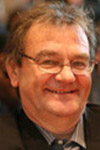
Stefan Junne is an Associate Professor at Aalborg University's Department of Chemistry and Bioscience, within The Faculty of Engineering and Science. His research focuses on optimizing bioprocesses for sustainable production, particularly in microbial cultivation systems, anaerobic digestion, and single-use bioreactor technologies. He holds a Ph.D. in Bioprocess Engineering from Technical University of Berlin and a University Diploma in Chemical Engineering from Friedrich-Alexander University Erlangen-Nürnberg.
Education:
- Ph.D. in Bioprocess Engineering, Technical University of Berlin (2010)
- University Diploma in Chemical Engineering, Friedrich-Alexander University Erlangen-Nürnberg (2003)
Research Interests: Dr. Junne's work addresses challenges in bioprocess scalability, microbial co-cultivation dynamics, and real-time monitoring technologies. He develops methods for valorizing biogenic residues via anaerobic digestion and dark fermentation, emphasizing low-energy, non-sterile systems. His projects include optimizing plug-flow reactors, membrane-free hydrogen sensors, and single-cell analysis tools. He also investigates the environmental and economic viability of bio-based production grids.
Key Projects (2022–2026):
- STARBio: Single-cell Tracking Analytics for Reliable Bioprocesses
- Controlling dissolved hydrogen for hydrogenotrophic processes
- Scale-down of microbial processes
- Heterogeneity of filamentous growth under shear-force regimes
- Plug-flow dark fermentation for carboxylic acids
Scientific Awards:
- Gold medal for membrane-free hydrogen monitoring in biogas (2024)
- Morphology control for Aspergillus scalability (2024)
- Membrane-free hydrogen monitoring in bioprocesses (2024)
Teaching & Collaboration: He teaches courses on bioprocess design, techno-economic analysis, and microbial biotechnology at both B.Sc. and M.Sc. levels. His flipped classroom and challenge-based learning approaches emphasize practical bioprocess development and sustainability assessments. He collaborates internationally on bioreactor engineering and bioeconomic solutions.