معرفی
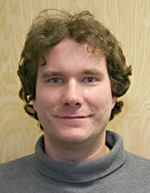
Professor Stefan Großkinsky is Chair of Stochastics and its Applications at the Institute of Mathematics, Faculty of Mathematics, Natural Sciences and Technology, University of Augsburg. His office is located at Universitätsstraße 14, 86159 Augsburg (Space 3014, L1) with contact information including phone +49 821 598 2210 and email stefan.grosskinsky@math.uni-augsburg.de. He maintains an active research profile with publications available on arXiv and Google Scholar (ORCID: 0000-0002-5113-9112).
His research focuses on applied probability, stochastic processes, mathematical modelling of complex systems, statistical mechanics, and rare event simulation. Professor Großkinsky investigates how probabilistic models can explain phenomena ranging from ant colonies to wealth distribution, market competition dynamics, and climate extremes. His work bridges theoretical mathematics with practical applications in economics, social systems, and environmental science.
Analysis of his recent publications reveals strong trends in applying stochastic models to real-world complex systems, particularly examining competitive dynamics, wealth distribution mechanisms, and extreme value statistics in climate contexts. His research demonstrates the power of probability theory to model diverse phenomena across scientific disciplines.
Professor Großkinsky leads a research team including M.Sc. students Chan Yoon Jun, Engel Rafael, and Marcel Schrocke, along with researchers Dr. Angeliki Koutsimpela and Dr. Bas Lodewijks. His previous academic appointments include positions at TU Delft (2020-2021), University of Warwick (2007-2020) where he was affiliated with the Alan Turing Institute and Centre for Complexity Science, University of Cambridge (2005-2007), and TU Munich (2000-2005).
His research group operates within the Institute of Mathematics at the University of Augsburg, focusing on developing and analyzing stochastic models for complex systems across various domains including economics, social dynamics, and environmental science. The team maintains active collaborations with other institutions as evidenced by his past affiliations with multiple international research centers.