معرفی
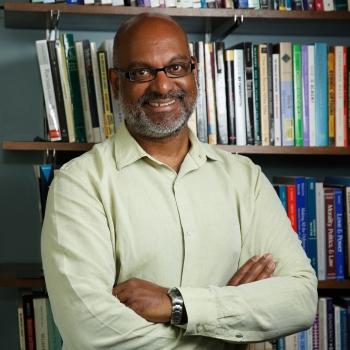
Stefan Eich serves as Assistant Professor in the Department of Government at Georgetown University since 2019, with a distinguished 2022/2023 fellowship at Princeton's Institute for Advanced Study. He co-edits Stanford University Press's 'Currencies: New Thinking for Financial Times' book series internationally with Martijn Konings of the University of Sydney.
His academic foundation includes:
- Ph.D. in Political Science from Yale University
- M.Phil in History from the University of Cambridge
- B.A. with Honors from the University of Oxford
Professor Eich's research pioneers the political theory of money and financial capitalism, examining monetary systems as historical-political constructs from Aristotle to Keynes. His work uniquely bridges classical political thought with contemporary crises like climate finance, revealing how financial structures encode power relations and shape democratic possibilities. This interdisciplinary approach integrates political theory, economic history, and philosophy to analyze money's role in social organization beyond purely economic frameworks.
His publication trajectory shows accelerating scholarly impact, with major 2024 contributions including an American Journal of Political Science article on Keynes and temporal politics alongside a Columbia University Press monograph on Benhabib and critical theory. These build upon his award-winning 2022 Princeton University Press book, demonstrating consistent innovation in connecting historical analysis to current financial-political challenges across multiple high-impact venues.
Professor Eich's exceptional scholarship has earned:
- 2024 David and Elaine Spitz Prize for liberal-democratic theory
- 2023 APSA Foundations of Political Theory Best First Book Prize
As an active Georgetown faculty member, he mentors students in political theory while advancing research through his Stanford University Press editorial role and ongoing projects examining the politics of time and financial uncertainty. His work continues to redefine how scholars understand money's embeddedness in political power structures.