معرفی
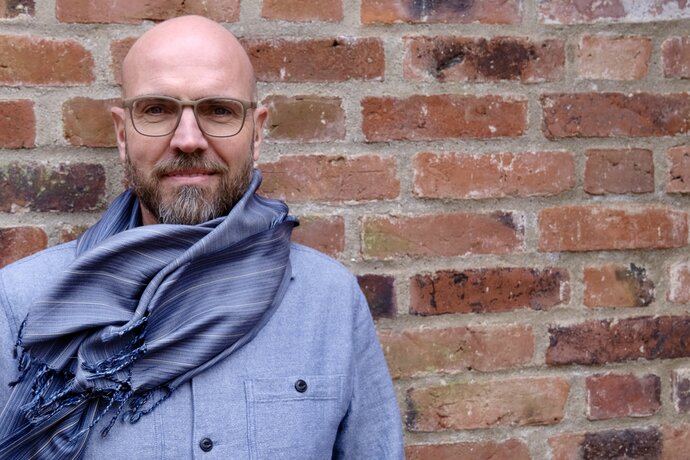
Staffan Andersson is a Professor in the Department of Political Science at Linnaeus University's Faculty of Social Sciences, where he has been employed since October 2006. He serves as director of the research group Governance, Ethics, and Corruption (GEC) and maintains active engagement with international organizations including service as a scientific expert for the Council of Europe's anti-corruption body GRECO during 2023-2024. He is also a member of the Scientific Council of the Swedish Agency for Public Management.
- PhD in Political Science from Umeå University (2002)
- Master's degree in Economics from Lund University (1994)
- Research Fellow at the School of Politics & International Relations, University of Nottingham (2004-2006)
Professor Andersson's research primarily focuses on comparative politics and public administration, with particular emphasis on democratic functioning, power organization, institutional effectiveness, and public administration integrity. His work extensively examines political corruption, public integrity mechanisms, and decision-making during crises. He has made significant contributions to understanding corruption dynamics in Sweden and other low-corruption contexts, exploring both theoretical frameworks and practical anti-corruption measures.
His recent publications demonstrate a strong focus on ethics management in public institutions, pandemic governance, and comparative analysis of corruption control mechanisms. The research shows consistent attention to Swedish governance models while maintaining comparative perspectives, particularly regarding British politics. His work bridges theoretical political science with practical policy applications, often addressing how democratic institutions can maintain integrity under various pressures.
- Active researcher with publications spanning from 1999 to 2025
- Current book projects on ethics in long-term care and public sector ethics
- Director of the Governance, Ethics, and Corruption (GEC) research group
Professor Andersson teaches courses in comparative politics, public administration, research methods, and political corruption while supervising undergraduate, master's, and doctoral students. His societal engagement extends beyond academia through expert consultations with governmental and international organizations focused on corruption prevention and ethical governance. His research group GEC actively studies both the positive and challenging aspects of public governance, contributing significantly to the understanding of how democratic systems can maintain integrity and effectiveness.