معرفی
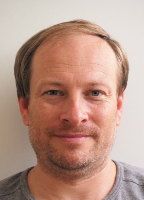
Stéphan Thomassé is a Professor in the Computer Science Department at Ecole Normale Supérieure de Lyon, where he is affiliated with the Parallel Computing Laboratory (LIP) and leads the Computational Models, Complexity, Combinatorics (MC2) research team (2023-2025). He was a Member of the University Institute of France from 2016-2021 and has held significant administrative roles including Head of M2 Fundamental Computer Science (2013-2015) and Deputy Director of the Computer Science Department (2013-2015).
Thomassé's research focuses on graph theory, combinatorics, algorithms, and theoretical computer science. His work spans structural graph theory, parameterized complexity, graph coloring, and combinatorial optimization. He is particularly known for his groundbreaking work on twin-width, a graph parameter that has revolutionized understanding of sparse and dense graph classes and their algorithmic properties. His research connects combinatorial structures with computational complexity, often bridging theoretical insights with practical algorithmic applications.
His recent publications demonstrate a strong focus on structural graph theory, with the twin-width series representing a major contribution to the field. These papers have established connections between graph parameters, model theory, and algorithm design, particularly for problems that were previously thought to be intractable on dense graph classes. Thomassé's work on graph coloring, particularly regarding dense triangle-free graphs and the Erdős-Hajnal conjecture, has resolved long-standing open problems.
- Member of University Institute of France (2016-2021)
- ANR projects: GRAAL, AGAPE, STINT, COMPA, Digraphs, TWIN-WIDTH, GODASse
As an advisor and educator, Thomassé has taught numerous advanced courses including Algorithmics, Optimization and Approximation, Tree Decompositions and FPT Algorithms, and Graph Decompositions. His teaching reflects his research expertise, emphasizing both theoretical foundations and practical applications of discrete mathematics. His administrative leadership in the MC2 team and the Computer Science Department demonstrates his commitment to advancing research and education in theoretical computer science.
Thomassé maintains active collaborations with researchers worldwide, as evidenced by his extensive publication record with co-authors from various institutions. His work continues to shape the landscape of structural graph theory and parameterized algorithms, with recent results opening new avenues for research in combinatorics and theoretical computer science.