معرفی
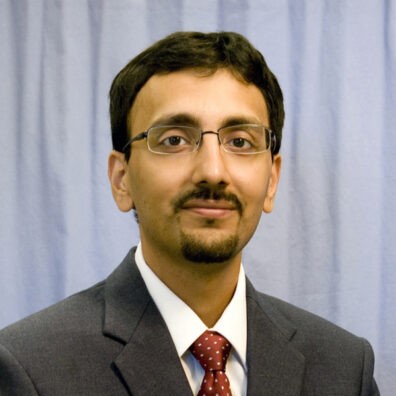
Soumik Banerjee is an Associate Professor at the Washington State University, leading the Computational Nanoscience Laboratory (CNL) within the School of Mechanical and Materials Engineering. His research focuses on modeling nanoscale transport phenomena and materials for energy conversion/storage applications.
Education
- Ph.D. in Engineering Mechanics, Virginia Tech (2008)
- M.S. in Mechanical Engineering, University of Illinois, Chicago (2004)
- B.S. in Mechanical Engineering, Jadavpur University, India (2002)
Research Interests
Professor Banerjee specializes in atomistic simulations of materials relevant to energy technologies, including perovskite solar cells, Li/Na-ion batteries, and ionic liquid electrolytes. His work explores chemical kinetics at interfaces, thermal and charge transport, and self-assembly of nanostructures using molecular dynamics and kinetic Monte Carlo methods.
Key research areas include nanomaterials for energy applications, electrochemical stability, and multiscale modeling of systems like fullerene aggregation and carbon nanotube alignment. His group investigates solvents, dopants, and molecular interactions to optimize synthesis parameters for thin films and nanocomposites.
Scientific Awards
- Fellow, American Society of Mechanical Engineers (2024)
- 3M Nontenured Faculty Award (2013)
- Max Planck Institute Postdoctoral Fellowship (2008-2009)
- Pratt Fellowship from Virginia Tech (2006-2007)
- Best Poster Award at Dean’s Forum on Energy Security (2006)
Advising & Collaborations
Soumik Banerjee has mentored numerous graduate and undergraduate researchers, including SM Mortuza, MFN Taufique, Aniruddha Dive, and Saeed Kazemiabnavi. His lab collaborates with institutions like the University of Michigan and Sharif University of Technology.
Labs & Teams
CNL (Sloan 240) develops models for energy conversion materials, focusing on nanoscale transport and self-assembly processes. The lab combines atomistic simulations with stochastic methods to address challenges in solar cells, batteries, and nanomaterials processing.