معرفی
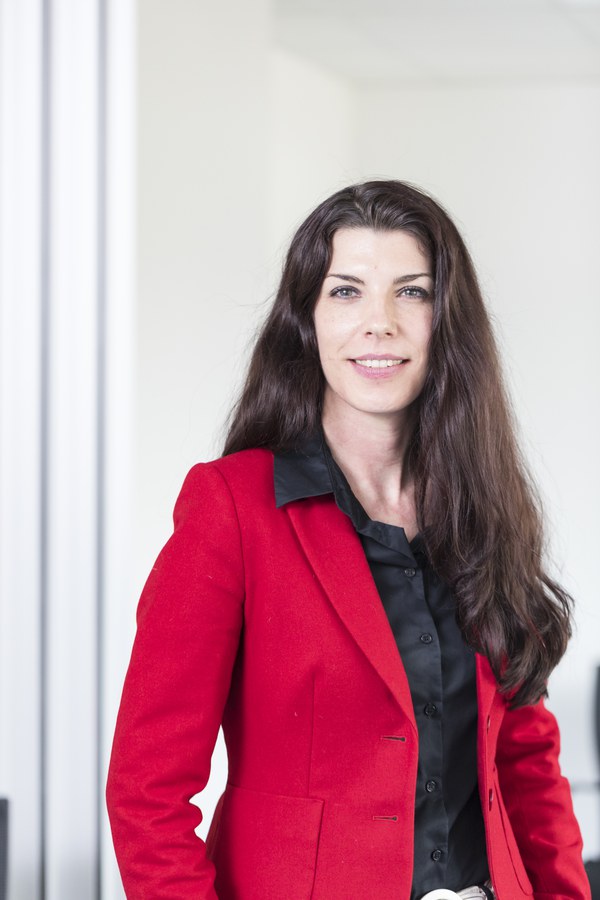
Prof. Dr. Silvia Daun is a Professor for Computational Neuroscience - Modeling Neural Network Function at the Zoological Institute of the University of Cologne and the Institute of Neuroscience and Medicine - Cognitive Neuroscience at Research Center Juelich. She leads the AG Daun research group focusing on mathematical modeling and numerical simulations of neural network functions related to motor control and locomotion. Her work bridges theoretical neuroscience with clinical applications, particularly in stroke rehabilitation.
Her research interests center on understanding how rhythmic motor activity in the nervous system generates locomotion and movement control. Using a multi-level approach spanning from single cell modeling to whole-limb mechanics, she has made significant contributions to understanding intra- and inter-limb coordination during multi-legged locomotion. More recently, she has expanded her research to high-level motor control mechanisms in humans, with applications for stroke patients. Her work combines mathematical modeling with experimental techniques including EEG, MEG, fMRI, and TMS to analyze complex neural network dynamics.
Daun's publication record shows consistent output across computational neuroscience, with recent papers focusing on cortical dynamics, locomotion mechanisms, and clinical applications. Her work demonstrates a clear progression from basic insect locomotion studies to human motor control applications, with increasing emphasis on clinical translation in recent years.
Her scientific achievements have been recognized with numerous awards including the prestigious Heinz Maier-Leibnitz Award in 2014, Heisenberg Fellowship from DFG, and recognition as one of Germany's top 40 researchers under 40 by Capital Magazine. She is also a member of AcademiaNet, highlighting her position among leading women scientists.
As an academic leader, Daun serves as Core PI in the Center for Data and Simulation Science and Co-PI in a DFG-funded Research Training Group. She has received significant grant funding including BMBF-NSF US-German Collaboration and University of Cologne's Emerging Group CONNECT. Her research group includes multiple postdoctoral fellows and doctoral students working on various aspects of computational neuroscience.
Her laboratory work focuses on developing mathematical models and numerical simulations that bridge multiple levels of neural organization, from molecular interactions to whole-body movement. The group maintains strong collaborations with the University Hospital of Cologne and Jülich Research Center, facilitating the translation of basic research findings into potential clinical applications.