معرفی
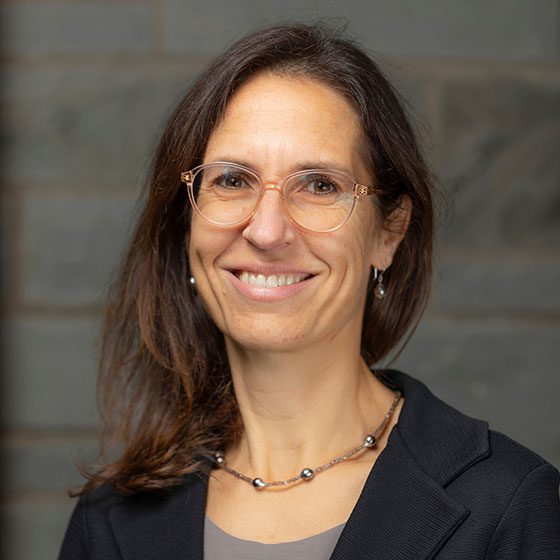
Dr. Shivaun D. Archer is a Senior Lecturer in the Department of Biomedical Engineering at Cornell University's College of Engineering, where she leads the Biomedical Engineering Undergraduate Instructional Laboratories. She designs and teaches hands-on laboratory modules for courses BME 1310, BME 3010, BME 3020, BME 4010, and BME 4020, integrating research-focused experiences in microfabrication, microfluidics, biosensors, nanobiotechnology, and drug delivery.
Educational Background:
- B.A., Chemical Engineering, Cambridge University, 1989
- M.Eng., Chemical Engineering, Cambridge University, 1990
- M.Sc., Chemical Engineering, University of California, Davis, 1992
- Ph.D., Chemical Engineering, University of California, Davis, 1996
Her research interests lie at the intersection of nanobiotechnology and tissue engineering, with a strong emphasis on translating advanced technologies into undergraduate education. She holds a joint appointment as a Research Associate in the School of Chemical and Biomolecular Engineering, further enabling interdisciplinary collaboration.
The recent publications highlight a dual focus: advancing nanoparticle-biological interactions and innovating STEM education through model-based and inquiry-driven curricula for both university and high school students. Her work spans from fundamental bioprocess engineering to cutting-edge microfluidic systems and their pedagogical implementation.
Scientific Awards and Honors:
- Elected Fellow, American Institute for Medical and Biological Engineering (AIMBE), 2023
- James and Mary Tien Excellence in Teaching Award, 2015
- Zellman Warhaff Commitment to Diversity Award, College of Engineering, Cornell University, 2009
- Sonny Yau Excellence in Teaching Award, Cornell University, 2005
- NASA Invention Space Act Award, NASA, 2005
- NASA Invention Space Act Award, NASA, 2003
Dr. Archer has made significant contributions to undergraduate research training and inclusive engineering education. Her leadership in curriculum development has been recognized through multiple teaching awards. She has also secured recognition for her past research contributions, including two NASA awards for innovations in wastewater treatment for long-term space missions. While no current grants are listed, her role in developing instructional labs suggests ongoing support for educational innovation.
She is actively involved in the academic mission of Cornell Engineering, particularly through her integration of research and teaching. Her work with ex-ovo chicken models and alginate hydrogels demonstrates a commitment to accessible, inquiry-based science education that bridges engineering and biology.